Nutrition

What is food in 100 words

Nutrition is vital for survival. Food, a necessity for your body, provides energy and vital nutrients. It consists of carbohydrates, proteins, fats, vitamins, and minerals. Your body requires a balanced diet to function correctly. Consuming a variety of foods ensures you receive all the nutrients needed for optimal health. Choosing whole, unprocessed foods benefits your well-being. Do not forget, what you eat directly impacts your overall health and vitality. Make mindful choices and savor each bite, knowing that you are nourishing your body with the fuel it needs to thrive.

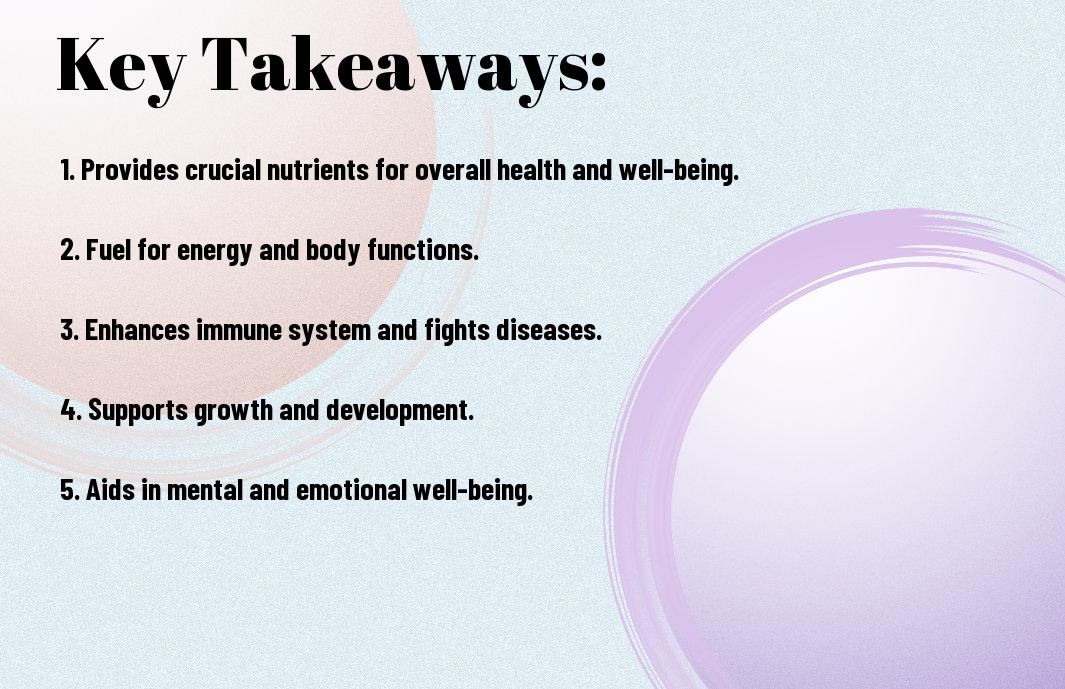
Key Takeaways:

  • Food is a source of nourishment: It provides important nutrients like carbohydrates, proteins, fats, vitamins, and minerals necessary for the body to function.
  • Food can have cultural significance: Different cuisines, cooking methods, and dining rituals are often tied to cultural traditions and can play a significant role in expressing identity and heritage.
  • Food can evoke emotions and memories: The experience of food goes beyond taste and can evoke feelings of comfort, nostalgia, joy, or even sadness, as it is often associated with memorable moments and events in people’s lives.

Defining Food

While you may think of food simply as something you eat for nourishment, its definition is more complex and multifaceted. Food can be defined through its biological components as well as its cultural significance.

Biological Definition

Biologically, food is any substance consumed to provide nutritional support for the body. It is typically of plant or animal origin and contains important nutrients such as carbohydrates, fats, proteins, vitamins, minerals, and water. Your body relies on food to function, grow, and repair itself.

Cultural Significance

Any society’s culture is intertwined with its food practices, shaping culinary traditions, meal rituals, and social gatherings. Food not only sustains you physically but also serves as a medium for expressing cultural identity and values. Different cuisines reflect unique histories, beliefs, and customs, offering a window into diverse cultures around the world.

Significance is placed on specific foods in various cultures for reasons such as symbolism, tradition, and social status. For example, certain foods may be considered sacred or reserved for special occasions, while others are everyday staples that form the foundation of daily meals. The way food is prepared, shared, and enjoyed can hold deep cultural meanings that connect individuals to their heritage and community.

Types of Food

Now, let’s examine the different types of food that make up your diet. Understanding the various categories can help you make informed choices about what you consume.

  • Nutrient-Dense Foods
    Whole foods packed with vitamins, minerals, and other necessary nutrients.
    Fruits, vegetables, nuts, seeds, lean meats, and fish fall under this category.
    These foods promote overall health, support growth, and help prevent diseases.
  • Processed Foods
    Food items that have undergone various alterations from their original state.
    Often high in sugar, salt, and unhealthy fats, they provide little nutritional value.
    To make them, manufacturers add preservatives, artificial flavors, and colors.
  • Fermented Foods
    Food products that have been through the fermentation process using bacteria or yeast.
    Yogurt, kimchi, sauerkraut, and kefir are common examples.
    These foods contain probiotics that support gut health and boost the immune system.

An important aspect to consider when selecting your food choices is the balance between these categories. By prioritizing nutrient-dense foods and limiting processed items, you can enhance your overall well-being and vitality. Make conscious decisions about what you put into your body to fuel it effectively and maintain optimal health.

Functions of Food

Providing Energy

On a fundamental level, food serves as the primary source of energy for your body. The calories derived from carbohydrates, fats, and proteins are converted into energy that fuels all your bodily functions, from breathing to exercising.

Supporting Growth and Development

Energy intake is crucial during growth stages like childhood, adolescence, and pregnancy. Proper nutrition supports physical growth, brain development, and overall health. Nutrients like protein, calcium, and vitamins play a vital role in supporting these processes.

Energy intake is crucial during growth stages like childhood, adolescence, and pregnancy. Proper nutrition supports physical growth, brain development, and overall health. Nutrients like protein, calcium, and vitamins play a vital role in supporting these processes.

Maintaining Health

Providing your body with important nutrients like vitamins, minerals, and antioxidants is crucial for maintaining overall health and well-being. These nutrients support functions such as immune system health, bone strength, and disease prevention.

Another important aspect of food is its role in preventing nutrient deficiencies, which can lead to various health problems. Consuming a balanced diet ensures that your body receives all the necessary nutrients to function optimally and stay healthy.

Food and Society

After exploring the concept of food, let’s probe into its profound impact on society. Food plays a crucial role in shaping cultures, traditions, and social interactions. It brings people together, fostering a sense of community and belonging.

Food Culture and Traditions

Society is deeply intertwined with food culture and traditions. Your family recipes and customs surrounding food reflect your heritage and history. Celebratory meals, festivals, and rituals are all centered around food, connecting you to your roots and creating a shared identity.

Food Security and Access

Society faces challenges regarding food security and access. Your ability to obtain nutritious food determines your health and well-being. Access to affordable and quality food is a basic human right, yet many communities around the world struggle with food insecurity, affecting individuals of all ages.

Food security and access are critical issues that require collective action and support. Governments, organizations, and individuals must work together to ensure that everyone has access to an adequate and sustainable food supply.

Food Waste and Sustainability

Another significant aspect of food in society is the issue of food waste and sustainability. Your consumption patterns and the food industry’s practices impact the environment. Wasting food not only squanders valuable resources but also contributes to environmental degradation.

A shift towards sustainable food practices, such as reducing waste, supporting local farmers, and choosing environmentally friendly options, is vital for the well-being of the planet and future generations. As a consumer, your choices can make a difference in promoting a more sustainable food system.

Food Production and Distribution

Farming and Agriculture

For food production, farming and agriculture are necessary. Farmers cultivate crops and raise livestock to provide raw materials for the food industry. Agriculture involves planting, nurturing, and harvesting crops, as well as raising animals for meat, dairy, and other products.

Processing and Manufacturing

On the processing and manufacturing side, food undergoes various transformations to become consumer-ready. This includes cleaning, sorting, cooking, packaging, and labeling to ensure quality and safety standards are met.

With technological advancements, food processing has become more efficient and diverse, offering a wide range of processed food options to consumers.

Transportation and Retail

For food to reach your table, it goes through transportation and retail channels. After production and processing, food products are transported to distribution centers and retail outlets such as supermarkets, grocery stores, and markets for consumers to purchase.

To ensure freshness and quality, a well-organized transportation and retail system is crucial in delivering a diverse range of food products to your local stores.

Food and Health

All Paragraph on Food in English (100, 150, 200, 250 Words), the food you consume plays a vital role in determining your overall health. The nutritional value of the food you eat directly impacts your body’s functions, energy levels, and disease prevention.

Nutritional Value

Health professionals emphasize the importance of consuming a balanced diet rich in nutrients such as vitamins, minerals, proteins, and carbohydrates. These imperative components support various bodily functions, including metabolism, immune system strength, and overall well-being.

Foodborne Illnesses

Foodborne illnesses can occur when you consume contaminated or improperly prepared food. Symptoms may range from mild digestive issues to severe conditions requiring medical attention. It is vital to handle, cook, and store food properly to prevent foodborne illnesses.

Foodborne illnesses can be caused by bacteria, viruses, parasites, or toxins present in food. Common sources include undercooked meat, contaminated produce, and unpasteurized dairy products. Proper hygiene and food safety practices can reduce the risk of foodborne illnesses.

Dietary Restrictions and Preferences

Any dietary restrictions or preferences you have should be carefully considered when planning your meals. Whether you follow a specific diet due to health reasons, ethical beliefs, or personal preferences, it is imperative to ensure that you meet your nutritional needs.

For instance, individuals with gluten intolerance must avoid gluten-containing foods to prevent adverse reactions. Vegetarians and vegans need to find alternative sources of protein and imperative nutrients typically obtained from animal products. By understanding your dietary requirements and making informed food choices, you can maintain a balanced and healthy diet.

To wrap up

So, in conclusion, think of food as the fuel for your body. It provides crucial nutrients and energy to keep your bodily functions running smoothly. Remember to choose a variety of foods to ensure you are getting all the necessary vitamins and minerals to maintain a healthy lifestyle. And don’t forget to savor the flavors and enjoy the social aspect of sharing meals with others. By understanding the importance of food and making mindful choices, you can truly nourish your body and soul.

Q: What is food?

A: Food is any substance consumed to provide nutritional support for an organism. It is usually of plant or animal origin and contains necessary nutrients such as carbohydrates, fats, proteins, vitamins, or minerals necessary for growth, repair, and maintenance of the body.

Q: Why is food important?

A: Food is important because it provides the energy and nutrients needed for survival. It supports the body’s functions, helps maintain health, and promotes overall well-being. A balanced diet with a variety of foods is crucial for proper growth and development, disease prevention, and optimal performance.

Q: How does food impact our health?

A: The type and quality of food we consume directly impact our health. A diet high in fruits, vegetables, whole grains, lean proteins, and healthy fats can reduce the risk of chronic diseases such as heart disease, diabetes, and obesity. On the other hand, a diet high in processed foods, sugars, and unhealthy fats can lead to negative health outcomes and increase the risk of various health conditions.

What is food Short answer

#Definition Let’s talk about food. You may think you already know what food is, but have you ever really stopped to consider its true essence? In this short yet informative blog post, we will probe into the fundamental question: What is food? From its basic definition to its role in nourishing our bodies and bringing people together, you will gain a deeper understanding of the importance of food in your life.

Key Takeaways:

  • Food is imperative: Food is necessary for survival and provides the body with energy, nutrients, and sustenance.
  • Food can be diverse: Food comes in various forms, flavors, and types, reflecting different cultures, traditions, and dietary preferences.
  • Food plays a social role: Food can bring people together, foster community, and create opportunities for bonding and celebration.

Defining Food

The

Historical Perspective

For centuries, food has been a fundamental aspect of human existence, necessary for survival. The concept of food has evolved over time, shaped by various cultural, social, and economic factors. Ancient civilizations relied on hunting, gathering, and later, agriculture to procure food for sustenance. As societies developed, food became not only a means of survival but also a symbol of power, wealth, and status.

Cultural Significance

Food is not just about nourishment; it carries immense cultural significance, reflecting traditions, values, and beliefs of a community. Different cultures have unique food customs and rituals that are passed down through generations, representing a shared identity and heritage. Sharing meals is a common way for people to bond, celebrate, and express love and hospitality. The diversity of food around the world is a testament to the rich tapestry of human culture and history.

Another fascinating aspect of food’s cultural significance is how it can be used as a form of communication. The choice of ingredients, cooking methods, and presentation of food can convey messages about social status, relationships, and even emotions. From festive feasts to everyday meals, food plays a central role in defining who we are and connecting us to others.

Nutritional Value

While food is important for providing energy and nourishment to your body, its nutritional value is what determines its quality. The components of food that contribute to its nutritional value are known as macronutrients and micronutrients.

Macronutrients: Carbohydrates, Proteins, and Fats

Carbohydrates are a primary source of energy for your body. They are found in foods like fruits, vegetables, grains, and legumes. Proteins are important for building and repairing tissues in your body, such as muscles and organs. Good sources of protein include meat, dairy products, nuts, and seeds. Fats are another important macronutrient that provides energy and helps in the absorption of fat-soluble vitamins. They can be found in foods like avocados, nuts, seeds, and oils.

Micronutrients: Vitamins and Minerals

Carbohydrates provide quick energy to your body, while proteins help in repairing tissues and building muscle. Fats are important for hormone production and cell structure. Additionally, vitamins and minerals are micronutrients that are crucial for various bodily functions. Vitamins, such as vitamin C and vitamin D, help in boosting your immune system and maintaining strong bones, while minerals like iron and calcium are important for blood health and bone strength.

These micronutrients can be found in a variety of foods, including fruits, vegetables, nuts, and whole grains. Ensuring you have a balanced diet rich in both macronutrients and micronutrients is key to maintaining good health and overall well-being.

Types of Food

All food can be categorized into different types based on their sources and processing methods. Understanding the various types of food can help you make informed choices about your diet. After all, different types of food offer varying nutritional benefits.

Plant-Based Foods

The plant-based food category includes fruits, vegetables, grains, nuts, seeds, and legumes. These foods are rich in necessary nutrients such as vitamins, minerals, fiber, and antioxidants that are beneficial for your health. By incorporating a variety of plant-based foods into your diet, you can ensure you are getting a wide range of nutrients to support your overall well-being.

In the table below, you can see examples of plant-based foods:

Fruits Apples, bananas, oranges
Vegetables Spinach, broccoli, carrots
Grains Quinoa, brown rice, oats
Nuts Almonds, walnuts, cashews
Legumes Beans, lentils, chickpeas

Animal-Based Foods

With animal-based foods, you have a source of protein, necessary amino acids, vitamins B12 and D, and minerals like iron and zinc. These foods include meat, poultry, fish, eggs, and dairy products. Incorporating animal-based foods into your diet can provide important nutrients that are crucial for various functions in your body.

Foods such as chicken, salmon, eggs, and yogurt fall under the category of animal-based foods.

Processed and Packaged Foods

Processed and packaged foods are foods that have undergone various methods of preservation, cooking, or packaging to extend their shelf life. These foods often contain added sugars, unhealthy fats, and high levels of sodium. While convenient, consuming too many processed and packaged foods can have negative effects on your health in the long run.

Processed foods can include items like canned soups, frozen meals, snacks, and sugary beverages. Be mindful of the ingredients list and opt for minimally processed options whenever possible to make healthier choices for your diet.

Food Production

One significant aspect of food production is farming and agriculture. This involves cultivating crops, fruits, and vegetables in fields, orchards, and greenhouses. Farmers use various techniques such as irrigation, fertilization, and pest control to ensure healthy plant growth and abundant harvests. Sustainable farming practices aim to preserve the environment and natural resources for future generations.

Livestock and Animal Husbandry

With livestock and animal husbandry, farmers raise animals for meat, milk, eggs, and other products. This involves taking care of animals’ health, feeding them nutritious diets, and providing suitable living conditions. Animal welfare is an imperative consideration in modern livestock farming, with many farms implementing humane practices to ensure the well-being of the animals.

It is crucial to consider factors such as animal welfare, environmental impact, and food safety in livestock and animal husbandry practices to ensure sustainable and ethical food production.

Food Processing and Manufacturing

Production processes in food processing and manufacturing involve turning raw agricultural products into packaged goods ready for consumption. This includes activities such as cleaning, sorting, packaging, and preserving food items to maintain freshness and quality. Food manufacturers adhere to strict standards and regulations to ensure the safety and integrity of the products they produce.

The technologies and techniques used in food processing and manufacturing play a crucial role in meeting consumer demands for convenience, variety, and nutrition in the foods available in the market.

Based on the article title “What is Food? Short Answer,” food production encompasses various processes that contribute to the availability of a wide range of food products for consumers. By understanding how food is produced, you can make more informed choices about the foods you consume, considering factors such as sustainability, ethics, and quality.

Food Distribution

Despite the abundance of food available in supermarkets and restaurants, the journey that food takes from the farm to your plate is a complex and intricate process. This journey involves multiple stages of distribution, each playing a crucial role in ensuring that fresh and safe food reaches you in a timely manner.

Supply Chain and Logistics

Food distribution begins with the supply chain and logistics network, which encompasses everything from sourcing raw materials to transporting finished products. This part of the distribution process involves coordinating with farmers, manufacturers, wholesalers, and retailers to efficiently move food from production centers to consumer markets.

Retail and Marketing

Chain – After the food products reach retailers, the focus shifts to marketing and selling them to consumers. Retailers employ various strategies to attract customers, including advertising, promotions, and product placement. These tactics are designed to influence your purchasing decisions and encourage you to buy specific food products.

For instance, when you walk into a grocery store, you may notice that certain items are placed at eye level or featured prominently in displays. These are intentional marketing tactics aimed at grabbing your attention and increasing the likelihood that you will choose those products.

Food Consumption

Eating Habits and Patterns

For many people, food consumption goes beyond just getting necessary nutrients for survival; it is often intertwined with cultural, social, and emotional aspects. Your eating habits and patterns can be influenced by your family traditions, societal norms, and personal preferences. Whether you follow a specific diet or enjoy trying new cuisines, your food choices reflect not only your nutritional needs but also your lifestyle and values.

Nutritional Deficiencies and Excesses

On occasion, your food consumption may lead to nutritional deficiencies or excesses, impacting your overall health. It is imperative to strike a balance and consume a variety of foods to meet your body’s needs. Consuming too little of certain nutrients can result in deficiencies, while excessive intake of others can lead to health issues. Understanding your nutritional requirements and making informed food choices is key to maintaining a healthy diet.

With the rise of processed foods and fast-paced lifestyles, it is becoming increasingly common for people to experience imbalances in their food consumption, leading to nutritional deficiencies or excesses. Keeping track of your diet and consulting a healthcare provider or nutritionist can help you identify and address any potential issues early on.

Food Allergies and Intolerances

For some individuals, food consumption can be complicated by allergies or intolerances. Certain foods may trigger allergic reactions or digestive issues, making it necessary to avoid specific ingredients. Understanding your body’s reactions to certain foods and being mindful of potential allergens can help you navigate your food choices more effectively. Allergies and intolerances should be taken seriously, and it is imperative to seek medical advice to manage them properly.

To ensure your well-being, pay attention to how your body responds to different foods and make adjustments as needed to accommodate any allergies or intolerances you may have. By being proactive and informed about your dietary needs, you can enjoy a fulfilling and healthy relationship with food.

Summing up

To wrap up, understanding the concept of food is crucial for maintaining a healthy lifestyle and making informed choices. If you’re looking to explore this topic further, you can explore more details by checking out What is food? for a comprehensive overview. Do not forget, food is not just sustenance; it’s a vital element that impacts our overall well-being and quality of life.

FAQ

Q: What is food?

A: Food is any substance consumed to provide nutritional support for an organism. It is usually of plant or animal origin and contains important nutrients such as carbohydrates, fats, proteins, vitamins, or minerals that are necessary for growth, energy, and overall health.

Q: Why is food important?

A: Food is important because it provides the necessary nutrients and energy for our bodies to function properly. It fuels our cells, supports growth and development, boosts the immune system, and helps maintain overall health. Eating a well-balanced diet is important for physical and mental well-being.

Q: What are the different types of food?

A: Food can be categorized into several groups based on their nutritional content. These include fruits, vegetables, grains, protein sources (such as meat, fish, eggs, and legumes), dairy products, and fats/oils. It is important to consume a variety of foods from these groups to ensure a well-rounded and nutritious diet.

What are the 20 best foods to eat

Many health experts agree that incorporating a variety of nutrient-dense foods into your diet is key to maintaining overall well-being. In this blog post, we will explore the top 20 foods that you should consider adding to your daily meals for optimal health and vitality. From leafy greens to lean proteins, these foods are packed with imperative vitamins, minerals, and antioxidants to support your body’s functions and keep you feeling your best. Let’s dive in and discover the best foods to fuel your body!

Key Takeaways:

  • Include a variety of nutrient-rich foods: To ensure a balanced diet, incorporate a diverse range of fruits, vegetables, whole grains, lean proteins, and healthy fats.
  • Foods high in antioxidants are important: Berries, dark leafy greens, nuts, and seeds are rich in antioxidants, which help protect cells from damage and reduce the risk of chronic diseases.
  • Focus on whole foods: Opt for minimally processed foods like whole grains, legumes, lean meats, and fresh fruits and vegetables to maximize nutrient intake and support overall health.

The Power of Nutrition

The Importance of Whole Foods

One of the most crucial aspects of a healthy diet is the consumption of whole foods. Whole foods are unprocessed and free from additives, making them rich in crucial nutrients like vitamins, minerals, fiber, and antioxidants. By including a variety of whole foods in your diet, you can ensure that your body is getting all the necessary nutrients it needs to function optimally.

Whole foods also provide sustained energy levels and promote better digestion and overall health. By incorporating plenty of fruits, vegetables, whole grains, lean proteins, and healthy fats into your meals, you are setting yourself up for success in maintaining a balanced and nutritious diet.

Debunking Fad Diets

Whole foods are the foundation of a healthy diet, and fad diets often promote quick fixes and drastic restrictions that can be harmful to your overall well-being. Fad diets typically focus on cutting out specific food groups or drastically reducing calorie intake, which can lead to nutrient deficiencies, low energy levels, and an unhealthy relationship with food.

It is important to be wary of any diet that promises rapid weight loss or requires you to eliminate whole food groups. Instead of falling for fad diets, focus on nourishing your body with a variety of whole foods to support your overall health and well-being.

Nutrition

Nutrition plays a vital role in your overall health and well-being. By prioritizing whole foods and avoiding fad diets, you can ensure that you are providing your body with the crucial nutrients it needs to thrive. Remember to listen to your body, eat mindfully, and make informed choices that support your health goals. A balanced diet rich in whole foods is key to feeling your best and maintaining long-term health.

Top 5 Fruits for Optimal Health

Berries: Antioxidant Powerhouses

Even though all fruits have their own health benefits, berries stand out as antioxidant powerhouses. Blueberries, strawberries, raspberries, and blackberries are packed with vitamins, minerals, and antioxidants that can help protect your cells from damage caused by free radicals. Including a variety of berries in your diet can support your overall health and well-being.

Citrus Fruits: Boosting Immunity

For boosting your immunity, citrus fruits like oranges, grapefruits, lemons, and limes are excellent choices. These fruits are rich in vitamin C, which is known for its immune-boosting properties. Vitamin C helps your body produce white blood cells that are vital for fighting off infections and maintaining a healthy immune system.

On top of that, citrus fruits also provide fiber and other vital nutrients that support overall health. Including citrus fruits in your diet can help you stay energized and ward off illnesses.

Apples: The Ultimate Snack Food

Antioxidant-rich apples are known as the ultimate snack food for a reason. With their high fiber content and various antioxidants, apples can aid in digestion, promote heart health, and even help lower your risk of chronic diseases. Including an apple in your daily snack routine can satisfy your sweet cravings while providing your body with vital nutrients.

Food experts often say, “An apple a day keeps the doctor away” due to the numerous health benefits associated with this delicious fruit. So, make sure to keep a stock of apples in your kitchen for a quick and healthy snack option.

Bananas: Potassium-Rich Energy

Citrus bananas are potassium-rich energy powerhouses that can help you refuel and replenish your energy levels. Potassium is vital for maintaining proper muscle function, regulating fluid balance, and supporting heart health. Adding bananas to your pre or post-workout snacks can help prevent muscle cramps and promote overall wellness.

Understanding the importance of potassium in your diet can help you make informed choices about the fruits you consume. Bananas are not only convenient and delicious but also offer a wide range of health benefits to keep you feeling your best.

Avocados: Healthy Fats Galore

One of the powerhouses in the fruit world, avocados are packed with healthy fats that are vital for brain health, hormone production, and overall well-being. These creamy fruits are also a good source of fiber, vitamins, and minerals that can support your cardiovascular health and weight management goals.

Powerhouses in healthy fats, avocados are a versatile fruit that can be enjoyed in salads, sandwiches, smoothies, and even desserts. Including avocados in your diet can help you feel satiated, improve your nutrient absorption, and promote a healthy inflammatory response in your body.

Leafy Greens and Vegetables

To maintain a healthy diet, it is crucial to incorporate plenty of leafy greens and vegetables into your meals. Packed with necessary vitamins, minerals, and antioxidants, these nutrient-dense foods can help boost your overall health and well-being.

Spinach: Iron-Rich Superfood

The vibrant green leaves of spinach are not only a beautiful addition to your plate but also a powerhouse of nutrients. Spinach is particularly high in iron, making it an excellent choice for vegetarians and vegans who may need to pay extra attention to their iron intake. Incorporating spinach into your diet can help support healthy blood circulation and energy levels.

Kale: The Queen of Greens

Leafy greens don’t get much more regal than kale. Packed with vitamins A, K, and C, as well as calcium and antioxidants, kale is truly a superfood. Its robust flavor and sturdy texture make it a versatile ingredient that can be enjoyed in salads, smoothies, or even baked into crispy kale chips.

Another benefit of kale is its high fiber content, which can support digestion and help you feel full and satisfied after meals. By adding kale to your diet, you are giving your body a nutrient boost that can contribute to your overall health and well-being.

Broccoli: Cancer-Fighting Crusader

Broccoli is not just a favorite vegetable among kids; it is also a powerful ally in the fight against cancer. Packed with sulforaphane, a compound known for its cancer-fighting properties, broccoli can help protect your cells from damage and reduce the risk of developing certain types of cancer. Including broccoli in your meals regularly can be a delicious way to support your long-term health.

CancerFighting: Another benefit of broccoli is its high vitamin C content, which can help boost your immune system and promote overall wellness. Whether steamed, roasted, or tossed into a stir-fry, broccoli is a versatile and nutritious vegetable that deserves a regular spot on your plate.

Carrots: Visionary Vitamin A

Carrots are not just good for your eyes; they are a fantastic source of vitamin A, which is necessary for maintaining healthy vision, skin, and immune function. These vibrant orange vegetables are also rich in beta-carotene, an antioxidant that can help protect your cells from damage and reduce inflammation in the body. Adding carrots to your meals can be a tasty and beneficial way to support your health.

Superfood: Another reason to love carrots is their natural sweetness, which can satisfy your cravings for something sweet while still providing valuable nutrients. Whether raw, cooked, or blended into a juice, carrots are a versatile superfood that can add a pop of color and nutrition to your diet.

Sweet Potatoes: Complex Carb Delight

Sweet potatoes are not only a delicious and comforting food but also a nutritional powerhouse. Rich in complex carbohydrates, fiber, vitamins, and minerals, sweet potatoes can provide sustained energy and support digestive health. The vibrant orange flesh of sweet potatoes indicates high levels of beta-carotene, an antioxidant that can help reduce inflammation and promote skin health.

CancerFighting: What sets sweet potatoes apart from regular potatoes is their lower glycemic index, which means they are less likely to cause spikes in blood sugar levels. Whether baked, mashed, or roasted, including sweet potatoes in your meals can be a delicious way to fuel your body and support your overall well-being.

Protein-Packed Foods

Salmon: Omega-3 Richness

All fish are a great source of protein, but salmon stands out for its omega-3 fatty acids. These healthy fats are necessary for your overall health and brain function. By including salmon in your diet, you not only get a hefty dose of protein but also benefit from its heart-healthy properties.

Chicken: Lean Protein Power

For a lean and mean source of protein, chicken is a top pick. This versatile protein is low in fat and high in necessary nutrients like B vitamins and selenium. By incorporating chicken into your meals, you can boost your muscle health and support your immune system.

Chicken is also incredibly versatile, making it easy to incorporate into a variety of dishes. Whether you grill, bake, or stir-fry it, chicken can be a delicious addition to your balanced diet.

Lentils: Plant-Based Protein

Another excellent source of protein for you, lentils are a plant-based powerhouse. Packed with fiber, vitamins, and minerals, lentils not only provide you with necessary nutrients but also help you feel full and satisfied. Whether you enjoy them in soups, salads, or stews, lentils are a versatile and budget-friendly protein option.

A cup of cooked lentils contains around 18 grams of protein, making them a great meat alternative for your meals. Including lentils in your diet can also help support your digestive health and cholesterol levels.

Greek Yogurt: Calcium-Rich Delight

A calcium-rich delight, Greek yogurt is a protein-packed option that also provides you with probiotics for gut health. Greek yogurt is strained to remove excess whey, resulting in a thicker and creamier texture compared to regular yogurt. You can enjoy Greek yogurt on its own or use it as a base for smoothies, dips, and dressings.

With approximately 17 grams of protein per 6-ounce serving, Greek yogurt can be a satisfying snack or meal component. Including Greek yogurt in your diet can help improve bone health and support your weight management goals.

Turkey: Lean Meat Marvel

With its lean profile and rich protein content, turkey is a meat marvel that can benefit you. Turkey is low in saturated fat and calories but high in important nutrients like iron, zinc, and potassium. By choosing turkey as your protein source, you can promote muscle growth and overall health.

With the holidays around the corner, turkey can be a delicious and nutritious option for your festive meals. Roasted, grilled, or sliced in a sandwich, there are various ways to enjoy the lean goodness of turkey in your diet.

Whole Grains and Healthy Carbs

Quinoa: Protein-Rich Grain

For a nutritious and protein-rich addition to your meals, quinoa is an excellent choice. This whole grain is packed with necessary amino acids, making it a complete protein source. Additionally, quinoa is high in fiber, iron, and magnesium, providing you with a well-rounded nutritional boost.

Brown Rice: Fiber-Rich Staple

One staple you should consider incorporating into your diet is brown rice. This fiber-rich whole grain is a great source of energy and helps keep you feeling full and satisfied. Brown rice is also packed with vitamins and minerals, such as manganese and selenium, making it a healthy choice for any meal.

When choosing brown rice, opt for the whole grain variety over white rice, as it contains more fiber and nutrients. You can enjoy brown rice as a side dish, in stir-fries, or as a base for grain bowls.

Oats: Heart-Healthy Breakfast Option

FiberRich for your heart health, oats are a great addition to your breakfast routine. Oats contain beta-glucans, a type of soluble fiber that helps lower cholesterol levels and promote heart health. Additionally, oats are a good source of antioxidants and nutrients, making them a nourishing choice to start your day.

ProteinRich You can enjoy oats in various forms, such as oatmeal, overnight oats, or added to smoothies for an extra nutritional boost. To maximize the health benefits, opt for whole oats rather than instant varieties.

Whole Wheat: Nutrient-Dense Bread

Any time you reach for bread, consider choosing whole wheat for a more nutrient-dense option. Whole wheat bread is made from whole grains, providing you with fiber, vitamins, and minerals that are stripped away in refined white bread. This wholesome choice can help regulate blood sugar levels and promote digestive health.

Whole wheat bread can be used for sandwiches, toast, or to accompany your favorite soups and salads. Look for bread that lists whole wheat flour as the first ingredient for the most nutritional benefits.

Sweet Corn: Summer’s Sweet Treat

To enjoy a sweet and nutritious treat during the summer months, include sweet corn in your diet. This delicious vegetable is packed with fiber, vitamins, and antioxidants. Sweet corn can help support your overall health, including promoting healthy vision and digestion.

Oats Incorporate sweet corn into salads, salsas, or simply enjoy it grilled on the cob for a tasty side dish at your next summer barbecue. You can also add sweet corn to soups and stews for a naturally sweet flavor and a nutritional boost.

Healthy Fats and Snacks

Many of the best foods you can incorporate into your diet are rich in healthy fats, providing you with necessary nutrients and a satisfying snacking experience. From nuts to seeds and dark chocolate to avocado oil, there are plenty of delicious options to choose from that will keep you feeling nourished and energized throughout the day.

Nuts: Crunchy Snacking Delight

Delight in the crunchy goodness of nuts as a convenient and nutritious snack option. Packed with heart-healthy fats, protein, and fiber, nuts like almonds, walnuts, and pistachios make for a satisfying treat that will keep you full between meals. Whether you enjoy them on their own or sprinkled over salads and yogurt, nuts are a versatile snacking delight that you can easily incorporate into your daily routine.

Seeds: Chia, Flax, and Hemp Oh My!

The array of seeds such as chia, flax, and hemp offer an abundance of omega-3 fatty acids, protein, and dietary fiber. The versatility of seeds allows you to add them to smoothies, oatmeal, or salads for an extra nutrient boost. Including seeds in your diet can help support your overall health and well-being, making them a valuable addition to your snack repertoire.

The

Seeds: Chia, Flax, and Hemp Oh My!

are small but mighty powerhouses of nutrition, offering a variety of health benefits in every bite. They are also a great source of plant-based protein and can help you feel satisfied and full throughout the day.

Chia seeds are rich in antioxidants and fiber, promoting better digestion and reducing inflammation in the body. Flaxseeds are high in omega-3 fatty acids, which are necessary for heart health and brain function. Hemp seeds are a complete protein source, containing all nine necessary amino acids that your body needs.

Avocado Oil: Healthy Cooking Companion

Companion your cooking with avocado oil, a heart-healthy fat that can elevate the flavor of your dishes while providing necessary nutrients. With a high smoke point, avocado oil is perfect for roasting, sautéing, and salad dressings. Its monounsaturated fats can help lower bad cholesterol levels and reduce inflammation in the body, making it a smart choice for your culinary creations.

Healthy

Avocado Oil: Healthy Cooking Companion

is a versatile and nutritious alternative to other cooking oils. It is rich in vitamins E and K, as well as potassium and antioxidants, which can help support your overall health. Incorporating avocado oil into your cooking routine can enhance the taste of your meals while offering numerous health benefits.

Dark Chocolate: Antioxidant-Rich Indulgence

Snack on dark chocolate for an indulgent treat that is also rich in antioxidants. Choose chocolate with a high cocoa content to reap the most benefits, such as improved heart health, lower blood pressure, and enhanced brain function. Just a few squares of dark chocolate can satisfy your sweet tooth while providing you with a host of health-promoting compounds.

Snacks

Dark Chocolate: Antioxidant-Rich Indulgence

are not only delicious but also offer a variety of health benefits. Dark chocolate contains flavonoids, a type of antioxidant that can help reduce inflammation and improve blood flow in the body. As a tasty and satisfying treat, dark chocolate is a smart choice for when you need a pick-me-up throughout the day.

Popcorn: Whole Grain Snacking Fun

Fats Popcorn is a fun and whole grain snack that can be a healthier alternative to traditional chips or candy. Air-popped popcorn is low in calories and high in fiber, making it a satisfying option when you’re craving a crunchy snack. You can sprinkle it with your favorite seasonings, such as nutritional yeast or cinnamon, for added flavor without the guilt.

Indulgence

Popcorn: Whole Grain Snacking Fun

in a bowl of whole grain goodness with popcorn as your go-to snacking option. Not only is popcorn high in fiber, which can support digestive health, but it is also a whole grain that provides necessary nutrients like vitamins and minerals. By choosing air-popped popcorn without added butter or salt, you can enjoy a guilt-free snack that will keep you feeling full and satisfied.

To wrap up

The 20 best foods to eat are not only delicious but also highly nutritious. By incorporating these foods into your diet, you can enhance your overall health and well-being. Remember to focus on a well-balanced diet that includes a variety of fruits, vegetables, lean proteins, whole grains, and healthy fats to ensure you are getting all the vital nutrients your body needs.

Make sure to prepare your meals with these top foods to reap the benefits of their nutrients. Your body will thank you for fueling it with these powerhouse options that can support your immune system, improve your digestion, boost your energy levels, and even help with weight management. So, stock up on these nutritious options and enjoy the positive impact they can have on your health.

FAQ

Q: What are the best foods to eat for weight loss?

A: Foods like lean proteins, leafy greens, whole grains, and fruits are great choices for weight loss. Other options include nuts, seeds, tofu, and legumes.

Q: What are the best foods to eat for heart health?

A: Foods like fatty fish, berries, nuts, seeds, olive oil, and whole grains are excellent for heart health. Leafy greens, avocados, and garlic are also beneficial.

Q: What are the best foods to eat for overall health and wellness?

A: Including a variety of foods in your diet is imperative for overall health. Some top choices include fruits, vegetables, lean proteins, whole grains, nuts, seeds, and legumes. It’s also important to stay hydrated and limit processed foods and added sugars.

What foods eat daily

Wellness starts with the foods you eat daily. Your daily diet plays a crucial role in maintaining your overall health and well-being. By incorporating a variety of nutritious foods into your daily meals, you can provide your body with important nutrients it needs to function optimally. In this blog post, we’ll explore the top foods that you should be including in your daily diet to help you feel your best and support your health goals.

Key Takeaways:

  • Variety: It is important to eat a variety of foods daily to ensure you are getting all necessary nutrients for good health.
  • Balance: Creating balanced meals with a mix of protein, carbohydrates, healthy fats, fruits, and vegetables is vital for optimal nutrition.
  • Whole Foods: Choosing whole, unprocessed foods over processed options can help support overall health and well-being.

The Importance of Daily Nutrition

Why a Balanced Diet Matters

Daily nutrition plays a crucial role in maintaining your overall health and well-being. A balanced diet that includes a variety of nutrients such as vitamins, minerals, proteins, carbohydrates, and fats is important for your body to function properly. When you fuel your body with the right nutrients, you are providing it with the necessary building blocks to support your immune system, brain function, energy levels, and overall vitality.

The Consequences of Poor Eating Habits

Daily, consuming a diet high in processed foods, unhealthy fats, and sugars can have serious consequences on your health. Poor eating habits can lead to weight gain, a weakened immune system, increased risk of chronic diseases such as heart disease and diabetes, and low energy levels. Additionally, a lack of important nutrients in your diet can negatively impact your mood, cognitive function, and overall quality of life.

Another important point to consider is that poor eating habits not only affect your physical health but also your mental well-being. Research has shown that diets high in sugary and processed foods can contribute to mental health disorders such as anxiety and depression. Therefore, it’s important to pay attention to what you eat daily to not only nourish your body but also support your mental health.

Fruits and Vegetables

Even though most people are aware of the importance of fruits and vegetables in a healthy diet, many still struggle to consume an adequate amount each day. Fruits and vegetables are vital sources of vitamins, minerals, fiber, and antioxidants, all of which are imperative for maintaining good health and preventing chronic diseases.

The Rainbow on Your Plate

To ensure you are getting a wide variety of nutrients, aim to include fruits and vegetables of different colors in your daily meals. Each color group provides unique health benefits, so by eating a rainbow of produce, you can support your overall well-being. For example, red fruits and vegetables like tomatoes and strawberries are rich in lycopene, a powerful antioxidant that may help reduce the risk of certain cancers and heart disease.

Seasonal Eating for Optimal Nutrition

Nutrition experts often recommend focusing on seasonal fruits and vegetables as they tend to be fresher, tastier, and more nutritious. Seasonal produce is also more affordable and environmentally friendly since it doesn’t have to travel long distances to reach your plate. By eating seasonally, you can enjoy a varied diet throughout the year while maximizing the nutritional content of your meals.

With the abundance of fresh produce available during different times of the year, you can easily incorporate a wide range of fruits and vegetables into your diet. From juicy berries and stone fruits in the summer to hearty root vegetables and leafy greens in the fall and winter, seasonal eating allows you to experience the diverse flavors and textures of various produce while reaping the nutritional benefits they offer.

How to Incorporate More Fruits and Vegetables into Your Diet

Nutrition experts emphasize the importance of filling half your plate with fruits and vegetables at each meal to ensure you are getting an adequate intake of these nutritious foods. You can start your day with a fruit smoothie, pack crunchy vegetables as a snack, or add extra veggies to your main dishes. Experiment with different cooking methods like roasting, grilling, or sautéing to enhance the flavors of fruits and vegetables and make them more appealing to your taste buds.

Your health and well-being greatly depend on the quality of your diet, and incorporating more fruits and vegetables is a simple yet powerful way to nourish your body with imperative nutrients. By being mindful of the colors, seasons, and variety of produce you consume, you can optimize your nutrition and enjoy a vibrant and flavorful diet that supports your overall health.

Protein Power

The Role of Protein in Our Bodies

Keep in mind that proteins play a crucial role in our bodies. They are crucial for building and repairing tissues, making enzymes and hormones, and supporting overall immune function. Without an adequate amount of protein in your diet, your body may struggle to function optimally.

Best Sources of Plant-Based Protein

Plant-based proteins are an excellent option for incorporating protein into your daily diet. Foods like lentils, chickpeas, quinoa, tofu, and nuts are all rich sources of plant-based protein. These foods not only provide you with the protein you need but also offer crucial nutrients like fiber, vitamins, and minerals.

It’s important to note that while plant-based proteins can be just as nutritious as animal-based proteins, they may lack one or more crucial amino acids. To ensure you get all the necessary amino acids, it’s beneficial to combine different plant-based protein sources in your meals, such as beans with rice or hummus with whole-grain pita.

The Benefits of Lean Meat and Fish

Lean meats and fish are excellent sources of high-quality protein that are also low in saturated fats. Incorporating options like skinless chicken, turkey, salmon, or cod into your meals can provide you with crucial nutrients like omega-3 fatty acids, vitamin B12, and iron. These nutrients are vital for supporting heart health, boosting energy levels, and aiding in muscle recovery.

Lean meats and fish are also versatile in cooking, allowing you to experiment with different flavors and recipes while still benefitting from their protein-packed goodness. Whether grilled, baked, or poached, these protein sources can add a delicious element to your daily meals.

Whole Grains and Complex Carbohydrates

The Difference Between Whole and Refined Grains

Unlike refined grains, whole grains contain the entire grain kernel, which includes the bran, germ, and endosperm. This means they are packed with nutrients like fiber, vitamins, and minerals. Refined grains, on the other hand, have had the bran and germ removed, stripping away many of these crucial nutrients.

How to Choose the Right Bread and Pasta

One easy way to ensure you are choosing whole grains is to look for products that list “whole grain” as the first ingredient. You can also check the nutrition label and ingredient list to make sure the product is made with whole grains. Swap out white bread and pasta for whole grain options to increase your intake of fiber and nutrients.

Any time you are shopping for bread and pasta, remember that terms like “multi-grain” or “wheat” don’t necessarily mean the product is made with whole grains. It’s crucial to look for the words “whole grain” specifically on the packaging to make the best choice for your health.

The Benefits of Legumes and Root Vegetables

Grains like quinoa, brown rice, and oats, as well as legumes like lentils and chickpeas, are excellent sources of plant-based protein, fiber, and other crucial nutrients. Root vegetables like sweet potatoes and carrots are rich in vitamins, minerals, and antioxidants, making them valuable additions to your daily diet.

Right alongside whole grains, legumes, and root vegetables provide sustained energy, promote digestive health, and support overall well-being. Including a variety of these foods in your meals can help you feel satisfied and nourished throughout the day.

Healthy Fats and Oils

Despite the common misconception that all fats are bad for you, incorporating healthy fats and oils into your daily diet is imperative for overall well-being. According to The Top 10 Healthiest Foods You Should Eat Daily – Copeland’s, choosing the right fats can actually promote heart health, brain function, and inflammation reduction.

The Importance of Omega-3 and Omega-6 Fatty Acids

An imperative component of a healthy diet, Omega-3 and Omega-6 fatty acids play a crucial role in various bodily functions. Omega-3s are known for their anti-inflammatory properties and are commonly found in fatty fish like salmon, chia seeds, and walnuts. On the other hand, Omega-6 fatty acids, while also important, should be consumed in moderation to maintain a proper balance between the two types.

Navigating the World of Cooking Oils

Importance

In terms of cooking oils, it’s imperative to choose wisely to reap the benefits of healthy fats. Opt for oils like olive oil, avocado oil, and coconut oil, which are rich in monounsaturated fats and have been linked to numerous health benefits. Avoid oils high in trans fats and opt for those with a high smoke point for cooking at high temperatures like sautéing or frying.

The Benefits of Nuts and Seeds

Oils

The inclusion of nuts and seeds in your daily diet can provide you with a good source of healthy fats, vitamins, minerals, and fiber. Nuts like almonds, walnuts, and seeds such as flaxseeds and chia seeds are great options to sprinkle over salads, yogurt, or enjoy as a snack. Incorporating a variety of nuts and seeds can help boost heart health and provide imperative nutrients for overall well-being.

Cooking

Beverages and Snacks

The Impact of Sugary Drinks on Our Health

For many people, sugary drinks like soda, sweetened teas, and energy drinks are a regular part of their daily routine. However, these beverages can have a significant impact on your health. Consuming sugary drinks regularly can lead to weight gain, increased risk of type 2 diabetes, heart disease, and tooth decay. The high sugar content in these drinks can also cause blood sugar spikes and crashes, leaving you feeling fatigued and irritable.

How to Make Healthy Snacking a Habit

Beverages and snacks are often where many people struggle to make healthy choices. Instead of reaching for chips or cookies, try to incorporate nutrient-dense options like fresh fruits, vegetables, nuts, and seeds into your snacks. By planning ahead and having healthy options readily available, you can make snacking a positive part of your daily routine. Recall, making small, sustainable changes to your snacking habits can have a big impact on your overall health and well-being.

In terms of beverages, opt for water, herbal teas, or infused water instead of sugary drinks. These choices are not only hydrating but also packed with antioxidants and other beneficial nutrients. By choosing healthier beverage options, you can reduce your sugar intake and support your overall health.

The Benefits of Herbal Teas and Infused Water

Drinks like herbal teas and infused water offer a range of benefits for your health. Herbal teas can help with digestion, relaxation, and even boost your immune system. Infused water is a refreshing way to stay hydrated while enjoying the natural flavors of fruits, vegetables, and herbs. By incorporating these beverages into your daily routine, you can add variety to your diet and reap the health benefits they offer.

This chapter highlights the importance of making mindful choices when it comes to your daily beverages and snacks. By opting for nutrient-dense snacks and healthier drink options like herbal teas and infused water, you can support your overall health and well-being. Recall, small changes in your daily eating habits can lead to significant long-term benefits for your health.

Putting it All Together

Meal Planning for a Busy Lifestyle

For a busy lifestyle, meal planning is key to ensuring you eat balanced and nutritious meals each day. Take some time at the beginning of the week to plan out your meals. This way, you can make sure you have all the necessary ingredients on hand and avoid the temptation of unhealthy fast food options when you’re in a time crunch.

Tips for Eating Out and Ordering In

To maintain healthy eating habits even when eating out or ordering in, look for restaurants that offer lighter options like salads, grilled proteins, and vegetable-based dishes. When ordering in, choose dishes that are steamed, broiled, baked, or grilled rather than fried. Avoid creamy sauces and opt for dressings on the side to control portions.

  • Opt for grilled or steamed dishes
  • Choose dressings and sauces on the side

After indulging in a meal out, try to balance it out with lighter, healthier meals at home to stay on track with your nutrition goals.

How to Make Healthy Eating a Sustainable Habit

Eating healthy is not just a short-term fix but a long-term lifestyle choice. To make healthy eating a sustainable habit, incorporate a variety of whole foods, such as fruits, vegetables, whole grains, lean proteins, and healthy fats, into your daily meals. Try to cook at home more often so you have control over the ingredients and cooking methods used.

  • Focus on whole foods
  • Cook at home whenever possible

Plus, don’t be too hard on yourself if you occasionally indulge in less healthy options. It’s all about balance and consistency in the long run.

To wrap up

Ultimately, your daily food choices play a significant role in your overall health and well-being. By incorporating a variety of fruits, vegetables, whole grains, lean proteins, and healthy fats into your daily meals, you are providing your body with imperative nutrients and energy to thrive. Remember to stay hydrated with water and limit your intake of processed foods and added sugars to maintain a balanced diet.

FAQ

Q: What are some foods I should eat daily?

A: You should include a variety of foods in your daily diet, such as fruits, vegetables, whole grains, lean proteins, and healthy fats. Some specific examples include berries, spinach, quinoa, chicken breast, and avocado.

Q: How can I ensure I am getting all the necessary nutrients from my daily food intake?

A: To ensure you are getting all the necessary nutrients, aim for a balanced diet that includes a variety of food groups. Make sure to include different colored fruits and vegetables, whole grains, lean proteins, and healthy fats in your meals. You can also consult with a healthcare provider or a dietitian for personalized advice.

Q: Are there any foods I should limit in my daily diet?

A: While it’s important to enjoy a variety of foods, it’s also important to limit foods that are high in added sugars, saturated fats, and sodium. This includes sugary drinks, processed snacks, fried foods, and sweets. Opting for whole, minimally processed foods can help ensure you are making healthier choices.

What are the 5 importances of food

Health is a fundamental aspect of your well-being, and the food you consume plays a vital role in maintaining it. In this informative article, we will explore the five key importances of food and how they impact your overall health and quality of life. To investigate deeper into how food can improve your health from body to brain, check out From Body to Brain – 5 Ways Food Improves Your Overall …

Key Takeaways:

  • Nutrition: Food provides crucial nutrients that are necessary for growth, energy, and overall health.
  • Social Interaction: Food plays a central role in socializing, bringing people together, and creating bonds.
  • Cultural Identity: Food is deeply tied to culture and heritage, reflecting traditions, values, and beliefs.

Importance of Food for Energy

While food is necessary for overall health and wellbeing, one of its primary roles is to provide you with the energy needed to function on a day-to-day basis. The foods you consume are broken down into macronutrients, namely carbohydrates, proteins, and fats, which play a crucial role in fueling your body.

The Role of Macronutrients

The carbohydrates you eat are converted into glucose, which is the body’s main source of energy. Proteins help repair and build tissues, while fats provide a concentrated source of energy for your body. Balancing these macronutrients in your diet is necessary to ensure that you have a steady supply of energy throughout the day.

How Food Affects Physical Performance

Performance in physical activities is heavily influenced by the food you eat. The right combination of carbohydrates, proteins, and fats can enhance your endurance, strength, and overall athletic performance. Consuming a well-rounded diet that is rich in nutrients can help you achieve your fitness goals and excel in your chosen physical activities.

Affects your food choices can have a direct impact on how your body performs during exercise. For example, eating a carbohydrate-rich meal before a workout can provide you with the necessary energy to sustain physical activity for longer periods. Likewise, consuming protein-rich foods after exercise can help with muscle recovery and growth, improving your overall physical performance.

Importance of Food for Health

Some of the most critical aspects of food revolve around its impact on your health. What you eat can have a significant influence on your overall well-being, and it is vital to understand the connection between your diet and your health.

The Connection Between Diet and Disease

Between your daily food choices and the development of diseases, there lies a profound connection. Poor dietary habits, such as excessive consumption of processed foods high in sugar, salt, and unhealthy fats, can increase your risk of developing chronic conditions like obesity, diabetes, cardiovascular diseases, and certain types of cancer. On the other hand, a balanced diet rich in fruits, vegetables, whole grains, lean proteins, and healthy fats can help lower your risk of developing these diseases and improve your overall health.

Nutrients and Their Impact on Overall Well-being

Nutrients play a crucial role in maintaining your overall well-being. Each nutrient – from carbohydrates and proteins to vitamins and minerals – has specific functions that contribute to your body’s optimal functioning. For instance, carbohydrates provide energy, proteins help in tissue repair and growth, and vitamins and minerals support various bodily processes. Ensuring that you consume a diverse range of nutrients through a well-balanced diet is vital for maintaining good health and preventing nutrient deficiencies.

Additionally, certain nutrients have been linked to specific health benefits. For example, omega-3 fatty acids, found in fatty fish like salmon and flaxseeds, have anti-inflammatory properties that can reduce the risk of chronic diseases such as heart disease and arthritis. Including these nutrient-rich foods in your diet can have a positive impact on your overall well-being and longevity.

Importance of Food for Brain Function

Unlike other organs in your body, the brain relies solely on glucose as its primary source of energy. This makes the role of food in brain function crucial. The nutrients you consume play a vital role in maintaining optimal cognitive function, focus, and memory.

The Gut-Brain Axis

With an intricate connection between your gut and brain known as the gut-brain axis, the food you eat directly impacts your mental health. Consuming a diet rich in fruits, vegetables, whole grains, and healthy fats can promote a healthy gut microbiome, leading to improved brain function and overall well-being.

How Nutrition Affects Cognitive Function

Axis

The food you consume not only fuels your body but also influences your cognitive abilities. Nutrients like omega-3 fatty acids, antioxidants, vitamins, and minerals are imperative for maintaining brain health and enhancing cognitive function. Including foods like salmon, nuts, seeds, berries, and leafy greens in your diet can help support your brain health and potentially lower the risk of cognitive decline as you age.

Importance of Food for Social Bonding

Once again, food plays a crucial role in bringing people together and strengthening social bonds. The act of sharing a meal with others goes beyond just nourishment; it fosters connections and builds relationships that are crucial for your well-being.

The Cultural Significance of Food

On a cultural level, food holds tremendous significance. Different cultures have unique culinary traditions that are passed down from generation to generation. These traditions not only preserve cultural heritage but also serve as a way to celebrate and honor shared values and beliefs.

How Meals Bring People Together

Importance of coming together and sharing a meal cannot be overstated. Whether it’s a family dinner, a gathering of friends, or a community feast, sharing food creates a sense of unity and connection among individuals. It allows you to bond with others, have meaningful conversations, and create lasting memories.

Significance of dining together goes beyond just the food on the table; it strengthens relationships, fosters communication, and promotes a sense of belonging. So next time you sit down for a meal with others, remember that you’re not just nourishing your body but also nourishing your social connections.

Importance of Food for Economic Growth

The Impact of Agriculture on Local Economies

Keep in mind that agriculture plays a significant role in the economic development of regions. An increase in food production leads to higher agricultural output, which in turn boosts the local economy. The surplus generated from agricultural activities can be sold in the market, creating income for farmers and stimulating economic growth in the area.

How Food Production Affects Global Trade

Affects on a larger scale, food production has a direct impact on global trade. The ability of a country to produce enough food not only ensures food security for its citizens but also allows for surplus production that can be exported to other countries. This trade in food products contributes to the overall economy of nations and fosters international cooperation and development.

It is important to recognize the interconnectedness of food production and global trade. When countries specialize in producing specific food items efficiently, they can trade with other countries for goods they cannot produce as effectively. This exchange not only promotes economic growth but also creates a network of mutually beneficial relationships among nations.

Importance of Food for Environmental Sustainability

After recognizing the importance of food in our daily lives, it’s crucial to understand how the environmental impact of food production plays a significant role in sustainability efforts.

The Environmental Impact of Food Production

Any food that lands on your plate has a story behind it, including its journey from the farm to your table. The environmental impact of food production encompasses factors such as water usage, greenhouse gas emissions, deforestation, and biodiversity loss. Livestock farming, for example, is a major contributor to greenhouse gas emissions, while crop production can lead to deforestation and habitat destruction.

Sustainable Agriculture Practices

On the other hand, sustainable agriculture practices aim to minimize the negative impact of food production on the environment. Techniques such as crop rotation, organic farming, and agroforestry promote soil health, reduce water usage, and minimize the need for harmful pesticides and fertilizers. By implementing sustainable agriculture practices, we can ensure the longevity of our food systems while preserving the environment for future generations.

Environmental sustainability in food production is vital for maintaining a healthy planet. By adopting sustainable agriculture practices, we can reduce the carbon footprint of food production, conserve natural resources, and protect biodiversity. It’s necessary to support and promote practices that prioritize the health of the planet while meeting the growing demands for food worldwide.

Final Words

As a reminder, food plays a crucial role in maintaining your overall health and well-being. By providing necessary nutrients, promoting good digestion, boosting your energy levels, strengthening your immune system, and improving your mood, food impacts every aspect of your life. It is important to pay attention to your diet and make healthy choices to ensure your body is functioning at its best.

FAQ

Q: What is the importance of food for our bodies?

A: Food provides necessary nutrients that our bodies need to function properly, such as carbohydrates, proteins, fats, vitamins, and minerals. These nutrients play a key role in maintaining our overall health and well-being.

Q: How does food impact our energy levels?

A: Food is the primary source of energy for our bodies. The carbohydrates in food are converted into glucose, which is used by our cells as fuel. Eating a balanced diet ensures that we have sustained energy levels throughout the day.

Q: What role does food play in maintaining a healthy immune system?

A: Certain nutrients found in food, such as vitamin C, vitamin E, and zinc, help support a healthy immune system. Consuming a variety of fruits, vegetables, and whole grains can boost our immune function and help us fight off illnesses and infections.

What is the simple definition of food

Simple. As far as food, you might think of meals, snacks, and all those delicious things you eat. But what is food, really? In the most basic terms, food is any substance that provides nourishment for your body. It’s what fuels you, gives you energy, and helps you grow. Let’s break down the simple definition of food and take a closer look at what you’re really putting into your body.

Key Takeaways:

  • Food: Food is any substance consumed to provide nutritional support for an organism.
  • Nutritional Support: Food provides the necessary nutrients for organisms to survive and function properly.
  • Consumed: Food is ingested or taken into the body to sustain life and growth.

Defining Food

Before we look into the complex world of food, let’s start with a simple definition. Food is any substance consumed to provide nutritional support for the body. It is important for growth, energy, and overall well-being.

Historical Perspective

Food has been a fundamental part of human existence since the beginning of time. In ancient civilizations, food was scarce, and the struggle to find and produce it shaped societies. The evolution of food practices and culinary traditions has been influenced by factors such as agriculture, trade, and technological advancements.

Cultural Significance

Food is not just about sustenance; it is deeply intertwined with culture, traditions, and identity. Different cultures have unique food practices, recipes, and rituals that reflect their history and values. The act of sharing a meal with others can strengthen bonds and create a sense of community.

For instance, in many Asian cultures, food plays a central role in social gatherings and celebrations. The preparation and sharing of food are considered acts of love and hospitality, showcasing the importance of relationships and connection in these societies.

Nutritional Value

Even though food is fuel for your body, not all foods are created equal when it comes to their nutritional value. Understanding the necessary components of food can help you make informed choices about what you eat.

Macronutrients: Carbohydrates, Proteins, and Fats

Any food you consume contains macronutrients, which are nutrients that your body requires in large amounts to sustain energy and promote growth. Carbohydrates are your body’s primary source of energy, found in foods like fruits, vegetables, grains, and legumes. Proteins are necessary for building and repairing tissues and can be found in foods like meat, dairy, beans, and nuts. Fats are another important macronutrient that provides energy and helps your body absorb vitamins, found in foods like oils, butter, avocados, and fatty fish.

Micronutrients: Vitamins and Minerals

To truly nourish your body, you also need micronutrients, which are necessary vitamins and minerals that play various roles in your overall health. Vitamins, such as vitamin C, B vitamins, and vitamin D, are crucial for functions like immunity, energy production, and bone health. Minerals like calcium, iron, and potassium support processes like muscle function, oxygen transport, and bone strength. A balanced diet rich in a variety of foods can help ensure you get an adequate intake of these micronutrients.

Plus, it’s important to remember that each food item you consume contributes differently to your overall nutritional needs. By paying attention to the macronutrients and micronutrients in your diet, you can make choices that support your health and well-being.

Types of Food

Despite the vast array of food choices available to you, all foods can be categorized into two broad groups: plant-based foods and animal-based foods. Each group offers a variety of nutrients and flavors to support your overall health and well-being. Any well-rounded diet should include a mix of foods from both categories to ensure you are getting a diverse range of nutrients.

Plant-Based Foods Animal-Based Foods
Fruits Meat
Vegetables Dairy
Grains Eggs

Plant-Based Foods: Fruits, Vegetables, Grains

Food derived from plants includes fruits, vegetables, and grains. These foods are typically rich in vital vitamins, minerals, and dietary fiber that are important for your overall health. Incorporating a variety of colorful fruits and vegetables into your diet can provide you with a range of antioxidants and phytonutrients that help protect your cells from damage.

Whole grains, such as brown rice, quinoa, and whole wheat, are excellent sources of energy and fiber. They can help you feel full and satisfied while also supporting digestive health. Including a mix of plant-based foods in your meals can help you maintain a balanced and nutritious diet.

Animal-Based Foods: Meat, Dairy, Eggs

Fruits, on the other hand, come from flowering plants and are typically sweet or tart in flavor. They are excellent sources of vitamins, minerals, and antioxidants that can help support your immune system and overall health. Including a variety of fruits in your diet can add sweetness and freshness to your meals while providing vital nutrients.

The consumption of animal-based foods like meat, dairy, and eggs can provide valuable sources of protein, vitamin B12, calcium, and other vital nutrients. While these foods can be nutritious, it’s important to consume them in moderation and choose lean cuts of meat and low-fat dairy options to support your overall health.

Food Sources

Natural Sources: Farming, Hunting, Gathering

Keep in mind that food comes from natural sources such as farming, hunting, and gathering. One of the most fundamental ways to obtain food is through farming. Farmers grow a variety of crops like fruits, vegetables, grains, and legumes. These fresh produce items provide crucial nutrients like vitamins, minerals, and fiber that are crucial for your overall health and well-being.

Processed and Packaged Foods

The processed and packaged foods you find in supermarkets and grocery stores undergo various methods to extend shelf life and enhance taste. The convenience of processed foods can be tempting, but it’s crucial to be mindful of their ingredients. The packages often contain added sugars, unhealthy fats, and preservatives that may not be beneficial for your health in the long run.

This section provides a closer look at processed and packaged foods, which have become a prevalent part of the modern diet. Understanding the impact of these foods on your health can help you make informed decisions about your dietary choices. By being aware of the ingredients and processing methods used in these foods, you can better prioritize whole, natural sources of nutrition in your daily meals.

The Role of Food in Human Life

Sustenance and Energy

Energy. Food provides your body with the necessary nutrients to function and thrive. It serves as fuel for your body, providing the energy needed for everyday activities and bodily functions. Essential nutrients such as carbohydrates, proteins, fats, vitamins, and minerals obtained from food are vital for your overall health and well-being.

Social and Cultural Significance

One. Food plays a significant role in social gatherings and cultural traditions. Sharing a meal with family and friends fosters bonds and creates a sense of community. Different cultures have unique culinary traditions that reflect their history, values, and beliefs.

To truly understand the social and cultural significance of food, consider how certain dishes are passed down through generations, preserving a connection to the past. Additionally, the ways in which food is prepared, shared, and enjoyed vary widely across cultures, highlighting the diversity and richness of human experiences surrounding food.

The Impact of Food on Health

Your FOOD definition in American English is not just about satisfying hunger; it plays a crucial role in determining your overall health and well-being. The food choices you make can have a significant impact on your body, influencing everything from energy levels to disease prevention.

Nutritional Deficiencies and Diseases

Nutritional deficiencies can arise when your body doesn’t receive important nutrients like vitamins, minerals, and proteins in adequate amounts. This can lead to various health issues, such as anemia, osteoporosis, and weakened immune function. Consuming a balanced diet rich in a variety of nutrients is important to prevent these deficiencies and maintain optimal health.

Food Allergies and Intolerances

An estimated 32 million Americans have food allergies, which occur when the immune system mistakenly identifies a food protein as harmful. Common food allergens include peanuts, tree nuts, shellfish, and dairy. Food intolerances, on the other hand, involve difficulty digesting certain foods, often due to enzyme deficiencies.

Food allergies can range from mild to severe, with symptoms like hives, swelling, difficulty breathing, and even life-threatening anaphylaxis. It is crucial to identify and avoid trigger foods to prevent allergic reactions and manage food intolerances through dietary modifications.

Final Words

Ultimately, the simple definition of food is any substance consumed to provide nutritional support for the body. Whether you’re enjoying a fresh salad or indulging in a slice of cake, every bite you take fuels your body with necessary nutrients that help you function and thrive. So the next time you sit down to a meal, remember that food is more than just sustenance—it’s a vital source of energy and nourishment for your body and mind.

FAQ

Q: What is the simple definition of food?

A: Food is any substance consumed to provide nutritional support to an organism. It is usually of plant or animal origin and contains necessary nutrients such as carbohydrates, fats, proteins, vitamins, or minerals.

Q: Why is food important for our bodies?

A: Food is necessary for our bodies as it provides the necessary energy and nutrients to sustain life, support growth, repair tissues, and maintain overall health. Without an adequate intake of food, our bodies cannot function properly.

Q: What are the main categories of food?

A: The main categories of food are fruits, vegetables, grains, proteins, dairy, and fats/oils. Each category provides different nutrients that are needed for a balanced and healthy diet.

How to eat healthy

With so much conflicting information about nutrition out there, it can be overwhelming to know what to eat to stay healthy. In this blog post, we will provide you with practical tips and advice on how to make healthier food choices and develop sustainable eating habits. By following these simple guidelines, you can take charge of your health and well-being through the power of nourishing foods.

Key Takeaways:

  • Balance your meals: Include a variety of fruits, vegetables, lean proteins, whole grains, and healthy fats in your diet to ensure you are getting all the imperative nutrients.
  • Watch portion sizes: Be mindful of portion sizes to avoid overeating and to maintain a healthy weight. Use smaller plates, bowls, and utensils to help control portion sizes.
  • Stay hydrated: Drink plenty of water throughout the day to stay hydrated and help your body function properly. Limit sugary drinks and opt for water, herbal teas, or infused water instead.

Setting Healthy Eating Goals

Identifying Your Motivations

Eating healthy starts with identifying your motivations. What drives you to want to eat better? Is it to have more energy, improve your overall health, or simply to feel better about yourself? By understanding the reasons behind your desire to eat healthier, you can set more specific and achievable goals for yourself.

Assessing Your Current Diet

An crucial step in setting healthy eating goals is assessing your current diet. Take a close look at what you eat on a daily basis. Are you consuming enough fruits and vegetables? How much processed foods and sugary drinks are part of your regular intake? Assessing your current diet can help you pinpoint areas that need improvement and guide you in making necessary changes for a healthier lifestyle.

Building a Balanced Plate

Clearly, maintaining a balanced plate is crucial for your overall health. To ensure you are getting the right nutrients, check out this Healthy eating basics | Heart and Stroke Foundation guide.

The Importance of Whole Foods

Foods that are minimally processed, such as fruits, vegetables, whole grains, lean proteins, and healthy fats, are necessary for your well-being. These whole foods are rich in vitamins, minerals, and antioxidants that support your body in functioning at its best. Incorporating these items into your diet can help reduce the risk of chronic diseases and improve your overall health.

Incorporating Variety and Color

For a truly balanced plate, aim to include a variety of colorful fruits and vegetables in your meals. Different colored produce contain different types of nutrients, so by eating a rainbow of fruits and veggies, you ensure you’re getting a wide array of vitamins and minerals necessary for your health. Additionally, the different flavors and textures will make your meals more interesting and enjoyable.

Portion Control and Mindful Eating

Control over portion sizes and adopting mindful eating habits are key components of maintaining a balanced plate. It’s necessary to listen to your body’s hunger and fullness cues, as well as to be aware of the portion sizes you are consuming. By slowing down during meals, savoring each bite, and paying attention to your body’s signals, you can prevent overeating and better regulate your food intake.

It’s all about nourishing your body with the right foods in the right amounts to promote optimal health and well-being. Bear in mind, building a balanced plate is not just about what you eat but also how you eat it. By being mindful of your food choices and eating habits, you can cultivate a healthier relationship with food and set yourself up for long-term wellness.

Navigating Nutrition Labels

Food packaging can be overwhelming with all the information displayed. After a brief scan, you might toss it in your cart without really understanding what’s inside. However, taking the time to decode food labels can help you make healthier choices for you and your family.

Decoding Food Labels

Food labels are a great tool for understanding what you are putting into your body. They provide valuable information on serving sizes, calories, nutrients, and ingredients. Pay attention to the serving size, as many packages contain more than one serving. This can impact the total calories, fats, and sugars you consume. Look for high amounts of added sugars, unhealthy fats, and artificial ingredients – these can lead to health issues when consumed in excess. Recall, the ingredients list is organized by quantity, so the first few ingredients are the most prevalent in the product.

Watching Out for Hidden Ingredients

One crucial aspect of reading food labels is keeping an eye out for hidden ingredients. Many processed foods contain additives like artificial colors, flavors, and preservatives that may pose health risks when consumed frequently. These ingredients can be disguised under names that are hard to pronounce or unfamiliar to most people. By choosing whole, minimally processed foods, you can avoid these hidden ingredients and opt for healthier alternatives.

One effective way to spot hidden ingredients is to look for terms like “hydrogenated oils,” “high-fructose corn syrup,” or “artificial flavors” in the ingredients list. These are red flags indicating the presence of potentially harmful additives. Recall, the fewer ingredients listed, the better. Opt for products with recognizable, whole-food ingredients to ensure you are making the best choices for your health.

Making Sense of Nutrient Claims

Decoding nutrient claims on food packaging can be tricky, as manufacturers often use terms like “low-fat” or “all-natural” to attract consumers. An important tip is to focus on the actual nutrient content rather than just the claim on the front of the package. For example, a product labeled “low-fat” may be high in sugar or sodium to compensate for flavor. Be sure to read the nutrition label to get the full picture of what you are consuming.

An crucial point to remember when evaluating nutrient claims is to consider your overall diet. Just because a product claims to be “high in fiber” or “vitamin-rich” doesn’t mean it’s the healthiest choice. Balance is key, so aim for a varied diet with a mix of nutrients from different food sources to ensure you are meeting your nutritional needs.

Hidden

Hidden ingredients in food products can sometimes be tricky to identify, as manufacturers may use terms that aren’t immediately recognizable. Common hidden ingredients include artificial sweeteners, MSG, and food colorings that may have negative effects on your health. Be vigilant when reading labels and opt for products with simple, transparent ingredient lists to avoid these hidden additives. Recall, your health is worth taking the time to decipher these labels for better-informed choices.

Stocking a Healthy Kitchen

Pantry Staples for Healthy Cooking

For an efficiently stocked and healthy kitchen, it’s important to have a range of pantry staples on hand. Items like whole grains (brown rice, quinoa), legumes (beans, lentils), nuts, seeds, and a variety of herbs and spices can form the foundation of countless nutritious meals. These ingredients are not only versatile but also provide important nutrients like fiber, protein, and healthy fats.

Fresh Produce: What to Buy and How to Store

An important aspect of maintaining a healthy kitchen is having a selection of fresh produce. Fruits and vegetables should make up a significant portion of your diet, providing important vitamins, minerals, and antioxidants. When choosing produce, opt for a variety of colorful options to ensure you’re getting a diverse range of nutrients. Store your produce properly – some items like bananas and tomatoes should be kept at room temperature, while others like leafy greens and berries are best stored in the fridge to prolong freshness.

This way, you’ll have access to nutritious ingredients for your meals, making it easier to incorporate them into your daily eating habits. Remember to wash your produce thoroughly before consuming to remove any dirt or pesticides.

Healthy Snacking Options

Stocking up on healthy snacking options is key to avoiding reaching for less nutritious choices when hunger strikes. Keep your pantry filled with items like raw nuts, seeds, whole fruit, and yogurt. For a quick grab-and-go option, pre-cut veggies like carrots and celery, paired with hummus or guacamole, can satisfy your snack cravings while also providing important nutrients.

Having these healthier options readily available in your kitchen can help you make better food choices throughout the day, supporting your overall health and wellness goals.

To make sure you have a range of choices, you can also prepare healthier snacks in advance, such as homemade trail mix or energy balls. This way, when hunger strikes, you have nutritious options on hand, making it easier to stick to your healthy eating plan.

Meal Planning and Prep

Unlike making last-minute meal decisions which can lead to unhealthy choices, meal planning can help you stay on track with your healthy eating goals. Creating a weekly meal plan allows you to think ahead and make deliberate choices about what you will eat, ensuring balanced meals and avoiding impulse decisions. Start by considering your schedule for the week, then plan your meals accordingly, taking into account your nutritional needs.

Creating a Weekly Meal Plan

The key to creating a successful weekly meal plan is to include a variety of nutrient-dense foods such as lean proteins, whole grains, fruits, and vegetables. By planning your meals in advance, you can make sure you have all the ingredients on hand, saving time and reducing the temptation to order takeout or grab unhealthy snacks. Remember to be flexible with your meal plan and allow some room for spontaneity or dining out occasionally.

Cooking in Bulk and Meal Prepping

An crucial part of meal planning is cooking in bulk and meal prepping. By preparing larger quantities of food in advance, you can save time during the week and always have healthy options ready to eat. Consider batch cooking staples like grains, proteins, and vegetables that you can mix and match to create a variety of meals. Invest in quality food storage containers to portion out your meals for easy grab-and-go access.

Creating a routine for meal prepping can significantly impact your ability to stick to your healthy eating habits. Spend some time each week chopping vegetables, marinating proteins, or assembling salads to streamline your meal preparation process. By having healthy options readily available, you can avoid the temptation of reaching for convenience foods when hunger strikes.

Healthy Eating on-the-go

onthego Maintaining a healthy diet while constantly on the move can be challenging, but with some planning, you can still make nutritious choices. Keep portable snacks like nuts, fruits, yogurt, or homemade energy bars on hand for quick and healthy options when you’re on-the-go. Invest in a good quality insulated lunch bag to carry your prepared meals and snacks with you wherever you are.

Healthy Eating is about making conscious choices that nourish your body and mind. With thoughtful meal planning, cooking in bulk, and preparing meals in advance, you can set yourself up for success in sticking to your healthy eating goals, even with a busy schedule. Recall, small steps taken each day towards healthier eating habits can lead to significant long-term benefits for your overall well-being.

Overcoming Common Challenges

Dealing with Food Cravings and Temptations

Not giving in to food cravings and temptations can be a challenge when trying to eat healthy. However, there are strategies you can use to help you stay on track. One tip is to have healthy snacks readily available, so when cravings strike, you have a nutritious option at your fingertips. Another idea is to practice mindful eating, where you pay attention to your hunger cues and choose foods that nourish your body instead of just satisfying a craving.

Eating Healthy on a Budget

To eat healthy on a budget, you can start by planning your meals and making a shopping list to avoid impulse buys. Buying seasonal produce and shopping at local markets can also help you save money while eating fresh, nutritious foods. Consider buying items like beans, lentils, and whole grains in bulk to get more bang for your buck and stretch your meals further.

A great way to stick to your healthy eating plan on a budget is to meal prep. This can help you avoid the temptation of ordering takeout or grabbing convenience foods when you’re short on time. By preparing meals in advance, you can control portion sizes and ensure you have nutritious options available throughout the week.

Staying Motivated and Accountable

A budget-friendly way to stay motivated and accountable on your healthy eating journey is to buddy up with a friend or family member who shares your goals. You can swap healthy recipes, exercise together, and check in with each other regularly to provide support and encouragement. Keeping a food journal can also help you track your progress and hold yourself accountable for your choices. Set realistic goals for yourself, celebrate your successes, and don’t be too hard on yourself if you slip up occasionally. Do not forget, it’s all about progress, not perfection.

Summing up

Taking this into account, the key to eating healthy lies in incorporating a variety of fruits, vegetables, whole grains, lean proteins, and healthy fats into your diet. Remember to focus on whole foods and limit processed foods high in added sugars, unhealthy fats, and sodium. Portion control is also vital to ensure you are not overeating even healthy foods.

By practicing mindful eating, meal planning, and staying hydrated, you can make significant strides towards a healthier diet and lifestyle. Bear in mind, it’s all about balance, moderation, and listening to your body to nourish it in the best way possible.

Q: Why is eating healthy important?

A: Eating healthy is important because it provides your body with vital nutrients required for optimal functioning, helps maintain a healthy weight, reduces the risk of chronic diseases, and boosts overall well-being.

Q: What are some tips for eating healthy?

A: Some tips for eating healthy include choosing a variety of fruits and vegetables, opting for whole grains over refined grains, limiting processed foods high in sugar and sodium, staying hydrated by drinking plenty of water, and practicing portion control.

Q: How can I start eating healthy?

A: You can start eating healthy by meal planning and prepping, reading food labels to make informed choices, cooking at home more often, gradually incorporating healthier foods into your diet, and seeking support from a registered dietitian or nutritionist if needed.

What is food type

#Diet Have you ever wondered about the different types of food you consume and how they impact your health and well-being? In this post, we will explore the concept of food types, ranging from whole foods to processed foods, and how they contribute to your overall diet. Understanding the quality of the food you eat can lead to making healthier choices and improving your relationship with food. Let’s research into the world of food types and empower ourselves to make informed decisions about what we fuel our bodies with.

Key Takeaways:

  • Food Type: Refers to the categorization of foods based on nutritional content and composition.
  • Types of Food: Include macronutrients (carbohydrates, proteins, fats), micronutrients (vitamins, minerals), and functional foods (probiotics, antioxidants).
  • Importance of Food Type: Helps individuals plan balanced diets, meet dietary requirements, and make informed food choices for optimal health and nutrition.

Defining Food Types

Before delving into the specifics of food types, it is crucial to understand what they encompass. Food types refer to the various categories into which different foods can be classified based on their characteristics. These classifications help in organizing and understanding the diverse range of foods available to us. Assume that by categorizing foods into types, it becomes easier to plan meals, ensure a balanced diet, and make informed food choices.

The Basics of Food Classification

Any discussion about food types begins with understanding the basics of food classification. Foods are typically classified based on their nutritional content, food group, and physical characteristics such as texture and taste. By categorizing foods in this way, it becomes easier to identify which nutrients are predominant in each type of food. This knowledge is crucial for ensuring that you are consuming a well-rounded and diverse diet that meets your body’s nutritional needs.

Nutritional Content Food Group
Carbohydrates Fruits and Vegetables
Proteins Grains and Cereals
Fats Dairy Products
Vitamins and Minerals Meat and Alternatives
Water Fats and Oils

Categories of Food Types

Food categories encompass a wide range of food types, each with its unique properties and characteristics. Understanding these categories can help you in making informed choices about your diet. After categorizing foods, you will find it easier to plan balanced meals and ensure that you are meeting your body’s nutritional requirements.

Fruits Vegetables
Grains Proteins
Dairy Fats and Oils
Sweets and Desserts Beverages
Snacks Condiments

Food categories encompass a wide range of food types, each with its unique properties and characteristics. Understanding these categories can help you in making informed choices about your diet. After categorizing foods, you will find it easier to plan balanced meals and ensure that you are meeting your body’s nutritional requirements.

  • By grouping foods into categories, you can easily identify which food types you need to include in your diet.
  • Understanding food categories helps in creating diverse and balanced meals that provide your body with crucial nutrients.
  • After categorizing foods, you will find it easier to plan meals and ensure that you are meeting your body’s nutritional requirements.

Plus

Your awareness of food types and categories is crucial for maintaining a healthy and balanced diet. By understanding the basics of food classification and familiarizing yourself with the various food categories, you can make informed choices that support your overall health and well-being. Plus, categorizing foods can help you create diverse and flavorful meals that cater to your nutritional needs.

Balance Diet Health
Weight Management Nutritional Needs
Meal Planning Flavorful Meals
Body’s Requirements Well-being
Informed Choices Diverse Diet

Natural Food Types

Some foods that are considered natural can be categorized into different types based on their sources. In this chapter, we will explore the various natural food types, including plant-based foods and animal-based foods. Each type offers unique nutritional benefits that can contribute to a well-balanced diet.

Plant-Based Foods

Plant-based foods come from a variety of sources, such as fruits, vegetables, nuts, seeds, grains, and legumes. These foods are rich in important nutrients like vitamins, minerals, fiber, and antioxidants that are beneficial for your overall health. By incorporating a diverse range of plant-based foods into your diet, you can ensure that you are getting a wide array of nutrients to support your well-being.

Fruits Rich in vitamins and antioxidants
Vegetables Excellent source of fiber and minerals
Nuts and Seeds High in healthy fats and protein
Grains Provide energy and important nutrients
Legumes Good source of plant-based protein and fiber

Animal-Based Foods

Animal-based foods include meat, poultry, fish, eggs, and dairy products. These foods are rich in high-quality protein, important amino acids, vitamins (such as B12), and minerals (such as iron and calcium) that are important for various bodily functions. By including a moderate amount of animal-based foods in your diet, you can meet your protein and micronutrient needs effectively.

Grains

This category includes foods like rice, wheat, oats, and corn. Grains are a significant source of carbohydrates, providing energy for your body to function properly. Whole grains, in particular, are rich in fiber, vitamins, and minerals, offering numerous health benefits such as improved digestion and reduced risk of chronic diseases. By choosing whole grains over refined grains, you can optimize your nutrient intake and promote overall wellness.

Processed Food Types

To understand processed food types, it’s crucial to recognize the various categories they fall into. Processed foods are often classified into packaged snacks, canned goods, frozen meals, and more. Here, we’ll break down each type to help you make informed decisions about your food choices.

  • Packaged Snacks
  • Canned Goods
  • Frozen Meals

Assume that processed foods have undergone significant alterations from their original state, often including the addition of preservatives, sugars, and unhealthy fats.

Packaged Snacks

Types of packaged snacks can range from chips and cookies to granola bars and crackers. These snacks are typically high in salt, sugar, and unhealthy fats, making them convenient but not the healthiest choice for regular consumption.

Sweet Snacks Salty Snacks
Examples: cookies, candies, chocolate bars Examples: chips, pretzels, cheese puffs
High in sugar and calories High in sodium and unhealthy fats

Canned Goods

Canned goods include items such as soups, vegetables, and fruits that have been preserved through canning. These products often contain added salts and sugars to enhance flavor and extend shelf life.

Canned goods are convenient for quick meal preparation but may have higher sodium content than fresh alternatives. Be mindful of choosing low-sodium options when incorporating canned goods into your diet.

The consumption of canned goods should be moderated to avoid excessive intake of added sugars and salts.

Frozen Meals

The variety of frozen meals available in the market is extensive, ranging from individual entrees to family-sized portions. These meals are convenient for busy days but can be high in sodium and preservatives.

The convenience of frozen meals comes at the cost of potentially sacrificing nutritional quality. When opting for frozen meals, prioritize those with lower sodium content and minimal additives to make healthier choices for your diet.

Snacks that are packed with sugars and unhealthy fats should be limited in your diet to maintain overall health and well-being. Opt for healthier snack alternatives like fresh fruits, nuts, and yogurt to fulfill your cravings while nourishing your body.

Cultural Food Types

After exploring the concept of food types, you must now probe into the rich and diverse world of Cultural Food Types. These types reflect the culinary traditions and practices of different societies around the globe. Perceiving the nuances in cultural food types allows you to appreciate the depth of flavors and stories behind each dish.

Asian Indian
Latin American Middle Eastern
African European

Traditional Cuisine

To truly understand Cultural Food Types, you must first explore Traditional Cuisine. This category encompasses recipes and cooking techniques that have been passed down through generations within a specific culture. Each dish is a reflection of history, heritage, and local ingredients, creating a tapestry of flavors unique to that region.

Ethnic Specialties

Types of foods that fall under Ethnic Specialties are often symbolic of a particular culture or ethnicity. These dishes are deeply rooted in tradition and are celebrated for their authenticity and distinctiveness. As you explore Ethnic Specialties, you will encounter an array of flavors, spices, and ingredients that paint a vivid picture of the cultural identity they represent.

This exploration of Ethnic Specialties allows you to broaden your culinary horizons and gain a deeper appreciation for the diversity of food traditions around the world. Whether it’s sampling Mexican street tacos or savoring a traditional Ethiopian injera, each bite tells a story of heritage and culinary artistry.

Regional Delicacies

The Regional Delicacies category offers a deeper examine the specific flavors and dishes that define a particular geographical area. From the coastal seafood delights of the Mediterranean to the hearty stews of Eastern Europe, each region boasts its own unique culinary treasures. Exploring Regional Delicacies allows you to not only taste the local flavors but also understand the environmental influences and historical factors that have shaped these dishes over time.

Regional delicacies often play a significant role in cultural celebrations and rituals, showcasing the intricate relationship between food and community. By indulging in these regional specialties, you can truly experience the essence of a place through its most beloved dishes.

Functional Food Types

All food serves a purpose beyond just providing nutrition. Functional foods are a category of food that offer additional health benefits beyond basic nutrition. These foods are designed to improve health or well-being by providing specific nutrients or compounds. Recognizing the importance of functional foods can help you make informed choices about your diet.

Nutraceuticals Probiotics
Probiotics are live microorganisms that can provide health benefits when consumed in adequate amounts. These beneficial bacteria are commonly found in fermented foods like yogurt, kefir, and sauerkraut. Some studies suggest that probiotics can help improve digestion, boost the immune system, and even enhance mental health. With more research emerging on the benefits of probiotics, you can find these live cultures added to various foods and supplements. Including probiotic-rich foods in your diet may help maintain a healthy gut microbiome and overall well-being.

Nutraceuticals

Nutraceuticals are foods that provide medical or health benefits, including the prevention and treatment of disease. These foods are often enriched with vitamins, minerals, herbs, or other bioactive compounds that promote health and wellness. Incorporating nutraceuticals into your diet can help support overall health and may offer additional benefits beyond traditional foods.

Probiotics

Probiotics are beneficial bacteria that can improve gut health and overall well-being. Including probiotic-rich foods like yogurt, kefir, and kimchi in your diet can help maintain a healthy balance of microorganisms in the gut. These friendly bacteria can support digestion, boost the immune system, and contribute to better mental health. By adding probiotics to your daily routine, you can support your gut microbiome and promote a healthy lifestyle.

Fortified Foods

Foods that are fortified with additional nutrients are known as fortified foods. These products have important vitamins, minerals, or other nutrients added to enhance their nutritional value. Fortified foods can help address nutrient deficiencies and improve overall health. By including fortified foods in your diet, you can ensure you are getting important nutrients that may be lacking in your regular food choices.

A well-rounded diet that includes a variety of functional food types can help you meet your nutritional needs and support your overall health and well-being. By incorporating nutraceuticals, probiotics, and fortified foods into your meals, you can optimize your diet and enjoy the additional health benefits these foods provide.

Contemporary Food Types

Despite the traditional food types that have been consumed for centuries, modern times have seen the emergence of new and innovative food alternatives. These contemporary food types cater to a variety of preferences, including plant-based alternatives, lab-grown meat, and fermented foods.

  • Plant-Based Alternatives
  • Lab-Grown Meat
  • Fermented Foods
Plant-Based Alternatives Lab-Grown Meat
Lab-Grown Meat Fermented Foods
Fermented Foods

Plant-Based Alternatives

For those looking to incorporate more plant-based options into their diet, plant-based alternatives are becoming increasingly popular. These alternatives include plant-based burgers, dairy-free milk, and meat substitutes made from ingredients like tofu, tempeh, and seitan. They offer a sustainable and ethical choice for those who are conscious about the environment and animal welfare.

Lab-Grown Meat

On the other hand, lab-grown meat, also known as cultured meat, is a revolutionary technology that involves growing meat from animal cells in a laboratory setting. This innovative approach aims to provide a more sustainable and ethical alternative to traditional meat production, reducing the environmental impact and addressing animal welfare concerns.

Food choices are evolving with the introduction of lab-grown meat, offering a solution to the ethical dilemmas surrounding meat consumption. As technology advances, lab-grown meat has the potential to become a mainstream option for consumers concerned about the environmental and ethical implications of traditional meat production.

Fermented Foods

Contemporary food types also include fermented foods, which have gained popularity for their health benefits and unique flavors. Fermented foods like kimchi, sauerkraut, kombucha, and kefir are rich in probiotics, which are beneficial for gut health. These foods undergo a fermentation process that not only preserves them but also enhances their nutritional value.

Another interesting aspect of fermented foods is their role in diversifying the microbiome, promoting a healthy balance of gut bacteria. Including fermented foods in your diet can contribute to improved digestion, immune function, and overall well-being. Incorporating these contemporary food types can add variety and nutritional value to your meals, offering a modern twist to traditional eating habits.

Conclusion

As a reminder, understanding food types is important for making informed choices about what you eat. By recognizing the different categories such as grains, fruits, vegetables, proteins, and fats, you can ensure a well-rounded diet that provides all the necessary nutrients for your body to thrive. Keep in mind, Michael Pollan’s famous advice to “Eat food, not too much, mostly plants” highlights the importance of focusing on whole, minimally processed foods for optimal health.

Incorporating a variety of food types into your meals can help you maintain a balanced diet and support your overall well-being. By paying attention to the types of foods you consume and making conscious choices to include a diverse range of nutrients, you can take control of your health and enjoy the benefits of a nourishing diet. So next time you sit down to a meal, remember the importance of food types and how they contribute to your health and vitality.

Q: What is a food type?

A: Food type refers to the classification of different foods based on shared characteristics such as taste, nutrient content, and preparation method.

Q: How are food types classified?

A: Food types are typically classified into groups such as fruits, vegetables, grains, proteins, and dairy. These categories help to simplify nutritional information and meal planning.

Q: Why is understanding food types important?

A: Understanding food types is important for maintaining a balanced diet and meeting nutritional needs. By incorporating a variety of food types into your meals, you can ensure that you are getting a wide range of important nutrients.

What's a food meal

There’s something profoundly satisfying about sitting down to enjoy a well-prepared food meal. In this article, you’ll learn the significance of a balanced and nourishing food meal in your daily life. From understanding food groups to portion sizes and creating a harmonious plate, we’ll research into the art of constructing a meal that not only fuels your body but also delights your senses. So, let’s explore the essence of what truly makes a food meal and how you can make the most of every bite.

Key Takeaways:

  • Food Meal Definition: A food meal is a combination of food and drink that is typically consumed at regular intervals during the day to provide nourishment and energy.
  • Components of a Food Meal: A typical food meal consists of a main dish (such as protein, starch, and vegetables), side dishes or accompaniments, and a beverage.
  • Importance of a Balanced Food Meal: A balanced food meal is imperative for providing the necessary nutrients, energy, and satisfaction to support overall health and well-being.

Defining a Food Meal

For many of us, a food meal is a familiar concept – a designated time to sit down and enjoy a plate of nourishing food. But have you ever paused to think about what a meal truly encompasses?

Historical Context of Meals

The history of meals dates back centuries, playing a crucial role in human civilization. The concept of gathering around food has been imperative for communal bonding and sustenance. The evolution of meals from simple gatherings to elaborate feasts reflects the changing societal norms and values over time.

Cultural Significance of Food

Food holds immense cultural significance, representing traditions, beliefs, and values of a community. The way food is prepared, shared, and consumed can vary greatly across different cultures, highlighting the diversity and richness of human culinary practices. From celebratory feasts to daily rituals, food plays a central role in shaping cultural identities.

Food not only serves as a means of sustenance but also serves as a vehicle for storytelling, connecting individuals to their heritage and ancestry. The flavors, ingredients, and cooking techniques passed down through generations carry a deep history and meaning, making every meal a cultural experience worth savoring.

Nutritional Components

Macronutrients: Carbohydrates, Proteins, and Fats

If you are wondering about the nutritional components of a food meal, they can be broken down into macronutrients and micronutrients. Macronutrients are the important nutrients that your body needs in large amounts to function properly. These include carbohydrates, proteins, and fats. Carbohydrates are your body’s primary energy source, while proteins are crucial for building and repairing tissues. Fats play a vital role in nutrient absorption and cell function.

Micronutrients: Vitamins and Minerals

On the other hand, micronutrients are the vitamins and minerals that your body requires in smaller quantities but are equally important for overall health. Vitamins help regulate various bodily functions and support immunity, while minerals are important for proper nerve function, bone health, and fluid balance.

Components such as vitamins A, C, D, E, K, and B-complex vitamins, along with important minerals like calcium, iron, potassium, and zinc, are all crucial for maintaining optimal health and well-being. Including a variety of foods rich in these micronutrients in your meals ensures that you are getting the necessary nutrients your body needs to thrive.

Types of Food Meals

Your meals throughout the day play a vital role in providing your body with the necessary nutrients and energy to function optimally. Knowing the different types of food meals can help you plan a well-balanced diet that supports your overall health and well-being.

Breakfast Starting the Day Right
Lunch Mid-Day Fuel
Dinner Evening Nourishment
Snacks In-Between Bites

Breakfast: Starting the Day Right

Any nutritious breakfast should provide you with a good mix of carbohydrates, protein, and healthy fats to kickstart your metabolism and keep you energized throughout the morning. Including foods like whole grain cereals, fruits, yogurt, and eggs can ensure you get a well-rounded meal to fuel your day ahead.

Lunch: Mid-Day Fuel

Lunch is another important meal that should refuel your body and brain to sustain your energy levels for the rest of the day. Plus, it’s a great opportunity to incorporate a variety of vegetables, lean proteins, and whole grains into your diet to promote satiety and support your overall nutritional needs.

This main meal of the day should ideally be balanced, with a focus on lean proteins like chicken, fish, or tofu, accompanied by whole grains such as quinoa or brown rice, and plenty of colorful vegetables to provide imperative vitamins and minerals to keep you going strong.

Snacks: In-Between Bites

With busy schedules and long gaps between meals, snacks can be a crucial part of your daily eating routine. For instance, opting for nutrient-dense snacks like nuts, fruits, or yogurt can help curb hunger between meals and prevent overeating during main meals, ultimately supporting your overall health and well-being.

Meal Preparation and Planning

Keep Recipes vs. Meals | Foodnoms Nutrition Tracker in mind when planning your meals. While recipes provide detailed instructions for cooking specific dishes, meals encompass a broader concept of the foods you consume throughout the day. Planning your meals involves considering not just individual recipes but also how they come together to create a balanced and satisfying eating experience.

Cooking Methods: Grilling, Roasting, Steaming

Planning your meals also involves choosing cooking methods that suit your preferences and dietary goals. Whether you prefer the bold flavors of grilling, the caramelization of roasting, or the light touch of steaming, selecting the right cooking methods can enhance the taste and nutritional value of your meals.

Meal Prep Strategies: Portion Control and Scheduling

Roasting vegetables not only brings out their natural sweetness but also helps you incorporate more plant-based foods into your meals. By roasting a variety of vegetables ahead of time, you can easily add them to salads, bowls, or wraps throughout the week, ensuring that you have nutritious options at your fingertips.

To make meal preparation more manageable, you can implement portion control strategies by pre-portioning snacks or ingredients for recipes. Scheduling dedicated time for meal prep each week can also help you stay organized and on track with your eating goals. By setting aside an hour or two to chop vegetables, cook grains, or marinate proteins, you can streamline the process of assembling meals during busy weekdays.

To optimize your meal prep efforts, consider investing in meal prep containers to store food safely and efficiently. These containers can help you portion out meals, reduce food waste, and make it easier to grab a nutritious option when you’re on the go. By having a selection of prepped ingredients and meals at your disposal, you can make healthier food choices throughout the week without sacrificing flavor or variety.

The Role of Food Meals in Health

Nutrition and Disease Prevention

To maintain good health, pay attention to the nutrition in your meals. Eating a well-balanced diet can help prevent various diseases, such as heart disease, diabetes, and certain types of cancer. Including a variety of fruits, vegetables, whole grains, lean proteins, and healthy fats in your meals can provide imperative nutrients that support your overall health.

The Impact of Food Choices on Well-being

Wellbeing encompasses not just physical health but also mental and emotional well-being. Your food choices can significantly impact how you feel on a day-to-day basis. Foods rich in antioxidants, vitamins, and minerals can boost your mood, energy levels, and cognitive function. On the other hand, consuming high amounts of processed foods, sugary snacks, and unhealthy fats may lead to fatigue, mood swings, and a decline in overall well-being.

Plus, making mindful food choices can also improve your quality of life. Eating nourishing meals that support your health goals can give you a sense of empowerment and control over your well-being. By choosing whole, nutrient-dense foods over highly processed options, you can fuel your body effectively and enhance your overall quality of life.

Social and Emotional Aspects

Despite the imperative role of food in providing sustenance and nourishment, meals also serve crucial social and emotional functions. Sharing a meal with others fosters social bonding and creates a sense of community.

Sharing Meals: Social Bonding and Community

To truly connect with others, sharing a meal is a powerful way to strengthen bonds and build relationships. Whether it’s a family dinner, a meal with friends, or a communal feast, the act of coming together around food creates a sense of togetherness and unity. The shared experience of enjoying a meal can create lasting memories and cultivate a sense of belonging within a group.

Emotional Connections: Food and Memory

On a deeper level, food is intricately tied to our emotions and memories. Certain dishes or flavors can evoke strong emotional responses and transport you back to a particular time or place. Whether it’s the aroma of freshly baked cookies triggering childhood memories or a special recipe reminding you of a loved one, food has a unique ability to evoke powerful emotions and create lasting connections.

Bonding over a meal not only nourishes your body but also feeds your soul, fostering relationships and creating lasting memories. The social and emotional aspects of sharing meals play a vital role in enhancing your overall well-being and strengthening connections with others.

Final Words

Considering all points discussed in “What’s a Food Meal,” it’s clear that the concept of a food meal goes beyond just eating to fulfill hunger. A food meal is a mindful and intentional act that involves choosing nutrient-dense foods, considering cultural and personal preferences, and being present in the moment while eating. By being more mindful of what you eat and how you eat it, you can enhance your overall well-being and enjoyment of food.

Q: What is a food meal?

A: A food meal refers to a specific serving or combination of food items that are consumed together in a single eating occasion, typically consisting of one or more food groups such as proteins, vegetables, grains, and fruits.

Q: How can I create a balanced food meal?

A: To create a balanced food meal, it is important to include a variety of nutrients from different food groups. This can be achieved by incorporating lean proteins, whole grains, plenty of vegetables, fruits, and healthy fats in appropriate portions. Balancing proteins, carbohydrates, and fats ensures that you are getting a wide array of nutrients important for overall health.

Q: What are the benefits of having a well-rounded food meal?

A: Consuming a well-rounded food meal offers numerous benefits such as improved energy levels, better concentration, enhanced mood, and overall well-being. A balanced meal provides important nutrients that support various bodily functions, help maintain a healthy weight, and reduce the risk of chronic diseases.

What should I eat after food intoxication

Just experiencing food intoxication can leave you feeling vulnerable and uncertain about what to eat next. Your body requires specific nutrients to recover effectively, so it’s imperative to choose foods that are gentle on your digestive system and rich in vitamins to restore balance. In this guide, you’ll learn about the best options to help soothe your stomach, replenish lost fluids, and support your overall recovery process, ensuring you get back on your feet quickly and safely.

Key Takeaways:

  • Hydration: After food intoxication, it’s crucial to replenish fluids lost during vomiting or diarrhea. Drink clear liquids like water, broth, or electrolyte solutions.
  • Gentle Foods: Start with bland foods that are easy on the stomach, such as crackers, toast, or bananas, to help ease the digestive process.
  • Avoid Certain Foods: Stay away from rich, spicy, or greasy foods until you feel fully recovered, as these can irritate the stomach further.
  • Small Portions: Gradually reintroduce food in small quantities, allowing your body to adjust without overwhelming your digestive system.
  • Monitor Symptoms: Keep an eye on your body’s response to food intake; if symptoms persist or worsen, seek medical advice promptly.

Understanding Food Intoxication

A food intoxication occurs when you consume food contaminated with harmful bacteria, viruses, or toxins. It can lead to a range of unpleasant symptoms and can vary in severity depending on the causative agent. If you find yourself dealing with the aftermath of food poisoning, it’s crucial to know what steps to take for recovery. To learn more about proper dietary choices following food poisoning, check out What to Eat After Food Poisoning – Healthline.

Symptoms of Food Intoxication

For many, the symptoms of food intoxication can include nausea, vomiting, diarrhea, abdominal cramps, and fever. These symptoms typically manifest within hours or days after consuming contaminated food or beverages, depending on the pathogen involved.

Causes of Foodborne Illness

One of the primary causes of foodborne illness is the ingestion of food contaminated with harmful organisms, such as bacteria (like Salmonella or E. coli), viruses (like Norovirus), or parasites. These contaminants can lead to a variety of health issues, as your body attempts to fight off these intruders.

Another contributing factor is improper food handling practices, such as undercooking meat, cross-contamination, and inadequate refrigeration, which can amplify the risk of contamination. Your risk of food intoxication increases if you eat raw or undercooked foods, such as eggs, seafood, and meats. Being aware of these causes can help you make more informed food choices and reduce your chances of experiencing foodborne illnesses in the future.

Immediate Actions Post-Intoxication

Assuming you have just experienced food intoxication, it’s crucial to take immediate and appropriate actions to help your body recover. You may feel uncertain about what to consume next, but there are steps you can follow to ensure a smoother recovery. For more detailed guidance on what foods to eat, check out this article on What to Eat After Food Poisoning or a Stomach Bug.

Hydration Importance

One of the first things you should focus on is rehydrating your body. After experiencing food intoxication, your body may have lost significant fluids, leading to dehydration. Always opt for clear fluids such as water, broth, or oral rehydration solutions to help replenish lost electrolytes. Staying hydrated is crucial for helping your body flush out toxins and begin the healing process.

Foods to Avoid

Immediate consumption of certain foods can aggravate your already sensitive stomach and prolong your recovery. It’s best to steer clear of high-fat, spicy, or dairy-based items that may exacerbate nausea or digestive distress.

Post-intoxication, you should also avoid caffeine and alcohol, as these can irritate your stomach lining and lead to further dehydration. Foods that are overly fibrous, like whole grains and raw vegetables, should be limited as they may be difficult for your digestive system to handle while it’s still recovering. Pay attention to your body’s signals and introduce mild, easily digestible foods when you feel ready.

Recommended Foods for Recovery

Despite the discomfort you may be experiencing after food intoxication, choosing the right foods can significantly aid your recovery. Eating the right types of food can help restore your body’s balance and prevent further gastrointestinal distress. Here are some recommended food groups to help you bounce back effectively.

Easily Digestible Foods

The best initial approach includes incorporating easily digestible foods into your diet, such as plain rice, bananas, and applesauce. These foods can provide your body with vital energy while minimizing the risk of further digestive upset.

Probiotic-Rich Options

An excellent choice for recovery involves foods that are rich in probiotics, like yogurt, kefir, and fermented vegetables. Adding these to your diet can help replenish the beneficial bacteria in your gut, which may have been disrupted due to food intoxication.

Options like low-fat yogurt and kefir are especially effective in promoting gut health. They contain live cultures that aid digestion and bolster your immune system. Including these probiotic-rich foods in your meals can pave the way for a smoother recovery while improving your overall gut flora balance.

Nutrient-Dense Choices

An important aspect of your recovery involves incorporating nutrient-dense choices, like leafy greens, sweet potatoes, and lean proteins. These foods will provide your body with vital vitamins and minerals needed for healing.

A well-rounded diet featuring nutrient-dense foods can greatly enhance your recovery. Leafy greens are packed with vitamins A and K that support immune function, while sweet potatoes offer carbohydrates and fiber to restore your energy levels. Incorporating these elements into your meals can fortify your body for a healthier rebound.

Long-Term Dietary Considerations

Now that you’ve recovered from food intoxication, it’s crucial to think about how your long-term diet can support your health moving forward.

Building a Resilient Gut Microbiome

With a focus on incorporating diverse, nutrient-rich foods into your diet, you can help rebuild and strengthen your gut microbiome. Foods like fermented products, whole grains, fruits, and vegetables provide the necessary fiber and probiotics that support intestinal health and bolster your immune system.

Preventive Measures for Future Incidents

Measures to ensure you don’t experience food intoxication again involve being mindful of food safety practices. Always wash your hands before preparing food, keep raw and cooked foods separate, and ensure your food is cooked to the proper temperature. Avoid consuming expired products and be cautious when dining out.

Preventive actions extend beyond hygiene; it’s important to educate yourself on safe food storage and handling techniques. Regularly review your pantry for expiration dates and maintain proper refrigeration for perishable items. By staying informed and vigilant, you can greatly reduce the risk of foodborne illnesses in the future.

Summing up

With these considerations, after experiencing food intoxication, you should focus on rehydrating and gradually reintroducing bland foods into your diet. Start with clear fluids and electrolyte solutions to restore lost nutrients. Once you feel ready, opt for easily digestible foods such as bananas, rice, applesauce, and toast. Avoid rich or spicy foods until your digestion returns to normal. For more detailed guidance on what to eat post-intoxication, refer to the Eating, Diet, & Nutrition for Food Poisoning – NIDDK.

FAQ

Q: What types of food are recommended after experiencing food intoxication?

A: After food intoxication, it’s crucial to start with gentle foods that are easy on your digestive system. Recommended foods include bland options such as bananas, rice, applesauce, and toast (often referred to as the BRAT diet). Other suitable choices are clear broths, plain potatoes, and oatmeal. Avoid spicy, fatty, or dairy-heavy foods initially, as they can exacerbate nausea or diarrhea.

Q: How much should I eat after recovering from food intoxication?

A: After experiencing food intoxication, it is best to start with small portions. Begin with a few bites of bland food and gradually increase the amount as your body tolerates it. Listen to your body’s signals and avoid overloading your stomach. Typically, it is recommended to eat small, frequent meals instead of large ones until you’re fully recovered and can reintroduce a normal diet.

Q: When can I return to my regular diet after food intoxication?

A: You can start reintroducing your regular diet once you feel that your symptoms have significantly eased, usually within 24 to 48 hours after the initial onset of symptoms. Begin by adding more nutritious options like cooked vegetables, lean proteins, and healthy fats gradually. However, if symptoms persist for more than a couple of days, it’s advisable to consult a healthcare professional for further guidance.

Skip to content