Convenience is just one of the many aspects that make fast food a popular choice for many individuals today. As far as fast food, you’re not just looking at a quick meal option but also a variety of flavors and choices to suit your taste buds. Consider the affordability and speed of service that fast food establishments offer, allowing you to grab a meal on the go without breaking the bank. However, it’s crucial to weigh the pros and cons of consuming fast food regularly, as it can impact your overall health and well-being in the long run.
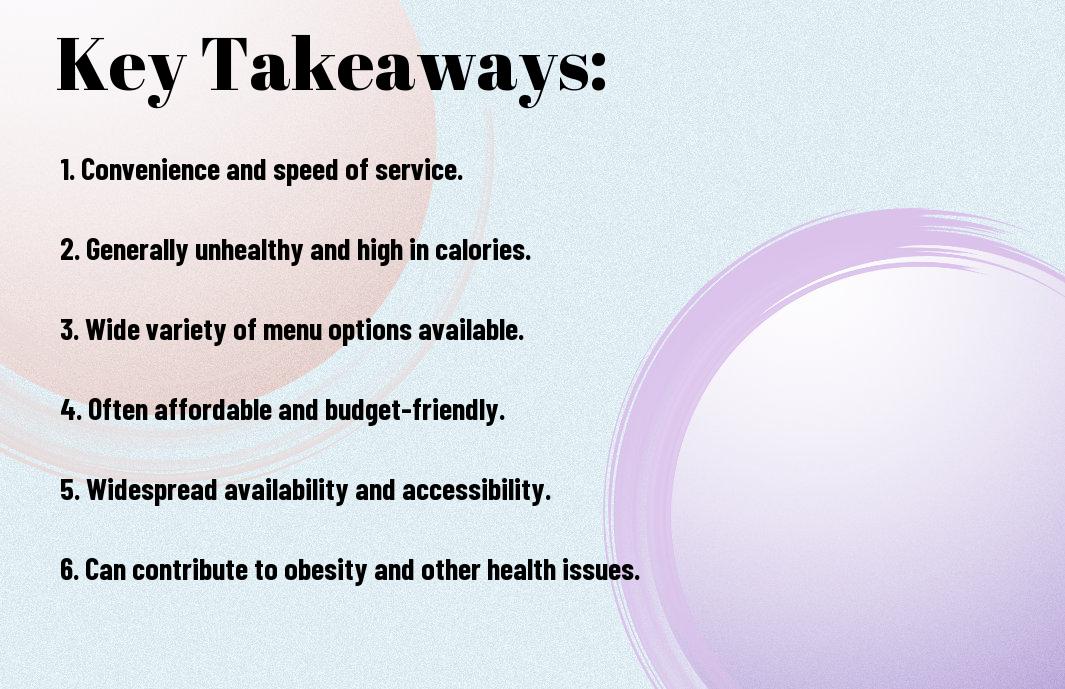
Key Takeaways:
- Convenience: Fast food is known for its quick service and easy accessibility, making it a popular choice for busy individuals.
- Price: Fast food is typically more affordable than dining at a sit-down restaurant, making it budget-friendly for many consumers.
- Taste and Variety: Fast food offers a wide range of flavors and menu options, catering to different tastes and preferences.
Definition and History
Before delving into the intricacies of the fast-food industry, it’s important to understand its roots and how it has evolved over the years. Fast food is a type of mass-produced food that is prepared and served quickly at affordable prices. It is designed for convenience and typically lacks intricate preparation methods found in traditional dining establishments.
Origins of Fast Food
To trace the origins of fast food, you have to go back to ancient civilizations where street vendors sold ready-to-eat food to passersby. However, the modern concept of fast food as we know it today can be attributed to the development of the hamburger in the early 20th century. Fast forward to the post-World War II era, and you see the rise of iconic fast-food chains like McDonald’s, paving the way for the industry’s rapid expansion.
Evolution of the Industry
Evolution of the fast-food industry has been marked by innovation and adaptation to changing consumer preferences. As consumer demand for healthier options and transparency in food sourcing increased, fast-food chains began offering salads, grilled options, and even plant-based alternatives on their menus. Additionally, advancements in technology have revolutionized the way fast food is prepared, ordered, and delivered to customers, creating a more seamless and efficient experience for diners.
Another notable evolution in the industry is the emphasis on sustainability and social responsibility. Many fast-food chains are now taking steps to reduce their environmental impact by implementing recycling programs, sourcing ethically produced ingredients, and supporting local communities through various initiatives. This shift towards a more sustainable approach not only benefits the environment but also resonates with customers who are increasingly conscious of the ethical practices of the businesses they support.
Convenience and Accessibility
Clearly, one of the key points of fast food is its convenience and accessibility. Fast food restaurants are strategically located in numerous neighborhoods, shopping centers, and along highways, making them easily reachable for a quick meal on the go.
Location and Operating Hours
The location of fast food chains is designed with your convenience in mind. You’ll find them in busy areas, near work or schools, and even in airports and train stations. Additionally, most fast food restaurants have extended operating hours, some even open 24/7, allowing you to satisfy your cravings at any time of the day or night.
Drive-Thru and Delivery Options
Location plays a crucial role in the popularity of drive-thru and delivery options provided by fast food chains. Drive-thru services are available at most outlets, enabling you to grab a quick meal without leaving the comfort of your car. Moreover, with the rise of food delivery services, getting your favorite fast food items delivered to your doorstep has never been easier.
Drive-thru and delivery options are designed to make your fast food experience even more convenient. Whether you’re in a rush or simply prefer the convenience of enjoying your meal at home, these services cater to your needs.
Affordability and Value
Unlike 15 Facts and Statistics About The Fast Food Industry that emphasize the fast-paced nature of the fast-food industry, affordability and value play a crucial role in why so many people gravitate towards these convenient dining options. From college students on a budget to families looking for a quick meal on the go, fast food provides a wallet-friendly option that doesn’t break the bank.
Pricing Strategies
To keep prices low and attract customers, fast-food chains employ various pricing strategies. Value menus offer items at discounted rates, making it affordable for you to grab a quick bite without spending too much. Limited-time promotions and combo deals also entice you to purchase more for less, ensuring that you get a satisfying meal without compromising your budget.
Portion Sizes and Meal Deals
Strategies surrounding portion sizes and meal deals are designed to provide you with the best bang for your buck. Whether it’s supersized meals that offer extra value or bundled deals that include multiple items at a discounted price, fast-food chains make sure that you feel like you’re getting a good deal when you choose to dine with them. These options not only save you money but also offer convenience by providing everything you need in one package.
Plus, with the option to customize your order to fit your appetite and preferences, you have the flexibility to create a meal that suits your budget and cravings. Whether you opt for a value meal with a drink and fries or prefer a larger combo for sharing, fast-food chains ensure that there’s something for everyone at a price point that works for you.
Nutrition and Health Concerns
Calorie Counts and Nutritional Content
For many individuals, fast food is a convenient option for meals on the go. However, it is important to be mindful of the calorie counts and nutritional content of these foods. An average fast food meal can easily surpass your daily recommended intake of calories, saturated fats, and sodium. It is crucial to make informed choices by checking nutritional information provided by fast food chains and opting for healthier menu options.
The Impact of Fast Food on Public Health
Nutritional experts have raised concerns about the impact of fast food on public health. Consuming fast food regularly can lead to a variety of health issues such as obesity, heart disease, and diabetes. The high levels of unhealthy fats, sugars, and processed ingredients in fast food can have long-term detrimental effects on your overall well-being. Making conscious decisions to limit your intake of fast food and opting for healthier alternatives can significantly improve your health in the long run.
Fast food consumption has been linked to the rise in obesity rates and other chronic health conditions in many countries. By understanding the potential risks associated with frequent fast food intake, you can take proactive steps to prioritize your health and well-being. Remember that moderation and balance are key when it comes to incorporating fast food into your diet.
Marketing and Advertising
Despite the controversy surrounding fast food and its impact on health, there is no denying that the industry excels in marketing and advertising. Fast food chains invest billions of dollars each year to create enticing campaigns to lure customers through their doors. From catchy jingles to celebrity endorsements, fast food companies spare no expense in promoting their products.
Target Audiences and Demographics
Demographics play a crucial role in the marketing strategies of fast food chains. They carefully analyze data to identify their target audiences and tailor their advertising accordingly. Whether it’s families looking for convenient meal options, young adults seeking affordable choices, or busy professionals needing quick lunches, fast food companies know how to appeal to each demographic group.
Branding and Menu Engineering
To successful fast food chains, branding is everything. They invest heavily in creating a strong brand identity that resonates with their target audience. From logos and slogans to packaging and store design, every aspect of the brand is meticulously designed to create a lasting impression. Menu engineering is another vital aspect of fast food marketing. Chains carefully craft their menus to maximize profits by strategically placing high-profit items, creating combo meals, and upselling customers.
Understanding the psychology of consumer behavior is key to effective branding and menu engineering in the fast food industry. By analyzing trends, preferences, and buying habits, fast food chains can continuously adapt and innovate to stay ahead of the competition. This constant evolution is what keeps customers coming back for more.
Environmental Impact
Now, let’s probe into the environmental impact of fast food. This industry has a significant effect on our planet through various factors such as packaging and waste management.
Packaging and Waste Management
Waste generated by fast-food chains, including single-use packaging, cups, straws, and food waste, contributes to environmental pollution. These items often end up in landfills or oceans, harming wildlife and ecosystems. As a consumer, you can make a difference by opting for brands that prioritize sustainable packaging and recycling initiatives. By reducing your reliance on single-use items and properly disposing of waste, you can play a role in minimizing the environmental footprint of fast food.
Sustainable Practices in the Industry
The fast-food industry is gradually adopting more sustainable practices to mitigate its environmental impact. Some chains are incorporating recyclable or compostable packaging, implementing energy-efficient measures in their operations, and sourcing ingredients from sustainable suppliers. These efforts aim to reduce carbon emissions, conserve resources, and promote accountability within the industry.
The industry’s shift towards sustainability is a positive step forward, but it requires ongoing commitment and innovation to truly make a substantial difference. By supporting fast-food companies that prioritize sustainability and advocating for eco-friendly practices, you can contribute to a greener future for the industry.
Summing up
With these considerations in mind, it is clear that the key points of fast food revolve around convenience, affordability, and taste. Fast food offers an easy solution for busy individuals who are looking for a quick meal on the go. It is also accessible to a wide range of people due to its low cost, making it a popular choice for many. However, it is crucial to be mindful of the nutritional value of fast food options and to consume them in moderation to maintain a balanced diet and a healthy lifestyle.
Q: What are the key points of fast food?
A: Fast food is known for its quick service and convenient options for on-the-go meals. Some key points of fast food include:
- Convenience: Fast food restaurants offer quick and easy meal options for busy individuals or families.
- Affordability: Fast food is typically priced lower than sit-down restaurants, making it a budget-friendly choice for many consumers.
- Varied Menu: Fast food chains offer a wide range of menu items, including burgers, fries, sandwiches, salads, and more, catering to different tastes and preferences.
- Global Reach: Fast food chains have expanded globally, making these familiar options available in many countries worldwide.
- Controversies: Fast food has been criticized for its high levels of salt, sugar, and unhealthy fats, leading to concerns about its impact on health and wellness.
Q: How does fast food impact health?
A: While fast food offers convenience and affordability, it is often high in calories, unhealthy fats, sodium, and sugar. Consuming fast food regularly can lead to health issues such as obesity, high cholesterol, diabetes, and heart disease. It is important to balance fast food consumption with healthier meal choices and regular exercise to maintain overall health.
Q: What are some tips for making healthier choices at fast food restaurants?
A: To make healthier choices at fast food restaurants, consider the following tips:
- Opt for grilled or baked items instead of fried options.
- Choose water, unsweetened tea, or a small serving of soda instead of sugary beverages.
- Select side salads, fruit cups, or yogurt parfaits as alternatives to fries or onion rings.
- Look for menu items with lean protein, whole grains, and plenty of vegetables.
- Pay attention to portion sizes and avoid super-sized or extra-large meals.
By making mindful choices and being aware of nutritional content, you can enjoy fast food occasionally while still prioritizing your health.