simon weiner

How to cure food poisoning fast

It’s crucial to know how to address food poisoning quickly to minimize discomfort and promote recovery. Experiencing symptoms like nausea, vomiting, and diarrhea can be distressing, but there are steps you can take to alleviate these issues effectively. In this guide, you will learn practical tips and remedies to help you feel better faster, so you can get back to your routine without the lingering effects of foodborne illness.

Key Takeaways:

  • Stay Hydrated: Drinking plenty of fluids helps combat dehydration caused by vomiting and diarrhea.
  • Rest: Getting adequate rest allows your body to recover more effectively from food poisoning.
  • Gentle Diet: Gradually introduce bland foods like rice and bananas to soothe your stomach once symptoms start to improve.

Understanding Food Poisoning

A better grasp of food poisoning can help you identify the symptoms and take necessary actions. Food poisoning occurs when you consume contaminated food or drinks, leading to various health issues. Bacteria, viruses, and parasites can all be culprits, affecting your digestive system and overall well-being. It’s necessary to recognize the signs early to manage your recovery effectively.

Types of Foodborne Illnesses

  • Bacterial infections (e.g., Salmonella, E. coli)
  • Viral infections (e.g., Norovirus, Hepatitis A)
  • Parasitic infections (e.g., Giardia, Cyclospora)
  • Toxin-mediated illnesses (e.g., Staphylococcus aureus toxin)
  • Allergic reactions (e.g., Shellfish, nuts)

Perceiving the specific type of foodborne illness you might have encountered is vital for proper treatment.

Type Common Sources
Bacterial Infections Undercooked meat, eggs, unpasteurized dairy
Viral Infections Contaminated water, raw shellfish
Parasitic Infections Undercooked fish, contaminated produce
Toxin-mediated Improperly stored food, fried rice

Common Symptoms and Their Impact

About the most common symptoms of food poisoning include nausea, vomiting, diarrhea, stomach cramps, and fever. These symptoms not only affect your comfort but can also lead to dehydration and more severe health complications if not addressed promptly. Being aware of what you may encounter can help you respond quickly and effectively.

Consequently, recognizing these symptoms early is vital for minimizing complications that could arise during your recovery. You may experience varying intensities of discomfort, often intense enough to disrupt your daily activities. The impact can be further exacerbated depending on your overall health and the severity of the illness. Staying hydrated and seeking medical attention if symptoms persist can greatly improve your recovery process.

Immediate Actions to Take

You should take swift action if you suspect food poisoning. Start by stopping any food intake to give your stomach a chance to settle. Stay hydrated by sipping clear liquids such as water or electrolyte solutions, which can help replace lost fluids and prevent dehydration. Rest your body, as this can assist in recovery. If symptoms persist or worsen, note the specifics, as this information will be valuable for any medical professional if you need to seek further help.

Assessing the Severity of Symptoms

Any signs of severe symptoms should be taken seriously. Look out for high fever, severe abdominal pain, persistent vomiting, or signs of dehydration. If you’re feeling dizzy, weak, or unable to keep fluids down, these could indicate a more serious issue. Evaluating your symptoms will help determine the next steps in your recovery process.

When to Seek Medical Help

Seek medical attention if your symptoms worsen or are accompanied by severe signs such as blood in your stools or prolonged vomiting. These could point to a more serious condition that may require professional intervention.

When evaluating your situation, consider how long you’ve been ill and whether home remedies are not providing alleviation. If symptoms last more than 48 hours or if you’re experiencing excessive dehydration signs, like decreased urination or extreme thirst, it’s advisable to consult a healthcare provider. Early intervention can often lead to quicker relief and prevent complications.

Home Remedies for Relief

Once again, it’s vital to directly address food poisoning’s symptoms to seek effective relief. Home remedies such as ginger tea, peppermint, or apple cider vinegar can help soothe your stomach and reduce nausea. For a more comprehensive understanding of food poisoning, including symptoms, causes, and treatment, visit Food Poisoning: Symptoms, Causes, and Treatment. Always consult a healthcare professional if symptoms persist or worsen.

Hydration Techniques

Remedies for food poisoning often focus on hydration as a priority. Keeping yourself hydrated is vital, as fluids help replace what your body loses through vomiting and diarrhea. Drink plenty of water, or consider electrolyte solutions to replenish lost nutrients and prevent dehydration.

Dietary Adjustments

Relief from food poisoning can often be achieved through careful dietary adjustments. Start with bland foods like bananas, rice, applesauce, and toast (the BRAT diet), which can help settle your stomach without overwhelming your digestive system.

With time, as you begin to feel better, you can gradually reintroduce more solid foods. Avoid spicy, fatty, or fried foods, as well as dairy products, until you’re fully recovered. Listening to your body is key; take note of how different foods affect your symptoms as you progress towards recovery.

Over-the-Counter Medications

To alleviate the symptoms of food poisoning, you can turn to over-the-counter medications that provide quick relief. Products designed to treat nausea, diarrhea, or stomach cramps can help ease your discomfort while your body recovers. Always consult with a healthcare professional if you have any concerns or if symptoms persist beyond a few days.

Anti-nausea Medications

About anti-nausea medications, you can find options such as dimenhydrinate or meclizine that can significantly reduce feelings of nausea and motion sickness. These medications work by blocking signals in the brain that trigger the vomiting reflex, allowing you to rest and recover more comfortably.

Antacids and Digestive Aids

Beside anti-nausea medications, antacids and digestive aids can also help in managing your symptoms. Antacids neutralize stomach acid, providing relief from discomfort and heartburn, while digestive aids can help facilitate a smoother digestive process.

The use of antacids and digestive aids can enhance your recovery from food poisoning by addressing the underlying issues contributing to your discomfort. These medications promote a healthier digestive environment, helping your stomach cope with irritation and aids in the breakdown of food. Familiarizing yourself with these over-the-counter options can empower you to take charge of your recovery.

Preventing Future Incidents

Many people experience food poisoning at some point in their lives, but understanding how to prevent future incidents is important. You can find valuable insights and tips on Food poisoning Information | Mount Sinai – New York. Prioritizing safe food handling practices and being aware of high-risk foods will help you enjoy meals without concern.

Safe Food Handling Practices

Across all stages of food preparation, maintaining safe food handling practices is vital. Wash your hands thoroughly before cooking, clean surfaces, and separate raw foods from prepared foods to avoid cross-contamination. Always store foods at the correct temperatures and ensure that you cook them thoroughly.

Recognizing High-Risk Foods

Practices related to food safety must include recognizing high-risk foods, as they can easily harbor bacteria. Foods such as raw meats, shellfish, unpasteurized dairy products, and certain produce items require special attention. Always be mindful of how these items are stored and prepared.

Considering the nature of high-risk foods, it’s important to handle them with care. For example, raw eggs and undercooked meats can lead to serious foodborne illnesses if not managed properly. You should always check expiration dates and avoid consuming foods that have been left out for extended periods, as this increases the risk of contamination. By understanding which foods require special attention, you can significantly reduce your chances of food poisoning.

Rebuilding Your Gut Health

After experiencing food poisoning, it’s imperative to focus on rebuilding your gut health for a complete recovery. Your digestive system may be weakened, and introducing beneficial foods and practices can help restore the balance of good bacteria. Incorporate fermented foods, stay hydrated, and consider gentle, nutrient-dense meals to support your recovery process. Gradually reintroducing a variety of foods ensures your gut flora can thrive and regain its strength.

Probiotics and Their Benefits

Their role in gut health is significant, as probiotics help restore the balance of good bacteria after an infection. These live microorganisms can enhance digestion, boost your immune system, and reduce inflammation. Adding probiotic-rich foods like yogurt or kefir to your diet can aid in faster recovery, ensuring that your gut is once again operating at its best.

Nutrition for Recovery

On your journey to recovery, focusing on nutrition is vital for replenishing lost nutrients and supporting your overall health. Eating a diet rich in vitamins and minerals, including zinc, vitamin C, and antioxidants, can promote healing and boost your immune system. Light, easily digestible foods, such as bananas, rice, applesauce, and toast, can be gentle on your stomach while providing imperative nutrients.

And don’t neglect hydration; consuming clear fluids like broth or electrolyte solutions can help replace lost fluids and minerals from your body. Incorporate small, frequent meals to avoid overwhelming your digestive system while ensuring you get the nutrients you need. As you recover, transitioning to a balanced diet with fruits, vegetables, whole grains, and lean proteins will further support gut health and overall wellness.

Final Words

Upon reflecting on how to cure food poisoning fast, it’s important that you prioritize hydration and rest to help your body recover quickly. You can consider utilizing over-the-counter medications to alleviate symptoms while ensuring your meals are light and easy to digest. Pay attention to your body’s signals, and avoid food that may exacerbate your condition. If symptoms persist or worsen, seek medical attention promptly. By following these guidelines, you enhance your chances of a swift recovery and can return to your normal activities sooner.

FAQ

Q: What are the common symptoms of food poisoning?

A: Common symptoms of food poisoning include nausea, vomiting, diarrhea, stomach cramps, fever, and fatigue. Symptoms can vary depending on the type of contaminant and may appear within hours to days after consuming contaminated food or beverages.

Q: What should I do immediately after suspecting food poisoning?

A: If you suspect food poisoning, it’s important to stay hydrated. Begin by sipping clear fluids, such as water or an electrolyte drink, to prevent dehydration. Avoid solid foods for the first few hours to allow your stomach to settle. It’s advised to rest as your body works to recover.

Q: Are there any over-the-counter medications I can take to help with food poisoning symptoms?

A: Over-the-counter medications like anti-nausea medications (such as dimenhydrinate) and anti-diarrheal medications (like loperamide) may help alleviate some symptoms. However, it is advisable to consult with a healthcare professional before taking any medication, especially if you have severe symptoms or underlying health conditions.

Q: When should I seek medical attention for food poisoning?

A: Seek medical attention if you experience severe symptoms such as high fever (over 101.5°F or 38.6°C), blood in your stools, continuous vomiting that prevents you from keeping fluids down, or signs of dehydration (such as a decrease in urination, dry mouth, or dizziness). Vulnerable populations, including young children, elderly individuals, and those with weakened immune systems, should also seek medical care early.

Q: What foods and drinks should I avoid during recovery from food poisoning?

A: During recovery, it’s best to avoid spicy, fatty, or fried foods, as well as dairy products and caffeine. Stick to bland foods like toast, rice, bananas, and applesauce to help soothe your stomach. Gradually reintroduce regular foods as you start to feel better, and continue to drink plenty of fluids to stay hydrated.


Is fast food good everyday

With the convenience and affordability of fast food, it may be tempting to indulge in it daily. However, have you ever stopped to consider the long-term effects on your health and well-being? In this blog post, we will probe into the pros and cons of consuming fast food every day, exploring how it can impact your overall health and offering tips for making more informed choices about your daily diet.

Key Takeaways:

  • Limit Consumption: Fast food should not be consumed every day due to its high levels of unhealthy fats, sugars, and sodium.
  • Nutritional Deficiencies: Eating fast food regularly can lead to nutritional deficiencies in important vitamins, minerals, and fiber that are crucial for good health.
  • Health Risks: Regular consumption of fast food has been linked to various health risks including obesity, heart diseases, diabetes, and high blood pressure. It is important to maintain a balanced diet by including a variety of nutrient-rich foods in one’s daily meals.

The Convenience Factor

Before exploring into whether fast food is good to have every day, it’s imperative to consider the convenience factor that draws many people towards it. Fast food is all about saving time in a busy world, offering quick and easy meal options for those on the go.

Saving Time in a Busy World

Saving time is crucial in today’s fast-paced society, where schedules are packed, and time is a precious commodity. Fast food establishments provide a convenient solution for those days when you’re swamped with work, errands, or other responsibilities. Instead of spending hours shopping for ingredients, preparing a meal, and cleaning up afterward, you can grab a quick bite to eat at a fast-food restaurant and continue with your day.

The Ease of Accessibility

Factor in the ease of accessibility that fast food offers, with drive-thru options available in most locations, making it a go-to choice for many busy individuals. For instance, when you’re running late for a meeting or stuck in traffic, being able to quickly swing by a fast-food joint and grab a meal without leaving your car can be a lifesaver. The convenience of fast food extends beyond just saving time; it’s also about being readily available when you need it most.

Nutritional Value

The High Calorie and Fat Content

Even though fast food may be convenient and tasty, it often lacks the nutritional value that your body needs to function at its best. For example, fast food is typically high in calories and saturated fats, which can contribute to weight gain and increase your risk of developing health issues like heart disease and diabetes.

Lack of Essential Vitamins and Minerals

High consumption of fast food can lead to a lack of vital vitamins and minerals in your diet. This is because fast food often lacks sufficient amounts of fruits, vegetables, and whole grains, which are important sources of vitamins, minerals, and dietary fiber that your body needs to stay healthy.

Plus, the cooking methods used in fast food preparation, such as deep-frying, can lead to a loss of nutrients in the food. This means that even if you are consuming some vitamins and minerals from fast food, they may not be as beneficial to your body due to the cooking process.

The Impact on Overall Health

ValueEven though fast food may be convenient and budget-friendly, it can have a significant impact on your overall health. Consuming fast food regularly can lead to weight gain, high cholesterol, high blood pressure, and an increased risk of chronic diseases. This can have long-term consequences on your health and well-being.

Understanding the nutritional value of the food you eat is vital for maintaining a healthy lifestyle. By choosing whole, nutrient-dense foods over fast food options, you can ensure that you are providing your body with the necessary vitamins, minerals, and nutrients it needs to thrive.

The Psychological Aspect

Emotional Eating and Fast Food

For an in-depth look at how fast food affects your body, you can read about Fast Food’s Effects on 8 Areas of the Body. Emotional eating is a common phenomenon where individuals use food as a coping mechanism for stress, sadness, or other emotions. Fast food, with its convenience and affordability, can easily become a go-to choice during times of emotional distress. However, these foods are often high in sugar, fat, and salt, which may provide a temporary feeling of comfort but can lead to negative impacts on your overall well-being in the long run.

The Role of Advertising in Shaping Our Choices

Fast food companies invest significant resources in advertising to create a strong allure around their products. These advertisements often portray fast food as tasty, fun, and a source of happiness. Marketing strategies target your emotions and desires, making you more likely to crave and choose fast food options over healthier alternatives. The constant exposure to these persuasive messages can subconsciously influence your food choices and behaviors.

Another aspect of advertising’s role in shaping our choices is the way it normalizes fast food consumption. Through strategic placements in movies, TV shows, and social media, fast food becomes ingrained in popular culture as a convenient and enjoyable option for meals and snacks. This normalization can make it challenging to resist the temptation of fast food, especially when surrounded by societal cues that suggest it is the norm.

The Social Pressure to Conform

Choices regarding food are often influenced by social pressures to conform to certain norms or expectations. When everyone around you is indulging in fast food without giving much thought to its health implications, you may feel compelled to do the same to fit in. The fear of standing out or being judged for making healthier choices can push you towards opting for fast food even when you know it’s not the best decision for your well-being.

Psychological factors, such as emotional eating, the impact of advertising, and social pressures, play a significant role in how we perceive and consume fast food on a regular basis. Being aware of these influences can help you make more conscious choices that align with your health goals and overall happiness.

The Environmental Impact

After exploring the nutritional implications of consuming fast food every day, it’s time to explore into the environmental impact it has. Fast food chains are notorious for their excessive use of packaging, leading to a significant amount of waste that ends up in landfills and oceans.

Packaging Waste and Its Consequences

With the convenience of fast food comes a hidden cost – packaging waste. From plastic containers to paper wrappers, the sheer volume of packaging used for one meal is astonishing. Unfortunately, much of this packaging is not biodegradable and adds to the growing pollution crisis our planet is facing. The consequences of this packaging waste are dire, with marine life often mistaking plastic for food, leading to ecosystem imbalances and harm to wildlife.

The Carbon Footprint of Fast Food Production

Packaging isn’t the only environmental concern when it comes to fast food. The carbon footprint of fast food production is substantial, with the industrial farming of livestock being a significant contributor to greenhouse gas emissions. The transportation of ingredients and the energy-intensive processes involved in mass-producing fast food also add to this carbon footprint.

Understanding the carbon footprint of fast food production is necessary in realizing the environmental impact of your daily food choices. By opting for fast food every day, you are unknowingly contributing to the acceleration of climate change and environmental degradation.

Sustainable Alternatives to Traditional Fast Food

One way to mitigate the environmental impact of fast food is to explore sustainable alternatives. Choosing food options that prioritize locally sourced, organic ingredients can significantly reduce the carbon footprint associated with your meals. Additionally, supporting eateries that use eco-friendly packaging and practices can help minimize waste and promote sustainability in the food industry.

Fast food doesn’t have to be synonymous with environmental harm. By making conscious choices and opting for sustainable alternatives, you can enjoy the convenience of fast food without compromising the health of our planet.

The Economic Perspective

The Cost of Fast Food on a Daily Basis

Your daily consumption of fast food may seem convenient and affordable, but have you considered the long-term costs it incurs on your health and wallet? While fast food chains offer quick and cheap options, frequent indulgence can lead to health issues like obesity, heart disease, and diabetes, resulting in hefty medical bills down the road. Additionally, the seemingly low upfront cost of fast food meals may add up over time, draining your financial resources.

The Impact on Local Economies and Small Businesses

Perspective is key when evaluating the impact of fast food on local economies and small businesses. While multinational fast food chains may create jobs and contribute to the economy, they often overshadow smaller, local eateries that struggle to compete. This shift towards large fast food corporations can lead to a homogenized dining culture, erasing the unique flavors and experiences that small businesses bring to communities.

Small businesses are the lifeblood of local economies, adding character and diversity to neighborhoods. By supporting these establishments over fast food chains, you not only preserve the charm of your community but also help sustain the livelihoods of independent entrepreneurs.

The Role of Government Subsidies in the Fast Food Industry

To understand the full picture of the fast food industry, it’s imperative to probe into the role of government subsidies. These subsidies, often provided to agriculture sectors that produce key ingredients for fast food, can artificially lower the cost of production for big fast food chains. This, in turn, perpetuates the cycle of cheap, unhealthy food options dominating the market, influencing consumer choices and fueling the demand for fast food.

In considering the impact of government subsidies on the fast food industry, one must reflect on how these policies shape our food landscape and influence our daily dietary decisions. By recognizing the role of subsidies in promoting certain food industries, you can make more informed choices about the foods you consume and support businesses that align with your values.

The Social Consequences

The Normalization of Unhealthy Eating Habits

Not all habits are beneficial. When fast food becomes a daily choice, it can lead to the normalization of unhealthy eating habits. The convenience and affordability of fast food may make it tempting to rely on it frequently, but this can contribute to poor dietary choices and overconsumption of calories, fats, and sugars.

The Influence on Children’s Eating Habits

To influence a child’s development is to shape their future. The exposure to fast food from a young age can have a lasting impact on children’s eating habits. When fast food is regularly consumed in childhood, it can create a preference for processed and unhealthy foods, setting the stage for potential health issues later in life.

The influence of fast food marketing targeted at children through toys, colorful packaging, and appealing mascots can further solidify these unhealthy eating habits. This can lead to a cycle of poor nutrition that not only affects the child’s health but also their relationship with food as they grow.

The Impact on Community Health and Well-being

Plus, communities are not immune to the effects of widespread fast food consumption. The prevalence of fast food restaurants in neighborhoods can contribute to a decline in community health and well-being. When fast food becomes a staple in the local food environment, it can lead to higher rates of obesity, diabetes, and other diet-related diseases among residents.

Habits formed within a community can influence the health outcomes of its members. The accessibility and affordability of fast food compared to healthier options can perpetuate poor dietary choices, affecting the overall well-being of the community as a whole.

Understanding the Importance of Balanced Nutrition

Understanding the social consequences of relying on fast food as a daily dietary option is crucial. By acknowledging the normalization of unhealthy eating habits, the influence on children’s developing food preferences, and the impact on community health and well-being, you can make more informed choices about your food consumption. Balanced nutrition is key to maintaining your health and the well-being of those around you.

To wrap up

Considering all points discussed in this article, it is evident that consuming fast food every day may not be the healthiest choice for your overall well-being. While it may be convenient and satisfying in the short term, the long-term consequences on your health, weight, and energy levels can be significant. It’s important to prioritize nutritious, balanced meals for your daily diet to maintain a healthy lifestyle.

Do not forget, moderation is key when it comes to fast food. Enjoy it occasionally as a treat, but be mindful of the potential negative effects it can have on your body if consumed regularly. Your health is a valuable asset, so make informed choices about the foods you consume to ensure a happy and healthy future.

Q: Is it healthy to eat fast food everyday?

A: Consuming fast food on a daily basis can lead to health problems such as obesity, high blood pressure, and heart disease due to its high levels of unhealthy fats, sugars, and sodium.

Q: Can fast food be a part of a balanced diet if eaten occasionally?

A: Yes, fast food can be enjoyed in moderation as part of a balanced diet. It is important to choose healthier options, such as grilled chicken sandwiches or salads, and to balance fast food with nutrient-dense foods like fruits, vegetables, and whole grains.

Q: What are some tips for making healthier choices at fast food restaurants?

A: To make healthier choices at fast food restaurants, opt for grilled or baked items instead of fried, choose water or unsweetened beverages instead of sugary drinks, and include more vegetables by swapping fries for a side salad. It’s also helpful to check the nutritional information provided by the restaurant and to avoid super-sized or extra-large portions.

How to stop food poisoning before it starts

There’s nothing worse than experiencing food poisoning, but you can take proactive steps to minimize your risk. Understanding safe food handling practices is vital in preventing illness before it starts. By following key guidelines, including proper food storage, cooking temperatures, and hygiene techniques, you can protect yourself and your loved ones. For more detailed information, you may want to check the Food poisoning – Diagnosis and treatment from Mayo Clinic. Let’s explore how you can keep yourself safe from foodborne illnesses.

Key Takeaways:

  • Hand Hygiene: Always wash your hands thoroughly with soap and water before handling food to prevent the spread of harmful bacteria.
  • Food Storage: Keep perishable foods refrigerated at safe temperatures (below 40°F) to slow down bacterial growth.
  • Cooking Temperatures: Ensure that foods, especially meats, are cooked to the appropriate internal temperatures to kill any pathogens.
  • Cross-Contamination: Use separate cutting boards and utensils for raw meats and ready-to-eat foods to avoid cross-contamination.
  • Regular Cleaning: Clean kitchen surfaces and utensils regularly to eliminate bacteria that may cause food poisoning.

Understanding Food Poisoning

As a crucial element of food safety, understanding food poisoning helps you take preventive measures to protect yourself and your loved ones. Food poisoning occurs when you consume contaminated food or beverages, often resulting from bacteria, viruses, or parasites. Recognizing the causes and symptoms can empower you to make safer food choices and reduce your risk of falling ill.

Common Causes

On any given day, you could encounter numerous sources of food contamination, such as improper food storage, undercooked meals, and cross-contamination. Common culprits include pathogens like Salmonella, E. coli, and Norovirus, which thrive in improperly handled or poorly prepared foods. Being aware of these risks is crucial to keeping your cooking environment safe.

Symptoms and Risks

Causes of food poisoning can manifest through various symptoms that range from mild to severe. You might experience nausea, vomiting, diarrhea, stomach cramps, and fever, which could derail your daily activities. In more severe cases, food poisoning can lead to dehydration or complicate existing health conditions, making it necessary to recognize these signs promptly.

This underscores the importance of understanding symptoms and risks associated with food poisoning. Effective prevention strategies can mitigate the chances of experiencing these uncomfortable symptoms, ensuring that your meals remain enjoyable and safe. By being vigilant about food safety practices, you enhance your well-being and that of your family, minimizing the potential dangers of foodborne illnesses.

Best Practices for Food Safety

While food poisoning can be a serious health concern, there are effective ways you can prevent it before it starts. Understanding and implementing best practices for food safety is key to ensuring that your meals are safe and enjoyable. If you do find yourself dealing with food poisoning, Here Are The Best Ways To Treat Food Poisoning.

Proper Handwashing Techniques

Best practices for handwashing include washing your hands with soap and warm water for at least 20 seconds, especially before handling food. Make sure to scrub all parts of your hands, including between your fingers and under your nails, to thoroughly remove any bacteria and contaminants.

Safe Food Storage Methods

Handwashing is vital, but it’s equally important to store your food safely. Store raw meat, poultry, and seafood in the refrigerator at the bottom shelf to prevent drips and cross-contamination. Make sure to keep your leftovers in airtight containers and refrigerate within two hours of cooking.

Storage also involves knowing how to organize your fridge and pantry. Always check expiration dates and rotate your food items by using the FIFO (First In, First Out) method to ensure that older items are used before newer ones. Keeping your storage areas clean and organized helps to minimize food waste and the risk of spoilage.

Cooking Temperatures

Food safety hinges on cooking your food to the right temperatures. Use a food thermometer to check that poultry reaches an internal temperature of 165°F, ground meats should hit 160°F, and seafood should be cooked to at least 145°F.

Cooking Temperature Guidelines

Food Type Safe Internal Cooking Temperature
Poultry 165°F
Ground Meat 160°F
Seafood 145°F
Eggs 160°F

Methods for verifying that you’re cooking your food to the proper temperatures include using a reliable food thermometer and knowing the signs of doneness for various food types. This not only ensures that harmful bacteria are killed but also enhances the overall quality and safety of your meals. Being diligent about cooking temperatures can drastically reduce your chances of foodborne illness.

Food Purchasing Tips

To ensure your food choices contribute to your health rather than detract from it, follow these vital food purchasing tips:

  • Buy from reputable stores with a good turnover of products.
  • Check for damages or bruises on products.
  • Choose the right packaging—look for sealed and intact packages.
  • Avoid bulk bins if they appear unkempt or are not well-maintained.
  • Be mindful of the environment—seasonal produce is often fresher.

The right food purchasing habits can significantly reduce your risk of food poisoning.

Selecting Fresh Produce

For selecting fresh produce, always opt for items that look vibrant and unblemished. Check for firmness in fruits and vegetables to ensure they are ripe and have not started to spoil. If possible, ask about their source to confirm freshness. Additionally, washing your produce before consumption, even if it’s pre-packaged, can help eliminate any residual pathogens.

Checking Expiration Dates

Produce caution when checking expiration dates on all food products.

Another crucial aspect of food safety is being diligent about checking expiration dates. Always pick products with the latest expiration or “best by” dates, as older items may have a higher likelihood of causing foodborne illnesses. This practice not only applies to perishable goods but also to dry and canned foods. When shopping, ensure you regularly check the dates on every item in your cart to make informed choices.

Understanding Labels

Food labels provide important information regarding ingredients and safety standards.

This information is vital, as labels can help you decipher what’s safe to consume. Look for terms like “pasteurized,” “organic,” or “no preservatives” to make healthier choices. Understanding labels also involves recognizing allergen information and ensuring your dietary needs are met. Be vigilant; misleading labels can obscure the presence of harmful additives or unsafe ingredients that lead to food poisoning.

Preventive Measures at Home

All foodborne illnesses can be prevented with the right practices at home. Educating yourself on safe food handling and hygiene can help prevent instances of food poisoning. For more information about Food Poisoning: Signs & Symptoms, Treatment, Causes, you can visit Cleveland Clinic’s website.

Cleaning and Sanitizing Surfaces

One of the most effective ways to prevent food poisoning is by thoroughly cleaning and sanitizing all surfaces that come into contact with food. Use hot soapy water and a disinfectant approved for kitchen use to clean counters, cutting boards, and utensils after each use. Regularly sanitizing these areas eliminates harmful bacteria that may lead to foodborne illnesses.

Avoiding Cross-Contamination

Avoiding cross-contamination is vital in your kitchen. Always use separate cutting boards for raw meats and vegetables. This practice significantly reduces the risk of transferring harmful bacteria from uncooked foods to those that will be consumed raw. It’s also advisable to store raw meats on lower shelves in your refrigerator to prevent juices from dripping onto other foods.

The key to avoiding cross-contamination lies in keeping raw and cooked foods apart. Make it a habit to wash your hands, utensils, and surfaces between handling different food types. Additionally, employ color-coded cutting boards to further distinguish between raw and cooked items. By adhering to these guidelines, you create a safer food preparation environment.

Educating Family Members

With proper education, your family members can play an active role in food safety. Teach them the importance of washing hands before handling food, cooking meats to the appropriate internal temperatures, and storing leftovers promptly. When everyone is aware of these critical practices, the risk of food poisoning decreases significantly.

Understanding safe food handling is vital for the health of your family. Engage your loved ones in discussions about food safety and encourage them to ask questions. Create a food safety checklist that everyone can follow, ensuring that each member of your household shares responsibility for maintaining a safe kitchen environment. Together, you can minimize the risks and enjoy your meals worry-free.

To Wrap Up

Following this guide can significantly reduce your risk of food poisoning before it starts. By practicing proper food handling, ensuring cleanliness in your kitchen, cooking food to the right temperatures, and being mindful of expiration dates, you protect yourself and your loved ones. Additionally, maintaining good hygiene, such as washing your hands regularly, plays a pivotal role in food safety. By implementing these preventive measures, you can confidently enjoy your meals without the worry of foodborne illness.

FAQ

Q: What are the best practices for food handling to prevent food poisoning?

A: To prevent food poisoning, it’s necessary to follow proper food handling practices. Always start by washing your hands thoroughly with soap and water for at least 20 seconds before and after handling food. Keep raw and cooked foods separate to avoid cross-contamination; use different cutting boards and utensils for meats and vegetables. Cook foods to the appropriate temperatures to kill harmful bacteria (e.g., 165°F for poultry). Refrigerate perishables within two hours to minimize bacterial growth, and ensure your refrigerator is set to 40°F or below.

Q: How can I ensure that my fruits and vegetables are safe to eat?

A: To ensure the safety of fruits and vegetables, start by purchasing produce from reputable sources. Before consuming, wash all fruits and vegetables under running water, scrubbing firm produce with a brush. Peel or cook produce when possible, as heat can kill harmful microbes. Avoid eating any produce that appears bruised or damaged, as this can encourage the growth of bacteria. If you’re consuming salad greens or pre-cut produce, make sure they are refrigerated properly and check for freshness before consumption.

Q: What precautions should be taken when cooking food, especially in bulk?

A: When cooking food, especially in large quantities, it’s important to take several precautions. First, make sure your cooking area, including surfaces and utensils, is clean. Use a food thermometer to ensure that all dishes reach safe internal temperatures. If you’re cooking large batches, divide them into smaller portions after cooking to cool them down more quickly, as this helps prevent bacteria from proliferating. Store leftovers in airtight containers within two hours of cooking, and always reheat to at least 165°F before consuming. Additionally, be mindful of the ‘first in, first out’ principle when using leftovers to ensure you consume older food first.

What are the first signs of food poisoning

With an increasing number of foodborne illnesses reported each year, it’s important for you to recognize the early signs of food poisoning. These symptoms can manifest suddenly and vary in severity, impacting your daily life. By understanding what to look for, you can take prompt action to safeguard your health and seek medical attention when necessary. This article will guide you through the common early indicators you should be aware of, ensuring you are equipped to react appropriately if you suspect food poisoning.

Key Takeaways:

  • Nausea: One of the initial symptoms often experienced after consuming contaminated food.
  • Vomiting: This may occur shortly after nausea and is a common reaction to eliminate harmful substances.
  • Diarrhea: Frequent loose or watery stools can develop as the body tries to rid itself of toxins.

Understanding Food Poisoning

Before experiencing the discomfort of food poisoning, it’s important to grasp its nature. Food poisoning occurs when you consume contaminated food or beverages, potentially leading to a range of unpleasant symptoms. Awareness of this condition can equip you to make safer food choices and understand the risks associated with certain foods.

Definition and Causes

About food poisoning, it is defined as an illness resulting from ingesting pathogens, such as bacteria, viruses, or parasites, present in contaminated food or drinks. Common causes include improper food handling, undercooked meals, and cross-contamination, which can put you at risk for these infections.

Common Pathogens

Foodborne illnesses can be attributed to various pathogens, including bacteria such as Salmonella, E. coli, and Listeria. Viruses like Norovirus and parasites like Giardia are also common offenders. Each of these pathogens can lead to severe gastrointestinal symptoms and other health complications.

In addition to bacteria, viruses, and parasites, contaminated food can also host toxins produced by some pathogens, leading to food poisoning. You may encounter these harmful germs in raw or undercooked meats, unwashed fruits and vegetables, or improperly stored leftovers. Understanding the origins of these pathogens can empower you in preventing potential foodborne illnesses.

Early Symptoms of Food Poisoning

There’s a range of early symptoms that can indicate food poisoning. These symptoms often appear within hours or days after consuming contaminated food or beverages. You might experience nausea, vomiting, diarrhea, abdominal cramps, and fatigue. Staying alert to these signs can help you manage your condition more effectively and seek medical attention if necessary.

Gastrointestinal Signals

For many individuals, gastrointestinal signals are the first indicators of food poisoning. You may notice sudden stomach pain or cramping, followed by symptoms such as diarrhea and vomiting. These reactions occur as your body attempts to rid itself of the harmful substances you’ve ingested, and they can vary in intensity and duration.

Systemic Reactions

Behind gastrointestinal symptoms, systemic reactions can manifest as part of the body’s overall response to food poisoning. These reactions might include fever, chills, fatigue, and muscle aches, which suggest that your immune system is actively fighting off infection. It’s crucial to pay attention to how your body feels during this time.

Gastrointestinal issues can lead you to overlook systemic reactions as you focus on immediate discomfort. However, systemic responses often signal that your body is experiencing a more significant infection. If combined with gastrointestinal symptoms, these immune-related reactions may indicate a severe case of food poisoning or specific pathogens such as Salmonella or E. coli. Monitor your symptoms closely, as severe systemic reactions may necessitate urgent medical care.

Factors Influencing Severity

After experiencing the initial symptoms of food poisoning, various factors can influence the severity of your condition. These factors include:

  • Type of contaminant
  • Individual health status
  • Amount of contaminated food consumed
  • Time elapsed since consumption

The combination of these elements can determine how your body reacts.

Type of Contaminant

By understanding the type of contaminant that caused your food poisoning, you can gauge potential severity. Common contaminants include bacteria, viruses, and parasites, each varying in potency and symptoms they provoke. For instance, E. coli may lead to severe gastrointestinal distress, while Norovirus typically causes milder symptoms.

Individual Health Status

The severity of food poisoning can largely depend on your individual health status. If you have pre-existing conditions, such as a weakened immune system or chronic illnesses, your body may struggle more to combat the infection, leading to heightened symptoms and complications.

Individual health conditions can significantly affect your response to foodborne illnesses. For those with conditions like diabetes, heart disease, or autoimmune disorders, risks increase due to compromised immune functions. Old age and pregnancy also heighten vulnerability. It’s necessary to consider your health history, as it may impact recovery and the likelihood of complications stemming from food poisoning.

Frequently Affected Foods

Not all foods carry the same risk for food poisoning, but a few types appear more frequently in incidents. Common culprits include undercooked meats, raw eggs, unpasteurized dairy, leafy greens, and shellfish. Eating these foods, especially when they are improperly handled or not cooked to the correct temperatures, increases your likelihood of experiencing foodborne illness. Being aware of these high-risk items can help you make safer choices in your diet.

High-Risk Categories

HighRisk foods typically include meats, especially poultry and beef, as well as seafood and eggs, which can harbor harmful pathogens. Additionally, dairy products that are not pasteurized are at greater risk. Vegetables, particularly when consumed raw or minimally processed, can also contribute to foodborne illnesses. Understanding these categories can guide you in selecting safer foods and preparing meals properly.

Safe Food Handling Practices

Foods must be handled properly to minimize the risk of contamination. Always wash your hands before and after handling food, and be sure to clean all utensils and surfaces that come into contact with raw ingredients. Cook meats to their recommended temperatures, refrigerate perishables promptly, and avoid cross-contamination by keeping raw and cooked foods separate.

Hence, incorporating safe food handling practices is important for safeguarding your health. You should consistently wash your hands before preparing meals, use separate cutting boards for raw meats and vegetables, and make sure to cook foods to the right temperatures. Storing leftovers correctly and consuming them within recommended timeframes further reduces the risk of foodborne illnesses. Adopting these habits ensures a safer and healthier dining experience for you and your loved ones.

When to Seek Medical Attention

For those experiencing potential food poisoning symptoms, it’s important to know when to seek medical attention. If you find that your symptoms are severe or worsening—such as persistent vomiting, high fever, or signs of dehydration—it’s vital to consult a healthcare professional. Additionally, if symptoms last more than 48 hours or if you notice blood in your stools, do not hesitate to seek medical help immediately to ensure appropriate treatment.

Warning Signs

Before you dismiss your discomfort, be aware of specific warning signs that indicate a need for urgent medical care. Symptoms such as difficulty breathing, chest pain, severe abdominal pain, or confusion should never be ignored. These indicators may suggest a more serious condition requiring immediate attention, so trusting your instincts is crucial.

At-Risk Populations

At certain times, specific groups of individuals are at a higher risk for severe food poisoning complications. This includes young children, the elderly, pregnant women, and individuals with weakened immune systems. If you belong to any of these demographics, it’s crucial to be vigilant and seek medical advice sooner, as your body may not cope with the infection as effectively as healthier adults.

Populations such as young children and the elderly may have less robust immune responses, making them more susceptible to the severe effects of food poisoning. Pregnant women must also exercise caution since foodborne illnesses can negatively impact both mother and fetus. Individuals with chronic illnesses or weakened immune systems face similar risks, making it vital for these populations to seek medical help at the first sign of concerning symptoms.

Prevention Strategies

Now that you understand the signs of food poisoning, implementing effective prevention strategies is vital. Start by ensuring that you handle, prepare, and store food safely. Awareness of the conditions that lead to foodborne illnesses can save you from potential health complications. Always prioritize cleanliness and proper cooking techniques.

Food Safety Guidelines

Across various food preparation settings, adhering to food safety guidelines is vital. This includes washing hands frequently, maintaining clean surfaces, and avoiding cross-contamination. Keeping food at safe temperatures can drastically reduce the chances of foodborne pathogens proliferating, helping you enjoy your meals without worry.

Personal Hygiene Practices

By following good personal hygiene practices, you can greatly reduce the risk of food contamination. Always wash your hands thoroughly before and after handling food, and keep your nails trimmed and clean. Wearing clean clothing and an apron can also minimize the risk of introducing harmful bacteria into your cooking environment.

Also, consider your kitchen habits—make it a point to tie back long hair and avoid touching your face while preparing food. Clean your utensils and cutting boards frequently, especially after handling raw meat or produce. Implementing these personal hygiene practices can significantly enhance the safety of your food and protect you from food poisoning risks.

Conclusion

Considering all points, recognizing the early symptoms of food poisoning, such as nausea, vomiting, diarrhea, and stomach cramps, can help you take timely action. If you experience any of these signs after eating, it’s vital to stay hydrated and consult a healthcare professional if symptoms persist. For more detailed information on the symptoms, causes, and treatment of food poisoning, you can visit Food poisoning – symptoms, causes and treatment.

FAQ

Q: What are the first signs of food poisoning?

A: The initial signs of food poisoning can vary depending on the type of bacteria or virus involved. Common early symptoms include nausea, vomiting, diarrhea, stomach cramps, and fever. These symptoms may appear within hours or days after consuming contaminated food or beverages.

Q: How quickly can food poisoning symptoms appear?

A: Symptoms of food poisoning can manifest within a few hours to several days after exposure to contaminated food or drink. For instance, Staphylococcus aureus may cause symptoms within 1 to 6 hours, while other pathogens, such as Salmonella or E. coli, may take 12 to 72 hours before symptoms are evident.

Q: Are there specific high-risk foods that can cause food poisoning?

A: Yes, certain foods are more likely to cause food poisoning. High-risk items include raw or undercooked meats, poultry, and seafood; unpasteurized dairy products; eggs; and fresh produce that has not been thoroughly washed. It’s important to handle and cook these foods properly to minimize the risk of food poisoning.

Q: Can food poisoning symptoms be mistaken for other illnesses?

A: Yes, symptoms of food poisoning can often resemble those of other illnesses, such as the stomach flu or other gastrointestinal infections. Nausea, vomiting, and diarrhea are common to many conditions. However, if these symptoms persist or worsen, it’s important to seek medical advice for a proper diagnosis.

Q: When should someone seek medical attention for food poisoning?

A: Medical attention should be sought if symptoms are severe or persistent. Signs that warrant a visit to a healthcare professional include prolonged vomiting or diarrhea, high fever, signs of dehydration (such as dry mouth and excessive thirst), or bloody stools. Vulnerable populations, such as pregnant women, the elderly, or individuals with weakened immune systems, should seek medical help sooner if they experience food poisoning symptoms.

What color is food poisoning vomit

Food poisoning can cause a range of symptoms, including vomiting, which can vary in color. You may wonder what the color of vomit indicates about the severity and type of foodborne illness you are experiencing. This post will provide you with imperative information about the different colors of vomit associated with food poisoning, helping you better understand your symptoms and when to seek medical attention. From green and yellow to blood-tinged hues, knowing what to look for can aid in your recovery and ensure your well-being.

Key Takeaways:

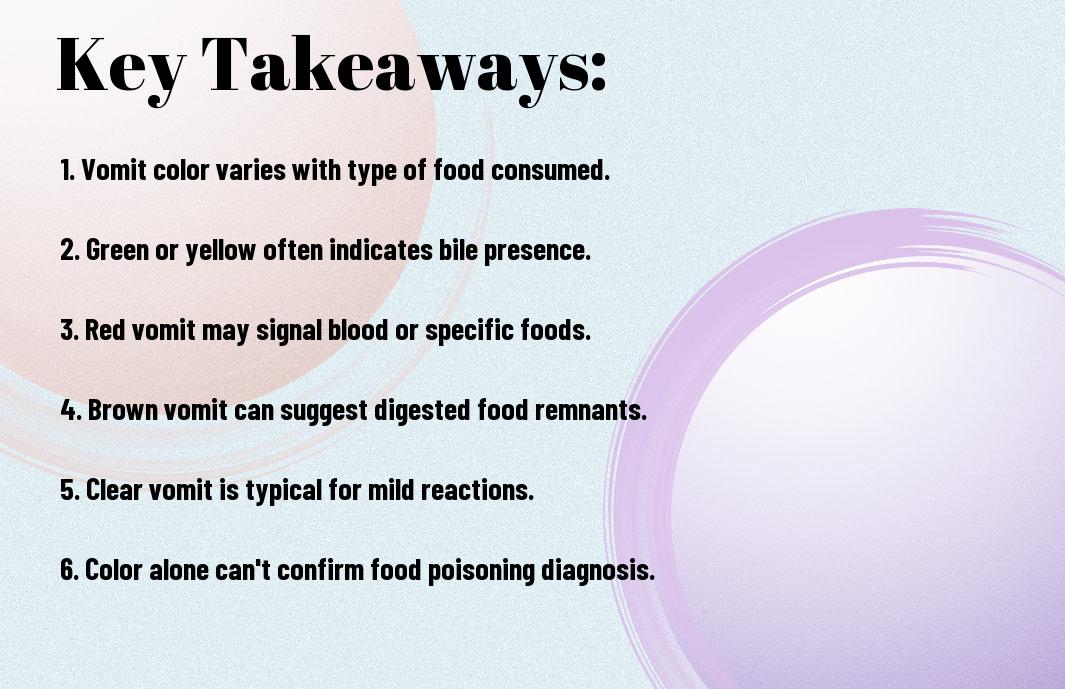
  • Color Variation: Food poisoning vomit can vary in color, often appearing yellow, green, or brown, depending on the type of food consumed and the person’s digestive state.
  • Presence of Blood: Vomiting blood, indicated by red or dark brown color, may signal a serious condition requiring immediate medical attention.
  • Severity Indication: The color and consistency of vomit can indicate the severity of food poisoning; lighter colors may suggest milder cases, while darker hues often point to more severe reactions.

Understanding Food Poisoning

Your knowledge of food poisoning can help you avoid potential health risks. Food poisoning occurs when you consume contaminated food or beverages, leading to a range of symptoms that can manifest within hours or days. Understanding the causes and symptoms can empower you to make safer food choices.

Definition and Causes

Below are several reasons why you may experience food poisoning. Common culprits include bacteria like Salmonella, E. coli, and Listeria, as well as viruses such as Norovirus. Improper food handling, cooking, or storage can lead to contamination, making you susceptible to foodborne illnesses.

Common Symptoms

Common symptoms of food poisoning include nausea, vomiting, diarrhea, abdominal pain, and fever. These symptoms can vary in severity, depending on the type of contaminant and your individual health.

This condition can lead to dehydration and other complications if not managed properly. In general, symptoms can last from a few hours to several days. It is important to stay hydrated and seek medical attention if your symptoms persist or worsen, ensuring that you address any serious health concerns promptly.

The Color of Vomit

One common aspect of food poisoning is the color of vomit, which can vary significantly based on various factors. These colors can range from clear to yellow, green, or brown, and can often provide insight into the source of the gastrointestinal distress. It is important to pay attention to the vomit color as it may indicate the severity of your condition and the presence of specific toxins or irritants in your system.

Factors Influencing Vomit Color

On your journey to understanding vomit color, several factors influence its appearance. These include:

  • Diet: The foods you consumed prior to vomiting
  • Hydration levels: Dehydration can lead to concentrated vomit
  • Medical conditions: Underlying health issues may alter vomit color

Perceiving these variations offers valuable context for your symptoms and may prompt you to seek medical advice.

Interpretation of Vomit Colors

Across various contexts, the interpretation of vomit colors can provide vital clues about your health. Understanding what each color may signify can aid in better assessing your condition and determining the urgency of your situation.

Further exploration into vomit colors highlights specific meanings. For instance, green or yellow vomit may indicate the presence of bile, which typically suggests that your stomach is empty. Brown vomit may be a sign of digested blood, prompting immediate medical attention. Clear vomit could hint at excessive water intake or an empty stomach. Recognizing these indicators will empower you to respond appropriately if food poisoning occurs.

Specific Colors and Their Significance

For many, the color of vomit can signal the underlying cause of food poisoning. Understanding these colors may help you gauge the severity of your condition and whether you need to seek medical attention. Colors like green, yellow, red, and brown each hold significance that you should be aware of, as they can inform you about what’s happening inside your body. Being knowledgeable about these indicators can aid you in making informed decisions about your health.

Green or Yellow Vomit

Specific shades of vomit, such as green or yellow, often indicate that your body is expelling bile. This typically happens when your stomach is empty, and your digestive system is reacting strongly to the toxins. If you notice these colors, it may suggest your food poisoning episode is particularly severe, highlighting the need for careful monitoring of your symptoms and hydration levels.

Red or Brown Vomit

Against common assumptions, red or brown vomit can be alarming and suggests the presence of blood or old blood in the gastrointestinal tract. This discoloration may arise from severe irritation or damage, requiring immediate medical evaluation to determine the underlying cause.

Consequently, if you experience red or brown vomit, it’s necessary to pay close attention to other symptoms you might be encountering, such as abdominal pain or dizziness. These can indicate more severe conditions, such as gastrointestinal bleeding, warranting urgent attention from a healthcare professional. Always prioritize your health and consult a doctor if you observe these troubling signs.

Diagnosis and Treatment

Despite the discomfort food poisoning causes, diagnosing the condition typically involves a thorough review of your symptoms and potential exposure to contaminated food. Healthcare providers may suggest testing your stool to identify the specific pathogen responsible. Treatment often focuses on hydration and rest, as most cases resolve without the need for medication. In severe instances, antibiotics or other therapies may be necessary, especially if a bacterial infection is involved.

When to Seek Medical Help

For certain symptoms such as persistent vomiting, high fever, or signs of dehydration like dry mouth and dizziness, seeking medical assistance promptly is important. If your symptoms worsen or do not improve within a few days, contact a healthcare professional for further evaluation and potential treatment options.

Preventive Measures

When preparing or consuming food, maintaining proper hygiene is important to reduce the risk of food poisoning. Ensure that you wash your hands thoroughly before and after handling food, cook meals to the appropriate temperatures, and store leftovers promptly in the refrigerator.

Plus, be vigilant about the food you purchase; always check expiration dates and prefer to buy from reputable sources. Avoid cross-contamination by using separate cutting boards and utensils for raw and cooked foods. Understanding safe food handling practices can significantly lower your chances of experiencing foodborne illnesses.

Personal Accounts and Case Studies

Many individuals have documented their experiences with food poisoning, shedding light on the various symptoms and colors of vomit they encountered. Here are some case studies to consider:

  • Case Study 1: A 30-year-old male reported bright yellow vomit after consuming undercooked fish, diagnosed with Vibrio parahaemolyticus infection.
  • Case Study 2: A family of four exhibited dark green vomit after a picnic, linked to spoiled mayonnaise-based dishes.
  • Case Study 3: An 18-year-old female experienced brown vomit after eating beef tacos contaminated with E. coli.
  • Case Study 4: A child showed clear, watery vomit following consumption of expired dairy products, confirmed as a case of norovirus.

Anecdotal Experiences

Along your journey through various dining experiences, you may hear anecdotes from friends and family about their own food poisoning episodes. These stories often highlight unusual colors of vomit and emphasize the distressing effects of contaminated food on personal health.

Expert Opinions

Around the world, health professionals emphasize the importance of understanding the symptoms associated with food poisoning. They often note that the color of your vomit can provide insights into the type of foodborne illness you may be dealing with.

Plus, experts state that the analysis of vomit color can indicate the severity and type of food poisoning, as greens may suggest spoiled vegetables while browns can indicate gastrointestinal bleeding. Understanding this information can empower you to seek the appropriate medical care early, ensuring better health outcomes in the event of a foodborne illness.

Myth vs. Reality

Keep in mind that many misconceptions surround the color of vomit associated with food poisoning. People often believe that specific colors directly indicate the severity or type of food poisoning. However, this is not always the case, as various factors can influence vomit color, making it necessary to look beyond just the hue for accurate information.

Misconceptions about Vomit Color

Before stepping into the reality of vomit color, it’s necessary to unpack some common misconceptions. Many assume that green or yellow vomit always signals a severe health issue, while others believe that different colors can reveal the specific type of food poisoning. These beliefs, while prevalent, can lead to unnecessary panic and misinterpretation of symptoms.

Facts to Consider

After debunking those myths, it’s vital to focus on facts that contribute to the understanding of vomit color during food poisoning. The color of vomit can vary due to several elements, including the contents of your stomach, hydration levels, and the specific food that caused the reaction. It’s important to consider these factors rather than jumping to conclusions based solely on color.

To make informed decisions regarding your health, observe all symptoms, not just vomit color. Various conditions can influence coloration, such as bile presence or the type of food consumed. If you experience persistent vomiting, especially accompanied by other alarming symptoms like fever or dehydration, seek medical attention. Relying solely on vomit color may divert your focus from recognizing the overall health issue at hand.

Conclusion

Presently, understanding the color of food poisoning vomit can help you identify possible health issues. Typically, vomit can vary in color from clear to yellow, green, brown, or even red, depending on what you have consumed and the severity of your condition. If you are concerned about your symptoms, it’s advisable to consult a healthcare professional. You can refer to a detailed Vomit Color Chart: Throwing-Up Yellow, Green, Black or Red to better understand the implications of your vomit color.

FAQ

Q: What color is food poisoning vomit?

A: Food poisoning vomit can vary in color, commonly appearing yellow, green, or even brown. The color can be influenced by the type of food consumed and how long it’s been in the stomach. Yellow vomit is often bile, which indicates that the stomach is empty, while greenish hues may indicate the presence of bile or undigested food. Brown vomit may result from partially digested food mixed with bile.

Q: Why does the color of vomit change with food poisoning?

A: The color of vomit can change due to several factors, including the type of food that was ingested, the time it’s spent in the digestive system, and the body’s reaction to toxins. When food is vomited, digestive juices, including bile, can mix with the contents, altering the color depending on what was eaten and how long it’s been in the stomach.

Q: Is green vomit a sign of food poisoning?

A: While green vomit can be a symptom of food poisoning, it does not exclusively indicate this condition. Green vomit is often associated with bile, which can occur when the body expels stomach contents due to irritation or infection, including foodborne illnesses. Other causes, such as certain medical conditions or bile reflux, can also lead to green vomit.

Q: Can the color of vomit indicate the severity of food poisoning?

A: The color of vomit itself does not directly indicate the severity of food poisoning. However, it can provide some insight into the body’s state. If vomiting is accompanied by blood or a persistent change in color, it may suggest a more serious condition that warrants medical attention. It’s important to assess other symptoms, such as dehydration and abdominal pain, for a better evaluation.

Q: When should I seek medical help for vomit color changes?

A: You should seek medical assistance if vomit appears consistently in unusual colors, such as red or dark brown, which can indicate blood or digested blood. Additionally, if vomiting persists for an extended time, is accompanied by severe abdominal pain, fever, or signs of dehydration (such as reduced urination or dry mouth), it is advisable to consult a healthcare professional for guidance and treatment.

Why is fast food junk food

With fast-paced lifestyles and convenience at the forefront, it’s easy to see why fast food has become a staple in your diet. However, have you ever stopped to think about why it’s often referred to as “junk food”? Let’s probe into the reasons behind why fast food may not be the healthiest option for your body and well-being.

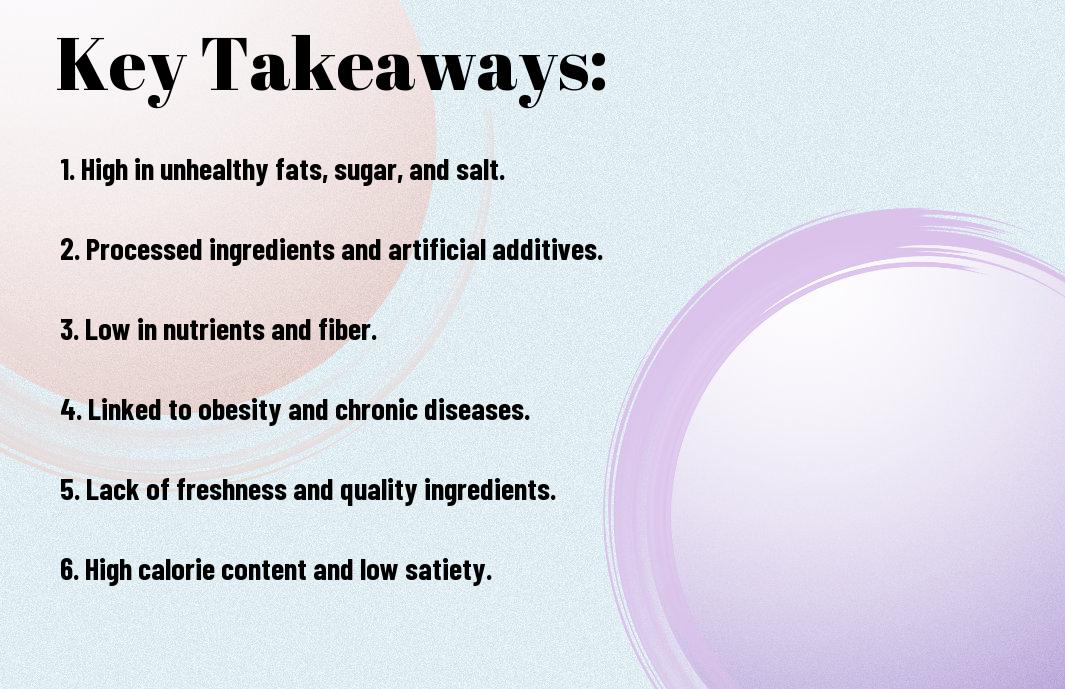
Key Takeaways:

  • High in unhealthy ingredients: Fast food is often high in added sugars, saturated fats, and sodium, which can contribute to various health problems.
  • Lack of nutrients: Many fast food items lack crucial nutrients like vitamins, minerals, and fiber, leading to an unbalanced diet.
  • Highly processed: Fast food is heavily processed, which can strip away natural nutrients and lead to poor nutritional value in the final product.

The Definition of Junk Food

Your indulgence in fast food comes with the baggage of consuming what is commonly known as junk food. But what exactly classifies a meal as junk food? Let’s probe into the definition of this culinary culprit.

Nutritional Value

Nutritional value plays a pivotal role in categorizing food as junk. Fast food lacks necessary nutrients like vitamins, minerals, and fiber, while being high in unhealthy fats, sugar, and salt. This imbalance can lead to various health issues in the long run if consumed frequently.

Ingredients and Additives

Any food item laden with artificial ingredients, preservatives, and additives usually falls under the junk food category. These substances are added to enhance flavor, texture, and shelf life but offer little to no nutritional benefit. Excessive consumption of such additives has been linked to adverse health effects.

For instance, many fast food items contain high fructose corn syrup, artificial flavors, and colors, which not only lack nutritional value but may also have negative impacts on your health when consumed in excess. Being mindful of these additives can help you make healthier choices when it comes to food selection.

The Rise of Fast Food Industry

Historical Background

Fast food as we know it today has its roots in the post-World War II era. In the 1950s, the fast food industry started to boom in America with the growth of franchised restaurants like McDonald’s, Burger King, and KFC. These restaurants offered quick, convenient, and affordable meals that catered to the busy lifestyles of Americans.

Marketing Strategies

Industry giants like McDonald’s revolutionized the way food was marketed to the masses. Their clever advertising campaigns targeted children and families, creating a culture of convenience and indulgence around fast food. Through slogans, mascots, and toy giveaways, fast food companies ingrained themselves into popular culture, making their products appealing and irresistible.

To further entice consumers, fast food chains strategically placed their restaurants near schools, workplaces, and busy intersections. The convenience of grabbing a quick meal on the go became a norm, shaping eating habits and preferences for generations to come.

The Unhealthy Truth About Fast Food

High Calorie and Fat Content

Many fast food options are loaded with high calories and unhealthy fats, making them a significant contributor to weight gain and obesity. These foods are often deep-fried or processed with added oils and sugars, increasing their caloric content and negating any nutritional value they may have had.

Low in Essential Nutrients

Fast food is typically low in imperative nutrients such as vitamins, minerals, and fiber. When you consume fast food regularly, you may be missing out on the vital nutrients your body needs to function properly. This can lead to deficiencies and overall poor health over time.

Another issue with fast food is its lack of diversity in terms of food groups. Most fast food items revolve around simple carbs, unhealthy fats, and protein sources that are often laden with preservatives and additives. This imbalance in nutrients can have long-term consequences on your health.

Link to Chronic Diseases

Essential research has shown a strong link between frequent fast food consumption and the development of chronic diseases such as heart disease, diabetes, and obesity. The high levels of saturated fats, trans fats, and sodium in fast food can wreak havoc on your cardiovascular system and metabolism, leading to serious health conditions.

This highlights the importance of being mindful of your fast food intake and opting for healthier, balanced meal options whenever possible. Making small changes in your eating habits can have a significant impact on your long-term health and well-being.

The Impact on Public Health

Obesity Epidemic

Keep in mind that fast food is a major contributor to the obesity epidemic that is sweeping the nation. When you regularly consume fast food, you are loading your body with high levels of unhealthy fats, sugars, and calories. These meals often lack vital nutrients and fiber, leading to overeating and weight gain.

Increased Risk of Diabetes and Heart Disease

Epidemic

Fast food consumption has been linked to an increased risk of developing serious health conditions such as diabetes and heart disease. The excessive intake of processed sugars and unhealthy fats in fast food can lead to insulin resistance, weight gain, and ultimately, type 2 diabetes. Additionally, the high levels of sodium in fast food can contribute to hypertension and cardiovascular diseases.

A

Moreover, the harmful trans fats found in many fast food items can raise bad cholesterol levels in your body, further increasing the risk of heart disease. It’s vital to be mindful of these health risks and consider healthier food options to protect your well-being in the long run.

Effects on Mental Health

Any

It’s crucial to note that your food choices can also impact your mental health. Studies have shown that a diet high in fast food and processed foods may increase the risk of mental health disorders such as depression and anxiety. The lack of vital nutrients in fast food can affect brain function and mood regulation, potentially leading to negative mental health outcomes.

Public

By being aware of the detrimental effects that fast food can have on your physical and mental well-being, you can make informed choices to prioritize your health. Consider opting for whole, nutrient-rich foods that nourish your body and support overall wellness. Your health is precious, so take the necessary steps to care for it wisely.

The Environmental Cost of Fast Food

Packaging Waste

For every fast-food meal you consume, think about the amount of packaging waste that is generated. From the paper wrappers to the plastic cups and utensils, fast food is notorious for producing excessive amounts of single-use packaging that typically ends up in landfills or polluting our oceans. By choosing fast food, you are contributing to this environmental burden of packaging waste that takes hundreds of years to decompose.

Resource Depletion

The fast-food industry heavily relies on natural resources for its production processes. Agriculture for meat and crops, water for cooking and processing, and fossil fuels for transportation all play a significant role. The demand for these resources by the fast-food industry can lead to overexploitation and depletion of natural ecosystems. This can result in deforestation, water scarcity, and habitat destruction, impacting biodiversity and the overall health of the planet.

Depletion of natural resources due to the fast-food industry can have far-reaching consequences, affecting not only the environment but also communities that rely on these resources for their livelihoods. By being mindful of your consumption choices and opting for sustainable food options, you can help mitigate the negative effects of resource depletion.

Contribution to Climate Change

With the widespread production and consumption of fast food, the industry significantly contributes to climate change. Livestock farming for meat production releases greenhouse gases like methane and carbon dioxide, while the transportation of ingredients and finished products adds to the carbon footprint. These practices exacerbate global warming and environmental degradation.

For instance, deforestation for cattle ranching to meet the demand for fast-food burgers not only leads to habitat loss but also releases stored carbon into the atmosphere, further intensifying the effects of climate change. By reducing your intake of fast food and choosing more sustainable food options, you can play a part in mitigating the harmful impact of the fast-food industry on our planet’s climate.

The Social and Economic Consequences

Exploitation of Workers

All too often, fast food chains exploit their workers to keep costs low and profits high. As an individual who enjoys quick meals at these establishments, you may not realize the harsh realities faced by the workers behind the scenes. Many employees in fast food restaurants are paid minimum wage or even less, forced to work long hours without proper breaks or compensation. This exploitation of workers not only impacts their quality of life but also contributes to wider economic inequalities.

Unfair Business Practices

For fast food giants, unfair business practices are all too common. From dodging taxes to underpaying suppliers, these corporations prioritize profit margins over ethical considerations. This means that while you might be enjoying a cheap meal, there are systemic issues at play that perpetuate exploitation and inequality within the industry.

To add to the issue of unfair business practices, fast food chains often engage in aggressive marketing tactics that target vulnerable populations, such as children and low-income communities. By promoting unhealthy food choices through enticing advertisements and promotions, they contribute to the rising rates of obesity and other health problems in these communities.

Impact on Local Communities

Social and economic consequences of fast food extend beyond worker exploitation and unfair business practices. The establishment of these chains in local communities can lead to a decline in small businesses, loss of cultural diversity, and even negative health outcomes. By dominating the market and offering cheap, unhealthy options, fast food outlets can displace local eateries and contribute to the homogenization of food choices.

With the shift towards fast food consumption, communities lose out on the social aspects of dining and supporting local businesses. This not only affects the economic sustainability of the community but also diminishes the sense of connection and belonging that comes from shared meals and local culinary traditions. As you grab a quick meal from a fast food chain, consider the broader implications it has on the fabric of your community.

Summing up

To wrap up, fast food is considered junk food due to its high levels of unhealthy fats, sugars, and sodium. Consuming fast food frequently can lead to various health problems such as obesity, heart disease, and diabetes. Additionally, the lack of important nutrients in fast food can leave you feeling unsatisfied and craving more unhealthy options. It is important to be mindful of your fast food consumption and prioritize fresh, whole foods to maintain a balanced and healthy diet.

Q: Why is fast food considered junk food?

A: Fast food is considered junk food because it is typically high in calories, unhealthy fats, and added sugars. It tends to be low in nutrients like fiber, vitamins, and minerals. Consuming too much fast food can contribute to weight gain, obesity, and various health problems.

Q: How does frequent consumption of fast food affect health?

A: Frequent consumption of fast food can have negative effects on health. It can lead to an increased risk of obesity, heart disease, type 2 diabetes, and other chronic conditions. Fast food is often high in sodium, which can contribute to high blood pressure and an increased risk of stroke.

Q: What are some healthier alternatives to fast food?

A: Some healthier alternatives to fast food include preparing meals at home using fresh ingredients, opting for whole foods like fruits, vegetables, lean proteins, and whole grains. In addition, choosing restaurants that offer healthier options like salads, grilled proteins, and whole grain options can help reduce the consumption of unhealthy fast food.

What is the fastest way to flush out food poisoning

Most people who experience food poisoning want immediate relief and a swift recovery. Understanding how to flush out the toxins effectively can help alleviate your symptoms and restore your health. In this guide, you will discover practical steps you can take to expedite the detoxification process, maintain hydration, and manage your recovery more efficiently. By following these recommendations, you can help your body eliminate harmful substances and feel better in no time.

Key Takeaways:

  • Hydration: Stay well-hydrated by drinking plenty of water or clear fluids to help flush out toxins from your system.
  • Rest: Allow your body to recover by getting enough rest, which can expedite the healing process.
  • Ginger or Peppermint: Consider consuming ginger or peppermint tea, as these can help soothe nausea and improve digestion.
  • Avoid Solid Foods: Initially, stick to a bland diet; avoid solid foods until symptoms subside to reduce strain on your digestive system.
  • Seek Medical Attention: If symptoms persist for more than a couple of days or worsen, don’t hesitate to contact a healthcare professional.

Understanding Food Poisoning

The term food poisoning refers to an illness that arises from consuming contaminated food or beverages. It’s often caused by bacteria, viruses, or parasites that can lead to various uncomfortable symptoms. Understanding the underlying causes, identifiable symptoms, and the necessary treatment is imperative for navigating this unpleasant experience.

Common Causes

Causes of food poisoning typically include undercooked meats, contaminated fruits and vegetables, unpasteurized dairy products, and improper food handling practices. You can inadvertently expose yourself to harmful pathogens through cross-contamination and inadequate refrigeration. Understanding these risks can help you make safer food choices.

Symptoms to Look Out For

With food poisoning, you might experience a range of symptoms, including nausea, vomiting, diarrhea, abdominal cramps, and fever. Some individuals may experience more severe reactions, which can require medical intervention. Knowing these symptoms is crucial for recognizing when you need to act quickly.

A clear understanding of the symptoms not only helps you manage your comfort but also determines when to seek medical attention. While most cases of food poisoning resolve within a few days, severe symptoms—such as persistent high fever, dehydration, and bloody stools—indicate a more serious condition. If you encounter these alarming signs, it is vital to consult a healthcare professional for further evaluation and treatment.

Immediate Actions to Take

You should take immediate action if you suspect food poisoning to help minimize symptoms and discomfort. Start by implementing vital measures that can aid in flushing out the toxins from your system effectively.

Hydration and Electrolyte Balance

Any instance of food poisoning can lead to dehydration due to vomiting and diarrhea. It’s crucial to replenish lost fluids and electrolytes by drinking clear fluids, such as water, broth, or electrolyte solutions. Aim for small sips frequently to prevent overwhelming your stomach.

Resting the Digestive System

On feeling the symptoms of food poisoning, it’s vital to allow your digestive system to rest. Avoid solid foods for several hours, giving your body time to recover from the stress caused by the illness.

Actions you take to rest your digestive system include refraining from eating until you are feeling better, which can help minimize irritation and allow your body to focus on healing. Once symptoms begin to subside, begin with bland, easy-to-digest foods, such as bananas, rice, applesauce, and toast (often referred to as the BRAT diet). This gradual reintroduction of food can support your recovery while ensuring that your digestive system is not overwhelmed.

Home Remedies and Treatments

Your journey to recovery from food poisoning may be supported with various home remedies and treatments. It’s imperative to stay well-hydrated and gently nourish your body as you heal. For a comprehensive guide on How To Recover From Food Poisoning Fast, consider seeking professional advice as well.

Natural Remedies to Support Recovery

One effective way to enhance your recovery is through natural remedies. Ginger tea can help soothe your stomach, while peppermint is known to ease nausea. Additionally, consuming clear broths can provide hydration and imperative nutrients without overwhelming your digestive system.

Over-the-Counter Medications

One option to alleviate your symptoms involves over-the-counter medications. These can be beneficial in managing discomfort such as diarrhea and nausea, enabling you to feel more at ease during recovery.

With various options available, medications like loperamide can reduce diarrhea, while bismuth subsalicylate can help calm your stomach and prevent further digestive issues. However, you should consult a healthcare professional before using these remedies, especially if your symptoms persist or worsen. Always ensure you follow the recommended dosages to avoid potential complications.

When to Seek Medical Help

Many individuals can manage mild cases of food poisoning at home, but it’s important to recognize when professional intervention is necessary. If your symptoms worsen or persist, seeking medical help can be crucial in preventing complications and ensuring your well-being.

Signs of Severe Food Poisoning

Signs of severe food poisoning include high fever, prolonged vomiting, severe abdominal pain, or blood in your stool. If you experience these symptoms, it’s vital to act quickly, as they may indicate a more serious infection that requires urgent medical care.

Professional Treatments Available

On the other hand, professional treatments for food poisoning typically involve rehydration therapies, medications to ease symptoms, and, in some cases, antibiotics to combat bacterial infections. Healthcare providers may also conduct tests to identify the specific pathogen causing your condition, allowing for targeted treatment.

Seek medical attention if your symptoms escalate or if you belong to a high-risk group, such as pregnant women, the elderly, or individuals with compromised immune systems. Medical professionals can provide tailored interventions based on the severity of your symptoms and help rule out any underlying complications, ensuring a quicker and more effective recovery.

FAQ

Q: What are the initial steps to take if I suspect food poisoning?

A: If you suspect food poisoning, the first step is to stop eating any additional food. Stay hydrated by drinking plenty of fluids, such as water or electrolyte solutions, to replace lost fluids. Rest is vital as your body needs energy to combat the illness. If symptoms persist for more than 24 hours, or if you experience severe symptoms like high fever, bloody diarrhea, or dehydration, seek medical attention immediately.

Q: Are there any specific foods or remedies that can help flush out food poisoning quickly?

A: While there isn’t a universal ‘quick fix’ for food poisoning, certain remedies may help alleviate symptoms. Clear fluids like broth or non-caffeinated drinks can aid hydration. Ginger tea may help settle your stomach and reduce nausea. Bananas, rice, applesauce, and toast (the BRAT diet) are gentle foods that can be reintroduced slowly as your stomach begins to feel better. Avoid dairy, caffeine, alcohol, and fatty foods until you’re back to normal.

Q: How long does it typically take to recover from food poisoning, and when should I be concerned?

A: Recovery from food poisoning can vary depending on the pathogen involved but typically occurs within a few days to a week. If symptoms such as vomiting, diarrhea, or nausea worsen or persist beyond 48 hours, or if you show signs of severe dehydration (like extreme thirst, dry mouth, little or no urination, or dizziness), it’s crucial to seek medical help. Some types of food poisoning may require more intensive treatment, so don’t hesitate to consult a healthcare professional.

How long can food poisoning last

With the potential to disrupt your daily life, food poisoning is a prevalent concern that affects countless individuals every year. Understanding how long you can expect symptoms to last is crucial for managing your health and well-being. This guide will explore the various factors that influence the duration of food poisoning, including the type of pathogen involved and your individual health status. Knowing what to look for can help you take appropriate action, ensuring you recover as quickly as possible.

Key Takeaways:

  • Duration Varies: The duration of food poisoning can range from a few hours to several days, depending on the type of bacteria or virus involved.
  • Common Symptoms: Typical symptoms like nausea, vomiting, diarrhea, and stomach cramps may persist for 24 to 72 hours.
  • Severity Matters: Severe cases, particularly those caused by pathogens such as E. coli or Salmonella, can last up to a week or longer and may require medical intervention.
  • Hydration Is Crucial: Staying hydrated is important, especially if symptoms last for more than a couple of days, to avoid dehydration.
  • Seek Help If Needed: If symptoms persist beyond 5 days or worsen, it’s imperative to consult a healthcare professional for appropriate treatment.

Understanding Food Poisoning

The experience of food poisoning can often be unsettling and inconvenient. It’s vital to recognize what food poisoning entails, its common causes, and how to respond effectively. For a deeper look into How Long Food Poisoning Lasts and What To Do About It, you can follow the link to gain more insights.

Definition of Food Poisoning

One of the most common health issues you can encounter, food poisoning arises from consuming contaminated food or beverages. The contaminants may include bacteria, viruses, or parasites, leading to various symptoms that can affect your wellbeing.

Common Causes

To understand food poisoning better, knowing its common causes is crucial. In most cases, it is the ingestion of food contaminated by harmful pathogens that leads to foodborne illness.

Causes of food poisoning vary widely, but commonly include improper food handling, inadequate cooking, or cross-contamination between raw and cooked foods. Other significant factors include consuming expired or improperly stored foods, as well as seafood that may be tainted with harmful microorganisms. By being aware of these factors, you can take steps to minimize your risk and ensure the safety of your meals.

Duration of Symptoms

There’s no one-size-fits-all answer when it comes to the duration of food poisoning symptoms. The length of time you experience discomfort can vary based on several factors, including the type of pathogen involved, your overall health, and how quickly you receive treatment. For detailed information, you can refer to Food poisoning – Symptoms and causes.

Typical Timeframes

With most cases of food poisoning, symptoms typically appear within hours to a few days after exposure. Generally, your recovery can take anywhere from 24 hours to several days, depending on the specific bacteria or virus causing your illness. You may find that some symptoms, like nausea or fatigue, persist even after the more acute symptoms have subsided.

Factors Influencing Duration

Duration can be influenced by various factors, including the type of pathogen, your age, and any underlying health conditions you may have. Here are some key considerations:

  • Type of foodborne pathogen involved.
  • Your immune system’s strength.
  • Hydration and nutrition during illness.
  • Timeliness and effectiveness of treatment.

Knowing these factors can help you better understand your experience and recovery time.

Duration varies not just with the pathogen but also with how effectively you manage symptoms and care for yourself. For instance, staying hydrated can significantly impact your recovery timeline. Here are additional aspects to consider:

  • Previous experience with foodborne illnesses.
  • Access to medical care.
  • Overall lifestyle and health habits.

Knowing these can provide you with a clearer picture of what to expect during your recovery.

Timeframes

Timeframes can vary widely; therefore, it’s crucial to be prepared for a range of experiences. While most symptoms resolve within a few days, some specific illnesses linked to contaminated food sources might have longer-lasting effects. You should remain aware of any persisting symptoms and consult a healthcare professional if necessary.

Types of Food Poisoning

After understanding the effects of food poisoning, it’s important to recognize the different types that can affect your health. Each type of food poisoning has distinct characteristics and can stem from various sources. Below is a brief overview of the major types:

  • Bacterial Infections
  • Viral Infections
  • Parasitic Infections
  • Toxin-induced Poisoning
  • Chemical Food Poisoning

Knowing the type of food poisoning you may be dealing with can help you seek appropriate treatment and avoid future occurrences.

Type Description
Bacterial Infections Caused by harmful bacteria like Salmonella or E. coli.
Viral Infections Often stem from viruses like norovirus or hepatitis A.
Parasitic Infections Involve parasites such as Giardia or Cryptosporidium.
Toxin-induced Poisoning Related to toxins produced by bacteria or found in food.
Chemical Food Poisoning Results from chemicals like pesticides or heavy metals.

Bacterial Infections

One of the most common causes of food poisoning is bacterial infections. These occur when you consume food contaminated with pathogenic bacteria. Symptoms typically include diarrhea, stomach cramps, and fever. High-risk foods include undercooked meats, dairy products, and unwashed vegetables. Quick intervention is often necessary to manage symptoms effectively.

Viral Infections

Any virus can lead to food poisoning, often resulting in gastrointestinal symptoms. Common culprits include norovirus and hepatitis A, which are highly contagious. These infections can cause nausea, vomiting, and abdominal pain after the consumption of contaminated food or water. Understanding how these viruses spread can help you take preventive measures.

Bacterial pathogens, while a significant concern, are not the only infectious agents. Viral infections can spread rapidly in settings like cruise ships or events where food is shared. Ensuring proper personal hygiene and safe food handling practices can minimize your chances of infection. Regular hand washing and cooking foods to the right temperatures are key preventive strategies.

Parasitic Infections

An additional concern in food safety is parasitic infections, which result from consuming food or water containing parasites. Symptoms may range from mild gastrointestinal discomfort to severe illness. Common parasites include Giardia and Cryptosporidium, often found in contaminated water or undercooked food. Recognizing these sources can help you avoid infection.

Parasitic infections, although less common than bacterial or viral ones, can lead to long-term health issues if not treated. They thrive in unsanitary conditions, making it crucial for you to practice safe food preparation and proper sanitation. By maintaining cleanliness in your kitchen and ensuring that your food is cooked thoroughly, you can reduce your risk of these infections significantly.

Prevention and Management

Your health and safety are paramount when it comes to food consumption. Understanding how to prevent food poisoning can equip you with the tools to safeguard yourself and others.

Safe Food Handling Practices

To prevent food poisoning, always practice safe food handling techniques. This includes washing your hands before and after handling food, cooking meats to the appropriate internal temperatures, and ensuring that perishable items are stored at the right temperatures to inhibit bacterial growth. Regularly clean and sanitize surfaces and utensils to reduce the risk of contamination.

When to Seek Medical Attention

Handling food poisoning can be tricky, as symptoms can vary widely in severity. If you experience severe symptoms, such as high fever, persistent vomiting, or dehydration, it’s crucial to seek medical attention immediately.

Food poisoning can escalate quickly and may lead to serious complications if left untreated. Symptoms that merit immediate medical attention include blood in your stool, prolonged diarrhea lasting more than three days, and signs of dehydration such as dizziness, dry mouth, or decreased urination. Taking prompt action can help you avoid more severe health issues and ensure you receive appropriate treatment.

To wrap up

The duration of food poisoning can vary significantly depending on the type of pathogen involved and your overall health. Symptoms may last from a few hours to several days, and in some cases, complications can prolong your recovery. It’s vital to stay hydrated and consult a healthcare professional if your symptoms persist or worsen. For detailed information on the Symptoms of Food Poisoning | Food Safety, access reliable sources to help you recognize when to seek medical attention.

Q: How long can food poisoning symptoms last?

A: The duration of food poisoning symptoms can vary widely depending on the type of pathogen involved and the individual’s health. Generally, symptoms can last anywhere from a few hours to several days. For most healthy adults, symptoms from common foodborne illnesses like Salmonella or E. coli typically last between 1 to 7 days. However, in some cases, like with Norovirus, symptoms may resolve in as little as 24 to 48 hours. It’s important to stay hydrated and seek medical attention if symptoms persist or worsen.

Q: What factors affect the duration of food poisoning?

A: Several factors can influence how long food poisoning lasts. These include the specific bacteria, virus, or toxin that caused the illness, the individual’s overall health and immune system response, the amount of contaminated food consumed, and whether the person has any underlying health conditions. For instance, young children, the elderly, and those with compromised immune systems may experience longer-lasting symptoms. Additionally, certain pathogens, such as Listeria or Hepatitis A, can lead to prolonged illness and require medical intervention.

Q: When should I seek medical attention for food poisoning symptoms?

A: It’s crucial to seek medical attention if you experience severe symptoms of food poisoning, which may include persistent vomiting, high fever (above 101.5°F), blood in stool, severe dehydration, or if symptoms last longer than 3 days. Additionally, vulnerable populations like pregnant women, infants, the elderly, or individuals with weakened immune systems should consult a healthcare provider promptly. Early medical intervention can help manage symptoms and prevent complications.

What's the difference between fast food and fast casual

Fasten your seatbelt as we probe the world of fast food and fast casual dining. Have you ever wondered about the nuances that separate grabbing a quick bite from a fast food joint versus enjoying a more laid-back meal at a fast casual restaurant? In this article, we explore the distinctions between the two popular dining options and help you navigate your way through the culinary landscape. If you’re curious to learn more, check out Fast Casual vs Fast Food – A Comparative Guide for a deeper dive.

Key Takeaways:

  • Customization: Fast casual restaurants offer more customizable and healthier options compared to fast food chains.
  • Service: Fast casual restaurants typically provide better service with features such as table delivery and higher quality ingredients.
  • Price: Fast casual restaurants are often slightly more expensive than fast food chains, but the higher quality of food justifies the price difference.

Defining Fast Food

Origins and Evolution

Evolution. The concept of fast food can be traced back to ancient civilizations, where people would consume pre-prepared foods sold by street vendors for quick and convenient meals. However, the modern fast food industry as we know it today emerged in the 20th century, with the rise of iconic chains like McDonald’s and Burger King.

Characteristics of Traditional Fast Food

Evolution. Traditional fast food is characterized by its emphasis on speed, affordability, and convenience. These establishments typically have a limited menu, offer items for takeaway or drive-thru, and prioritize efficiency in service to cater to the on-the-go consumer.

It’s important to note that traditional fast food often involves standardized menu items, assembly-line production processes, and a focus on uniformity across locations. This uniformity allows fast food chains to deliver consistent experiences to customers wherever they may be.

The Rise of Fast Casual

There’s a growing trend in the food industry that has caught the attention of many: the rise of fast casual restaurants. If you’re curious about what sets these establishments apart from traditional fast food chains, you can learn more about the differences between a quick service restaurant and fast casual dining here.

Emergence of a New Category

Rise of fast casual restaurants marks a shift in consumer preferences towards healthier, higher-quality food options that are still served quickly. These establishments offer a middle ground between fast food and casual dining, providing a more upscale experience without the long wait times often associated with sit-down restaurants.

Key Features of Fast Casual Restaurants

  • Customizable menu options
  • Fresh, high-quality ingredients
  • Open kitchen concept
  • Modern and inviting ambiance

Any meal on-the-go can be a more fulfilling and enjoyable experience when you opt for a fast casual restaurant.

Fast casual restaurants have gained popularity for their emphasis on customization, allowing you to tailor your meal to your preferences. With a focus on fresh ingredients and quicker service than traditional dining establishments, these eateries offer a convenient yet satisfying dining experience.

Emergence of fast casual restaurants has disrupted the food industry by combining the speed of fast food with the quality of casual dining, appealing to consumers looking for a balance between convenience and culinary excellence.

Menu and Pricing

Fast Food: Affordable and Standardized

After taking a look at the menus of fast food chains, you’ll notice that they often offer affordable pricing with standardized options. These chains have set menus that remain consistent across locations, providing you with familiar choices no matter where you go. The pricing is usually budget-friendly, making it convenient for those looking for a quick and inexpensive meal on the go.

Fast Casual: Upscale Options and Customization

To understand the difference, fast-casual establishments like Chipotle or Panera Bread offer upscale options with a focus on customization. At these restaurants, you have the opportunity to tailor your meal to your liking, choosing ingredients and toppings to create a personalized dish. While the pricing may be slightly higher compared to fast food, the quality of ingredients and the made-to-order nature of your meal add value to the overall dining experience.

The atmosphere at fast-casual restaurants also tends to be more inviting, with modern decor and comfortable seating arrangements that make you feel like you’re dining in a trendy bistro rather than a traditional fast food joint. This blend of quality ingredients, customization, and ambiance contributes to a slightly elevated dining experience compared to fast food.

Service Style and Ambiance

Fast Food: Quick and Efficient

Fast food restaurants are known for their quick and efficient service. You can expect to place your order at the counter, receive your food within minutes, and be on your way in no time. The focus is on speed and convenience, with limited interaction with the staff beyond placing your order.

Fast Casual: Comfortable and Inviting

For fast casual establishments, the service style is more relaxed and the ambiance is comfortable and inviting. You can typically expect to order at the counter or at a kiosk, and then have your food brought to your table. The atmosphere is more upscale than traditional fast food restaurants, with a focus on a pleasant dining experience.

For instance, fast casual restaurants often have modern decor, comfortable seating, and sometimes even offer beer and wine options. It’s a step up from fast food in terms of both service and ambiance, making it a popular choice for those looking for a quick meal in a more pleasant setting.

Quality and Sourcing

Fast Food: Processed and Mass-Produced

Many people tend to associate fast food with processed and mass-produced ingredients. When you walk into a typical fast-food restaurant, you may not give much thought to where the food comes from or how it was made. The emphasis in fast food is on speed and convenience, leading to a reliance on pre-packaged and highly processed foods that are often high in salt, sugar, and unhealthy fats. This type of food is optimized for consistency and efficiency in large quantities.

Fast Casual: Fresh and Sustainably Sourced

Unlike fast food, fast casual restaurants prioritize fresh and sustainably sourced ingredients. When you step into a fast casual eatery, you may notice a more transparent approach to food preparation. Fast casual establishments often highlight locally sourced produce, organic meats, and sustainable seafood on their menus. This focus on quality ingredients contributes to a more wholesome and flavorful dining experience.

Fast casual restaurants like to emphasize the quality and origins of their ingredients. By sourcing produce from local farms and prioritizing sustainable practices, these establishments aim to provide you with a healthier and more environmentally conscious dining option. This commitment to quality and sourcing sets fast casual apart from traditional fast-food chains.

Target Market and Demographics

Fast Food: Broad Appeal and Convenience

Not everyone has the luxury of time to sit down for a long meal, which is where fast food establishments come in handy. They cater to a wide range of demographics, from working professionals looking for a quick lunch to families seeking an affordable dining option. Fast food chains often offer value meals and convenient drive-thru options to accommodate busy schedules.

Fast Casual: Health-Conscious and Affluent Consumers

Demographics play a significant role in the success of fast casual restaurants. Their target market is often health-conscious individuals who are willing to pay a bit more for higher quality ingredients and freshly prepared meals. These establishments appeal to more affluent consumers who prioritize healthier food options in a relaxed dining environment.

Plus, fast casual restaurants tend to attract a younger crowd, including millennials and Gen Z, who value transparency in food sourcing and are willing to spend extra for a dining experience that aligns with their values.

To wrap up

Presently, you should have a clear understanding of the differences between fast food and fast casual dining. Fast food establishments typically offer quick, convenient, and inexpensive options, often with drive-thru services and a focus on consistency and speed. On the other hand, fast casual restaurants offer higher quality ingredients, more customization options, a trend towards healthier menu choices, and a slightly higher price point than traditional fast food chains.

By knowing the distinctions between these two categories of dining, you can make more informed choices about where to eat based on your preferences for speed, convenience, price, and overall dining experience. Whether you’re in the mood for a quick bite on the go or a more relaxed meal with fresh, customizable options, understanding the difference between fast food and fast casual dining can help you make the best choice for your next meal.

FAQ

Q: What is the difference between fast food and fast casual?

A: Fast food restaurants typically offer quick service, limited menu options, and pre-cooked or frozen ingredients. Fast casual restaurants, on the other hand, provide higher quality food, made-to-order dishes, and often have a more diverse menu selection.

Q: How is the food quality different between fast food and fast casual restaurants?

A: Fast food restaurants prioritize speed and efficiency over food quality, often using processed ingredients and additives. Fast casual restaurants focus on fresher, higher-quality ingredients, often sourced locally, to provide a healthier and more flavorful dining experience.

Q: Are the prices similar between fast food and fast casual establishments?

A: Fast food restaurants generally have lower prices than fast casual restaurants due to their lower operating costs and cheaper ingredients. Fast casual restaurants may have slightly higher prices, but offer better value in terms of quality and portion sizes.

How to prevent food poisoning

With a few simple precautions, you can significantly reduce your risk of food poisoning. This blog post will guide you through vital practices such as proper food handling, cooking, and storage techniques. By integrating these habits into your daily routine, you’ll ensure that your meals are safe, delicious, and free from harmful bacteria. Protect yourself and your loved ones from the dangers of foodborne illnesses by following these expert tips.

Key Takeaways:

  • Proper Cooking: Ensure that food is cooked to the right temperature, especially meats, to kill harmful bacteria.
  • Safe Storage: Keep perishable items refrigerated and follow expiry dates to reduce the risk of spoilage.
  • Good Hygiene: Wash hands, utensils, and surfaces often to prevent cross-contamination during food preparation.

Understanding Food Poisoning

Before you eat, it’s important to understand food poisoning and how it can affect your health. Food poisoning occurs when you consume contaminated food or beverages, leading to illness. It can be caused by a variety of bacteria, viruses, and parasites, often resulting in unpleasant and sometimes severe symptoms. Being aware of food poisoning helps you take the necessary precautions to protect yourself and your loved ones.

Common Causes

Food contamination can occur at any stage of food preparation and handling. Common causes of food poisoning include improper cooking or storage temperatures, unwashed hands, cross-contamination between raw and cooked foods, and contaminated water or soil. By understanding these factors, you can make more informed choices in your kitchen.

Symptoms to Watch For

Across various types of food poisoning, symptoms can emerge within hours or days of consuming contaminated food. You may experience nausea, vomiting, diarrhea, abdominal cramps, fever, and fatigue. These symptoms can range from mild to severe, depending on the specific pathogen involved and your overall health.

Common symptoms of food poisoning can vary significantly among individuals but typically include gastrointestinal distress such as vomiting and diarrhea. You might also encounter flu-like signs, like a low-grade fever and body aches. If you notice these symptoms, especially if they persist or worsen, seeking medical attention is advisable. Staying hydrated is imperative while your body recovers from food poisoning.

Safe Food Handling Practices

Even the freshest ingredients can lead to food poisoning if not handled properly. Always wash your hands, utensils, and surfaces before and after preparing food. Make sure to store foods at the correct temperatures and separate raw foods from cooked ones to minimize risks. Regularly check expiration dates and abide by safe cooking temperatures to ensure that your meals are safe to consume.

Personal Hygiene

One of the most effective ways to prevent food poisoning is by maintaining high standards of personal hygiene. Always wash your hands with soap and water for at least 20 seconds before handling food, after using the restroom, and after touching pets. Keeping your nails trimmed and avoiding touching your face while cooking can significantly reduce the risk of contaminating your food.

Cross-Contamination Prevention

Handling food safely involves taking steps to avoid cross-contamination between raw and cooked foods. Use separate cutting boards for meats and vegetables, and never place cooked food back on a plate that previously held raw ingredients.

Another important aspect of cross-contamination prevention is proper storage. Store raw meat at the bottom of the refrigerator to prevent any drips from contaminating other food items. Additionally, always use clean utensils when switching between raw and cooked foods. By being aware of your practices and organizing your kitchen space efficiently, you can significantly lower the risk of cross-contamination and keep your meals safe.

Proper Food Storage Techniques

Once again, effective food storage is vital in preventing food poisoning. By storing food properly, you can slow down the growth of bacteria and maintain food quality. Always consider the storage temperature, container materials, and placement in your refrigerator or pantry. Organizing your items helps you use older products first and reduces the risk of spoilage. Invest in airtight containers and labels to maximize freshness and safety in your kitchen.

Refrigeration Guidelines

On placing your food in the refrigerator, keep the temperature at or below 40°F (4°C). Store raw meats on the bottom shelf to prevent juices from contaminating other foods. Always cover foods securely to minimize exposure and odor transfer. Additionally, be sure to check expiration dates regularly to discard any items that are no longer safe for consumption.

Freezing and Thawing Foods

For optimal food safety, you should freeze items quickly and store them in airtight packaging to prevent freezer burn. It’s vital to label and date your frozen foods to keep track of their freshness. When thawing, always do so in the refrigerator, cold water, or microwave to ensure that the food stays within safe temperature limits.

And be mindful of the freezing and thawing processes—proper handling makes a significant difference. Avoid thawing foods at room temperature, as this can promote bacterial growth. If you have leftover food that has been thawed, do not refreeze it unless it has been cooked, as this can lead to contamination. By following these guidelines, you can safely enjoy your meals while minimizing the risk of food poisoning.

Cooking Foods Safely

For safe cooking, ensure that you prepare food at appropriate temperatures to eliminate harmful bacteria. Always use clean utensils and surfaces to avoid cross-contamination. It’s important to cook your food thoroughly and be aware of recommended cooking times to protect your health and that of your family.

Recommended Temperatures

Cooking foods at the right temperature prevents foodborne illnesses. Below is a table showcasing the minimum internal temperatures for common foods.

Minimum Internal Cooking Temperatures

Beef, Pork, Lamb 145°F (63°C)
Ground Meats 160°F (71°C)
Poultry 165°F (74°C)
Fish 145°F (63°C)
Eggs 160°F (71°C)

Using Food Thermometers

Safely measuring the temperature of your food is vital to ensure it is cooked adequately. A food thermometer provides a reliable way to check that your food has reached the necessary internal temperature to kill bacteria and avoid any risk of foodborne illness.

Foods should be inserted into the thickest part, avoiding bones and fat to get an accurate reading. For ground meats, insert the thermometer in the center and for whole birds, place it in the inner thigh near the bone. Using a food thermometer consistently helps guarantee your meals are not just delicious but also safe to eat.

Eating Out Safely

Despite the convenience and enjoyment of dining out, it’s crucial to prioritize your health by taking precautions against food poisoning. Focus on choosing reputable restaurants that follow stringent food safety practices. Being proactive can help ensure a pleasant dining experience without the risk of illness.

Choosing Safe Restaurants

Around your neighborhood, look for restaurants that are clean and well-maintained. Check online reviews and ratings, paying special attention to comments regarding food hygiene and safety practices. A place that attracts a high number of customers typically indicates fresh food being prepared and served regularly, which further reduces risks.

What to Ask Your Server

Your dining experience can be improved by asking your server relevant questions about the food being served. Inquire about how the meals are prepared, where the ingredients are sourced, and whether they follow guidelines for food safety and freshness. Your questions can help you make informed choices.

Safely navigating your dining experience can often come down to a few key inquiries. Don’t hesitate to ask about the cooking methods—grilled, steamed, or baked options are generally preferred over fried favorites. Additionally, request clarity on how the restaurant handles allergens if you have any sensitivities. Engaging your server not only aids in your own safety but also encourages restaurant staff to maintain higher food safety standards.

Special Considerations

Many factors can increase the risk of food poisoning, including improper food handling and inadequate cooking temperatures. It’s crucial for you to be aware of safe food practices at home and when dining out. For detailed guidelines, visit How to Prevent Food Poisoning.

Vulnerable Populations

One group particularly at risk for food poisoning includes the elderly, pregnant women, young children, and individuals with compromised immune systems. You should take extra precautions when preparing food for these groups, ensuring all food is cooked thoroughly and served in hygienic conditions to reduce the risk of illness.

Traveling Safely with Food

With proper planning and awareness, you can enjoy your travels without worrying about foodborne illnesses. It is important to be cautious about the food and water you consume while traveling, especially in regions with different food safety standards.

Traveling presents unique challenges regarding food safety. You should opt for bottled water, avoid street food, and ensure that any meals you consume are freshly prepared and hot. Additionally, keep your food properly sealed and refrigerate perishables to minimize risks during your journey. By being informed and vigilant, you can significantly reduce your chances of experiencing food poisoning while abroad.

Conclusion

The best way to prevent food poisoning is to practice safe food handling techniques. You should wash your hands before and after handling food, cook meat to the proper temperatures, and store food at appropriate temperatures. Be mindful of food expiration dates and avoid cross-contamination by using separate cutting boards for raw meats and vegetables. By being diligent in these practices, you can significantly reduce your risk of foodborne illnesses and enjoy your meals with greater peace of mind.

FAQ

Q: What are the best practices for food handling to prevent food poisoning?

A: To prevent food poisoning, it’s important to wash your hands with soap and water before and after handling food. Always use clean utensils and cutting boards, and avoid cross-contamination by keeping raw meats separate from other foods. Ensure that food is cooked to the right temperature to kill harmful bacteria, and refrigerate leftovers promptly.

Q: How should I store food to minimize the risk of foodborne illnesses?

A: Store perishable food in the refrigerator at a temperature of 40°F (4°C) or below. Freeze foods that won’t be consumed within a few days. Make sure to seal food in airtight containers to prevent contamination and keep foods in the proper compartments of the fridge to avoid cross-contamination.

Q: What food temperatures are safe for cooking to avoid food poisoning?

A: Different foods have specific safe cooking temperatures. Poultry should be cooked to at least 165°F (75°C), ground meats to 160°F (71°C), and whole cuts of beef, pork, lamb, and veal should reach a minimum of 145°F (63°C) with a resting time of three minutes. Use a food thermometer to accurately check temperatures.

Q: How can I tell if food has gone bad?

A: Signs that food has spoiled include changes in color, odor, and texture. If food has an unusual smell, slimy feel, or visible mold, it should not be consumed. Additionally, pay attention to expiration dates and any unusual packaging conditions, such as bulging or leaking.

Q: What precautions should I take when dining out to avoid food poisoning?

A: When eating out, opt for restaurants that display good hygiene practices. Ensure that food is cooked to order and served hot. Avoid buffets where food might sit out for long periods. If you notice unclean conditions, it is wise to reconsider dining there. Always inquire about the ingredients and preparation methods if you have dietary concerns.

Skip to content