Defined as conveniently prepared and served food that can be quickly and easily acquired, fast food has become a staple in modern society. Its popularity is attributed to its speed and accessibility, allowing you to grab a meal on the go without the need for lengthy preparation or wait times. Despite its convenience, understanding the nutritional content and impact of fast food on your health is imperative in making informed choices about your diet.
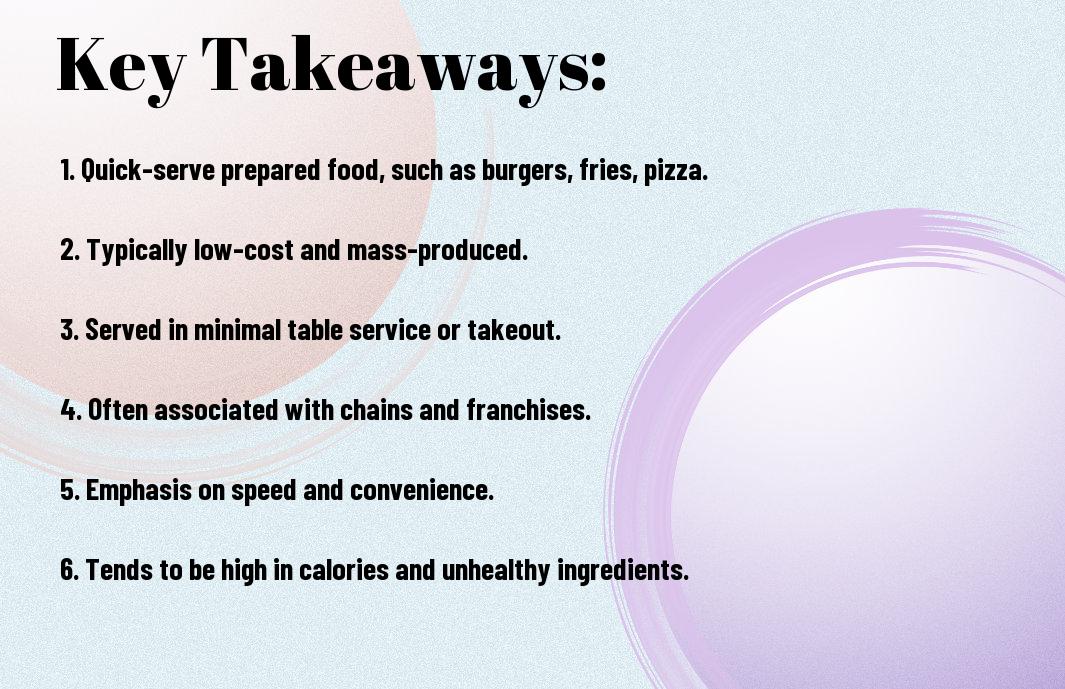
Key Takeaways:
- Quick Service: Fast food refers to food that is prepared and served quickly, allowing for a quick meal option for those on the go.
- Limited Menu: Fast food establishments typically have a limited menu focused on a few key items that can be prepared and served rapidly.
- Preparation Process: The preparation process for fast food often involves pre-cooked or pre-packaged ingredients that can be quickly assembled to serve customers efficiently.
The Origins of Fast Food
Historical Roots
A look back at the historical roots of fast food reveals that quick and convenient food options have been around for centuries. From ancient civilizations that served street food to travelers to the bustling markets of the Middle Ages where ready-to-eat foods were popular, the concept of fast food has a long and diverse history.
Early Innovations
An exploration of early innovations in fast food shows that the concept began to take shape in the 19th century with the rise of industrialization. The emergence of factories and urban centers created a demand for affordable and speedy meals, leading to the development of food stalls, diners, and eventually, fast food restaurants. These early pioneers laid the foundation for the fast food industry as we know it today.
Food historians credit the creation of the hamburger as a significant milestone in the evolution of fast food. In the early 20th century, the iconic sandwich became a staple of American fast food culture, paving the way for the widespread popularity of burgers and fries. This simple and satisfying meal epitomized the essence of fast food – quick, affordable, and delicious.
Defining Fast Food
Any discussion about fast food begins with understanding its defining characteristics.
Characteristics
Defining fast food involves looking at its key characteristics. Fast food is known for its quick service, allowing you to get your meal in a matter of minutes. It is also typically highly processed and pre-prepared, with a focus on convenience over quality. The standardized menu items and limited customization options are other hallmarks of fast food establishments.
Types of Fast Food
Fast food comes in various forms and flavors to cater to different tastes and preferences. Burgers, fries, pizzas, fried chicken, and sandwiches are some common types of fast food that you may encounter. These options are usually available for dine-in, takeout, or delivery, making them convenient choices for a quick meal on the go.
- Fast food is known for its quick service and convenience.
- It often consists of highly processed and pre-prepared menu items.
- Standardization and limited customization are typical of fast food establishments.
- Burgers, fries, pizzas, fried chicken, and sandwiches are popular types of fast food.
- These options are commonly available for dine-in, takeout, or delivery.
The Rise of Fast Food Chains
Post-War Expansion
Fast food chains began to expand rapidly after World War II, taking advantage of the economic boom and changing societal norms. As more women entered the workforce and families became busier, the convenience and affordability of fast food made it a popular choice for meals on the go.
Marketing and Branding Strategies
Chains like McDonald’s and Burger King revolutionized the way fast food was marketed, using catchy slogans, colorful logos, and memorable mascots to appeal to a wide audience. Their strategies focused on creating a sense of familiarity and comfort, making their restaurants feel like a home away from home.
Strategies such as toy giveaways with children’s meals and limited-time offers created a sense of urgency and excitement, driving customers to visit their favorite fast food chains regularly. This focus on branding and marketing helped fast food chains establish loyal customer bases and become an integral part of American culture.

The Impact of Fast Food on Society
Keep The New Definition of “Fast Food” in mind when considering the impact of fast food on society. Fast food has significantly influenced our modern way of life, affecting various aspects such as health, economy, and culture.
Health Concerns
Impact on health is one of the primary concerns associated with the consumption of fast food. The convenience and affordability of fast food often lead to excessive intake of high-calorie, low-nutrient meals, contributing to health issues such as obesity, heart disease, and diabetes.
Economic Effects
Food production and consumption patterns influenced by fast food can have significant economic effects. Fast food chains create employment opportunities, but there are concerns about low wages and poor working conditions for employees. Additionally, the mass production and distribution methods of fast food can impact local economies and agricultural practices.
Cultural Significance
A major aspect of the cultural significance of fast food lies in its global reach and influence on dietary habits and traditions. Fast food’s pervasiveness can lead to the homogenization of food cultures, eroding traditional culinary practices and local food businesses, impacting cultural diversity and heritage.
For instance, the popularity of fast food chains in different countries can shape preferences and eating behaviors, potentially diminishing the appreciation for indigenous ingredients and traditional cooking methods. The rise of fast food culture can also reflect broader social changes, such as the increasing pace of life and the prioritization of convenience over culinary authenticity.
The Evolution of Fast Food
All around the world, fast food has evolved significantly over the years, adapting to changing consumer preferences, embracing menu innovations, and implementing sustainability efforts.
Changing Consumer Preferences
Any keen observer of the fast-food industry can tell you that consumer preferences have shifted dramatically in recent years. Health-conscious consumers are now demanding healthier options, leading to the rise of salads, grilled items, and plant-based alternatives on fast-food menus.
Menu Innovations
Any visit to your favorite fast-food chain will reveal that menu innovations are constantly reshaping the industry. From unique flavor combinations to trendy ingredients, fast-food restaurants are always looking for ways to entice customers and stay ahead of the competition.
Innovations like customizable menu options, limited-time offers, and collaborations with popular brands or celebrities have also become common strategies to keep customers excited and engaged.
Sustainability Efforts
Any responsible fast-food establishment today is making strides towards sustainability. This includes initiatives to reduce packaging waste, sourcing ingredients ethically, and implementing energy-efficient practices in their operations.
Food chains are increasingly aware of their impact on the environment and are taking proactive steps to minimize their carbon footprint and promote a more sustainable food system for future generations.

Fast Food Around the World
Regional Variations
An exploration of fast food around the world reveals fascinating regional variations that reflect local tastes and preferences. From the savory samosas of India to the hearty poutine of Canada, each country puts its unique spin on fast food classics.
Cultural Adaptations
Variations in fast food offerings can also be attributed to cultural adaptations. For example, in Japan, fast food chains like Mos Burger offer rice burgers to cater to the Japanese preference for rice in their meals. Similarly, in Mexico, tacos and burritos are staples in fast food menus, showcasing the influence of Mexican cuisine on these global chains.
A deeper look into cultural adaptations in fast food reveals how global chains tweak their menus to resonate with local palates and cultural norms. This willingness to adapt showcases a blend of globalization and localization, creating a diverse array of fast food options worldwide.
Globalization
On a global scale, fast food has become a symbol of globalization, with fast food chains spreading to every corner of the world. You can now find familiar names like McDonald’s and KFC in numerous countries, offering a taste of home for travelers and a sense of familiarity in foreign lands.
Plus, globalization has led to interesting hybrid creations, such as the McSpaghetti in the Philippines or the Shrimp Burger in Japan, where local ingredients are infused with fast food concepts to create unique dishes.

To wrap up
With these considerations in mind, you now have a clearer understanding of what fast food truly entails. It is not just about the speed of service or the convenience factor; rather, it encompasses a broader spectrum of characteristics. Fast food is characterized by quick service, standardized menus, and often high levels of processed ingredients, making it easily accessible and widely available to people on the go.
Next time you find yourself grabbing a quick meal at a fast-food restaurant, think about the defining features that make it a part of this category. By being aware of these characteristics, you can make more informed choices about your food consumption and its impact on your health and well-being. Recall, moderation is key, and being mindful of what you eat is vital in maintaining a balanced diet.
FAQ
Q: What is the definition of fast food?
A: Fast food is a type of cuisine that is prepared and served quickly in restaurants or through take-out services. It typically includes high amounts of calories, fat, and salt, and is often associated with convenience and affordability.
Q: What are some examples of fast food?
A: Some popular examples of fast food include burgers, fries, pizza, fried chicken, hot dogs, and sandwiches. Fast food chains like McDonald’s, KFC, Burger King, and Taco Bell are well-known for serving these types of items.
Is fast food unhealthy?
A: Fast food is generally considered unhealthy due to its high levels of saturated fats, trans fats, cholesterol, salt, and sugar. Consuming fast food regularly can contribute to weight gain, heart disease, diabetes, and other health issues. It is recommended to consume fast food in moderation as part of a balanced diet.