It’s important to know about the culinary treasures of the world, and when it comes to India, the national dessert holds a special place. In this post, you’ll discover what India’s national sweet is, its historical significance, and why it resonates with millions. If you’re curious about the specific details, you can explore more about What is India’s national sweet? so you can appreciate this delicious facet of Indian culture.
Key Takeaways:
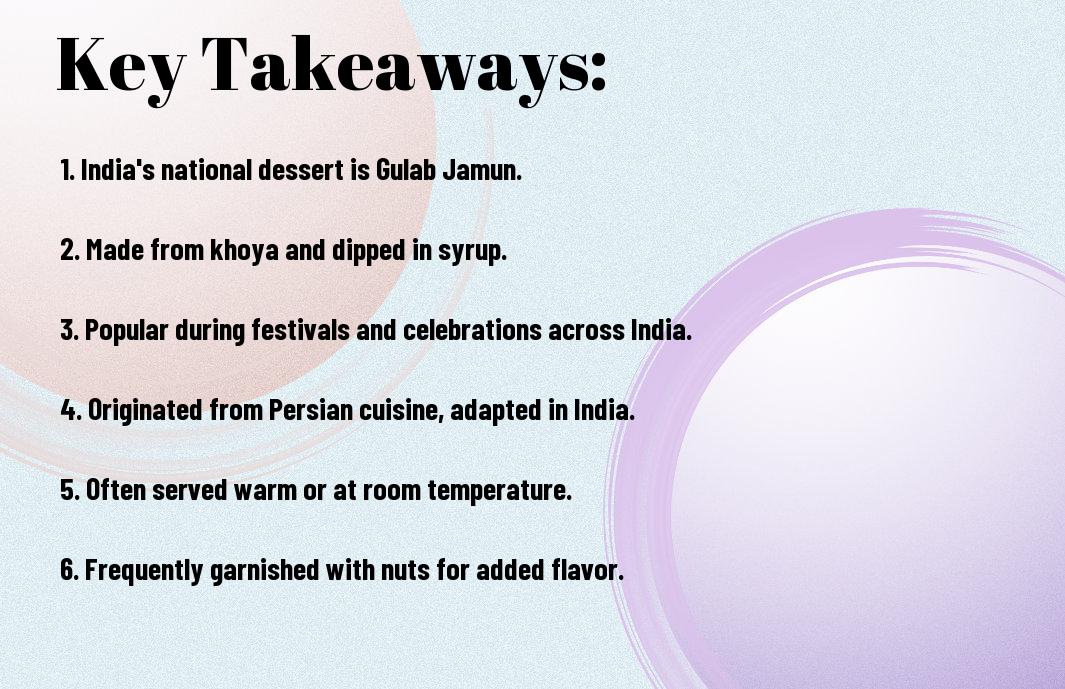
- Gulab Jamun: Widely regarded as India’s national dessert, gulab jamun is a sweet made from milk solids, sugar syrup, and a hint of cardamom.
- Popular Across Regions: This dessert is cherished throughout India, with variations and regional adaptations found in every state.
- Festive Celebrations: Gulab jamun is often served during festivals, weddings, and special occasions, symbolizing joy and celebration.
- Historical Roots: The dessert has a rich history, believed to have originated from the Persian ‘luqmat al-qadi’ and adapted over time in Indian cuisine.
- Easy to Make at Home: With simple ingredients, gulab jamun is a popular choice for home cooks looking to recreate traditional sweets.
Understanding India’s Culinary Heritage
To truly appreciate India’s national dessert, it’s vital to understand the rich tapestry of its culinary heritage. Indian cuisine is characterized by a delightful spectrum of flavors, ingredients, and cooking techniques influenced by its diverse geography and cultural traditions. Desserts in India are more than mere sweets; they are an integral part of celebrations, rituals, and everyday life, reflecting the country’s regional diversity and historical legacy.
The Role of Desserts in Indian Culture
Role of desserts in your life and culture is significant, as they often symbolize joy and festivity. Whether during festivals, weddings, or family gatherings, sweets play a pivotal role in creating memorable experiences. They are not only a treat for the taste buds but also a way to reinforce social bonds and convey goodwill, making them vital to your cultural practices.
Historical Influences on Indian Sweets
For centuries, Indian sweets have been shaped by various historical influences, including trade, conquest, and migration. The introduction of sugar and new cooking techniques by invaders and traders, such as the Mughals, transformed traditional sweets, creating a fusion of flavors and styles that you still enjoy today.
Heritage aspects of Indian sweets reveal a fascinating journey through time. The blending of local ingredients with those brought by traders and conquerors resulted in iconic desserts like gulab jamun and jalebi. As you explore the world of Indian sweets, you’ll discover how each recipe tells a story of cultural amalgamation and innovation, echoing the diverse narratives that have shaped your culinary landscape.
Popular Indian Desserts
Even if you are not familiar with Indian cuisine, it’s hard to ignore the vibrant array of desserts that feature in this culture. Each region of India boasts its own specialties, influenced by local ingredients, climate, and culinary traditions, creating an extensive palette of flavors and textures that delight the senses. From the creamy richness of Bengali sweets to the nutty delights of Punjabi desserts, every corner of the country has something unique to offer.
An Overview of Regional Specialties
Indian desserts vary significantly across its diverse regions. For instance, while you might find Rasgulla in West Bengal, Maharashtra is famous for Modak, particularly during the Ganesh Chaturthi festival. Each region’s specialities reflect not just local ingredients but also the customs and traditions of the people, making each dessert a celebration in its own right.
Festive Sweets and Their Significance
Popular Indian desserts hold great significance during festivals and special occasions. They are often prepared to mark celebrations, rituals, and family gatherings. Sweets like Gulab Jamun and Kheer symbolize joy, prosperity, and togetherness, adding a delicious layer to the festive spirit that embodies Indian culture.
With every Indian festival, whether it’s Diwali, Holi, or Eid, specific sweets take center stage. You will often find yourself indulging in delicate treats like Ladoo, Burfi, or traditional Halwa, which not only satiate your sweet tooth but also carry a cultural legacy. These festive delights strengthen family bonds and create lasting memories during celebrations.
Common Ingredients in Indian Desserts
Common ingredients in Indian desserts include milk, sugar, and a variety of nuts and spices, which come together to create harmonious flavors. You will frequently encounter ingredients like cardamom, saffron, and ghee, all of which elevate the taste and texture of these mouth-watering treats.
Ingredients like condensed milk and jaggery are staples in many recipes, while others incorporate regional flavors such as coconut or paneer. This use of diverse components not only enriches the culinary experience but also showcases the regional influences that have shaped Indian sweets over centuries. By understanding these common ingredients, you can better appreciate the intricate balance of flavors that make Indian desserts truly delightful.
The Quest for the National Dessert
Not just any sweet can claim the title of India’s national dessert. Instead, this quest involves understanding the unique cultural, historical, and regional significance of various desserts that represent the rich culinary heritage of India.
Criteria for National Recognition
For a dessert to be considered a national symbol, it must resonate with a large portion of the population, showcase regional diversity, and reflect India’s cultural traditions. Factors like historical significance, popularity across regions, and representation in celebrations play an necessary role in this decision-making process.
Comparisons of Leading Contenders
Leading contenders for India’s national dessert include iconic options like Gulab Jamun, Jalebi, and Kheer. Each of these desserts brings distinct flavors and cultural stories from different parts of the country.
Comparative Analysis of Leading Desserts
| Dessert | Key Features |
|---|---|
| Gulab Jamun | Soft, deep-fried balls soaked in sugar syrup |
| Jalebi | Crispy, spiral-shaped sweet soaked in syrup |
| Kheer | Rich rice pudding made with milk and nuts |
With each contender presenting its unique attributes, the choice can be difficult. Gulab Jamun, beloved for its rich, sugary flavor, often evokes nostalgia, while Jalebi’s crispy texture and vibrant colors make it a festival favorite. Kheer, with its comforting creaminess, often graces family gatherings, providing warmth and celebration.
Public Opinion on National Dessert
On the matter of a national dessert, public opinion is often diverse and passionate. People have their personal favorites based on regional influences and cultural traditions, leading to vibrant discussions regarding the best dessert.
A recent survey indicated that while many love Gulab Jamun for its sweetness, others argue fiercely for the crispy joy of Jalebi or the creamy richness of Kheer. Your preference may reflect your regional background or cherished family recipes, making the quest for a national dessert not just a culinary decision but a deeply personal one as well.
Final Words
Hence, as you explore the diverse and rich culinary landscape of India, you will discover that the national dessert, Gulab Jamun, holds a special place in the hearts and homes of its people. This delightful sweet, made from milk solids and infused with rose flavored syrup, symbolizes celebration and joy. To further deepen your understanding of Indian desserts and their cultural significance, you can read about the Introduction to Indian Desserts. Your journey through India’s sweet traditions is sure to be delicious and enlightening!
FAQ
Q: What is India’s national dessert?
A: India does not have an official national dessert; however, many people consider ‘Gulab Jamun’ as India’s most iconic dessert. It consists of deep-fried dough balls made from khoya (milk solids) that are soaked in a sugar syrup flavored with cardamom and rose water. It is widely enjoyed across the country and is a staple at festivals and celebrations.
Q: Are there regional variations of Gulab Jamun in India?
A: Yes, there are several regional variations of Gulab Jamun throughout India. For example, in North India, it is primarily made with khoya, while in some South Indian regions, it may be prepared using semolina or even made with grated coconut. In addition to the traditional sweet syrup, variations may also include flavors like saffron or various aromatic spices to introduce unique tastes.
Q: What are some other popular Indian desserts besides Gulab Jamun?
A: Apart from Gulab Jamun, India boasts a diverse range of desserts that vary by region. Popular options include ‘Jalebi’ (a spiral-shaped fried dough soaked in sugar syrup), ‘Rasgulla’ (soft cheese balls in syrup), ‘Kheer’ (rice pudding), and ‘Barfi’ (a milk-based sweet). Each region has its specialty, reflecting the rich culinary traditions of India.